
Colombo: Hoppers, Kottu, and the Tea Room Pause
Forty-eight hours of Sri Lankan eating — from egg hoppers at dawn to kottu after dark.
- colombo
- sri lanka
- itinerary
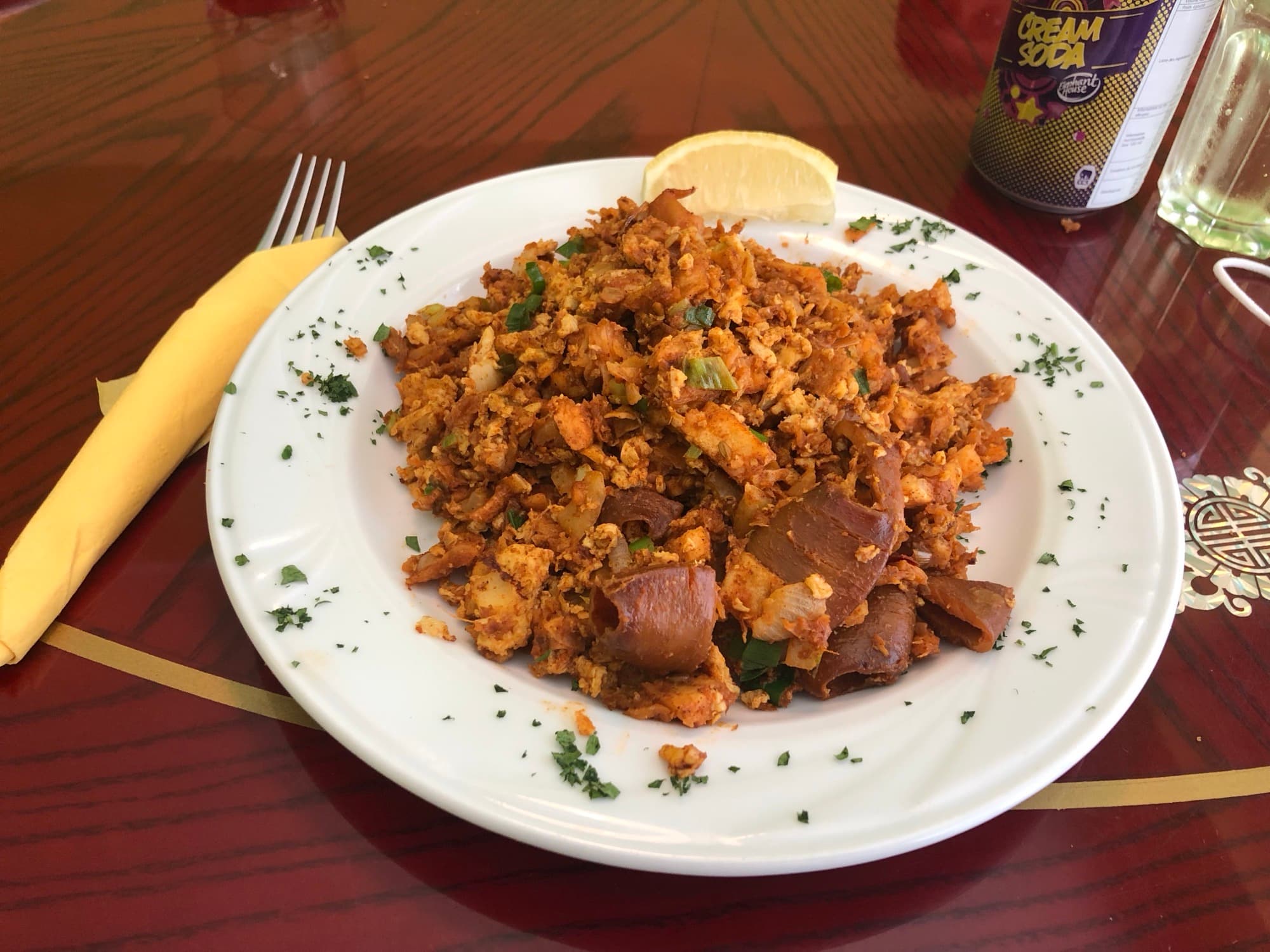
Colombo eating follows the clock more than a single “must” restaurant. This page is a workable day shape: hoppers early, short eats and tea in the afternoon lull, rice and curry when canteens are busy, then kottu or Galle Face snacks after dark — with room to skip tourist rooms that only serve a flattened “curry house” plate.
Morning: hoppers and string hoppers
Hoppers (appa) are a morning discipline — bowl-shaped fermented rice-flour batter cooked in a curved pan, often with an egg in the center. String hoppers (indi appa) come as steamed nests with dhal and sambols. Neighbourhood hopper shops and busy breakfast counters beat hotel buffets for this. Plain hoppers with pol sambol and seeni sambol are a complete breakfast; do not save them for dinner.
Midday: rice and curry, then a tea-room pause
A rice-and-curry plate — several curries, sambols, and rice — is the working lunch. Look for busy canteens near markets and offices rather than empty tourist dining rooms. After that, a tea pause matters: strong milk tea (or ask for plain tea if you want it without milk) and a short eat from a bakery case. Fish rolls, cutlets, patties, and egg roti fill the gap between meals; cases empty toward late afternoon.
Evening: Galle Face, then kottu
Galle Face Green at sunset is for isso vadai (prawn-topped lentil fritters), corn, and king coconut as much as for the view. Later, listen for kottu — chopped roti on a hot griddle with vegetables, egg, and often meat or cheese. Marine Drive and neighbourhood kottu joints stay later than the Green. Cheese or chicken kottu with extra gravy is a common order; spice level is negotiable if you ask.
Forty-eight hours without overbooking
- Day 1: hoppers → rice and curry → short eats + tea → Galle Face → kottu.
- Day 2: repeat hoppers in a different neighbourhood; add a sit-down seafood or crab meal if you want one formal stop; leave Pettah markets for walking, not for a checklist of snacks.
- Skip the instinct to rate every meal as “authentic.” Busy local turnover is a better signal than décor.
Sources and further reading
- Wikipedia: Kottu
- Wikipedia: Appam
- That’s What She Had: Sri Lankan street food
- Sri Lankan Guide: Colombo street food