A Mumbai Dinner Put Four Kerala Parottas on One Table
Coin, nool, bun, and kizhi from Porotta Hut at Magazine Street Kitchen. The set menu was about $38.
- parotta
- kerala
- mumbai
- bread
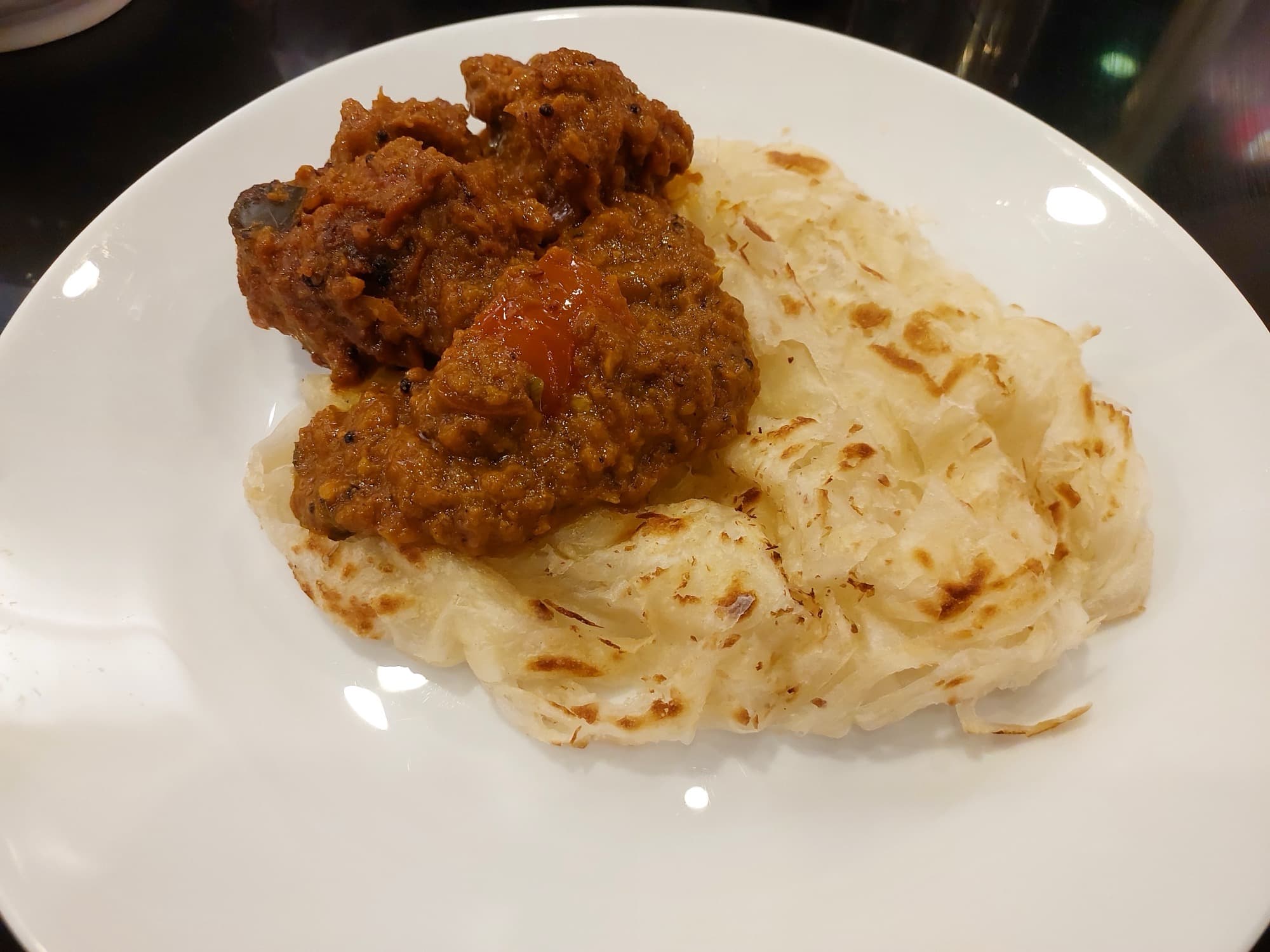
Porotta Hut came up from Thiruvananthapuram for two nights in Darukhana. At Magazine Street Kitchen, the guest-chef room in an old mill compound in Byculla, the card named four porottas: coin, nool, bun, and kizhi. You tear the first three. The kizhi arrives tied in a banana leaf, the bread already soft in the gravy.
Gauri Devidayal, Jay Yousuf, and chef Alex Sanchez, the people behind The Table in Colaba, opened Magazine Street Kitchen in 2016. The stoves take more of the building than the tables. This dinner was the third in a series they call Uncharted India. Tickets were ₹3,500 plus tax, about $38. In Kerala the same bread usually sits beside a roast at a roadside stall. For those two nights in Mumbai, the menu was built around it.
Shameer Basheer opened Porotta Hut after more than twelve years working abroad. He traces the cooking to his mother’s kitchen. The shops are in Pattom and Manacaud. In Mumbai the meat menu opened with a Trivandrum chicken fry, peppery and dry, then moved through the three breads before a nadan mutton roast, the country-style local one, and chicken cooked in the water of a tender coconut. A chicken kizhi closed the meal. Vegetarians got the same breads with gobi chilli, a mushroom roast, and a vegetable kizhi.
A plain Kerala porotta is refined wheat flour worked with oil until the dough will stretch thin. The cook coils it, flattens the coil, griddles it, and claps the bread so the layers open. Kurush Dalal, the archaeologist and culinary anthropologist, places that coil nearer West Asian flatbreads than a North Indian paratha, which is usually whole wheat and folded. He says the trail is not settled. Kerala does not grow the wheat. From Malabar to the tip of the state, the bread is still what you order with a beef fry or a chicken roast.
Coin porotta is that bread, shrunk to a bite. A Kerala version runs about two centimetres across, crisp enough to chase a roast. At the dinner it sat with the chicken fry.
Nool means thread. Suresh Pillai, a Kerala chef who keeps cooks in Bengaluru making only porotta, shreds the cooked layers into strips. He has said a Chinese bread gave him the idea. The shreds come apart in the hand, and in his rooms people reorder them.
Bun porotta is Madurai’s. K. Karuppanan, who runs Madurai Bun Parotta Kadai, has said a cook in the shop worked eggs, milk, and sugar into the dough in 1999 and let it rest. The outside crisps. The middle stays soft and a little sweet, which is how it got the name. It wants salna, the thin gravy Tamil parotta shops send on the side.
Kizhi is the tied bundle. Porotta goes into a banana leaf with meat or a vegetable roast, the leaf gets tied, and the parcel steams until the bread softens in the gravy. You open it at the table. Kothu is the one people confuse with this: bread chopped on the griddle with egg and meat.
Ask which porotta when the card is vague. Use the coin to finish a dry fry. Order nool for the shreds, bun when you want it soft and a little sweet, and kizhi when the bread has already met the curry in the leaf. Fish curry, appam, and the rest of a Kerala night are in The Kerala Table: Matta Rice, Fish Curry, and Appam.