
The Kerala Table: Matta Rice, Fish Curry, and Appam
Sadya is the feast. Most nights are coconut oil, a souring agent, and one pot of fish or stew.
- kerala
- malayali
- regional
- fish
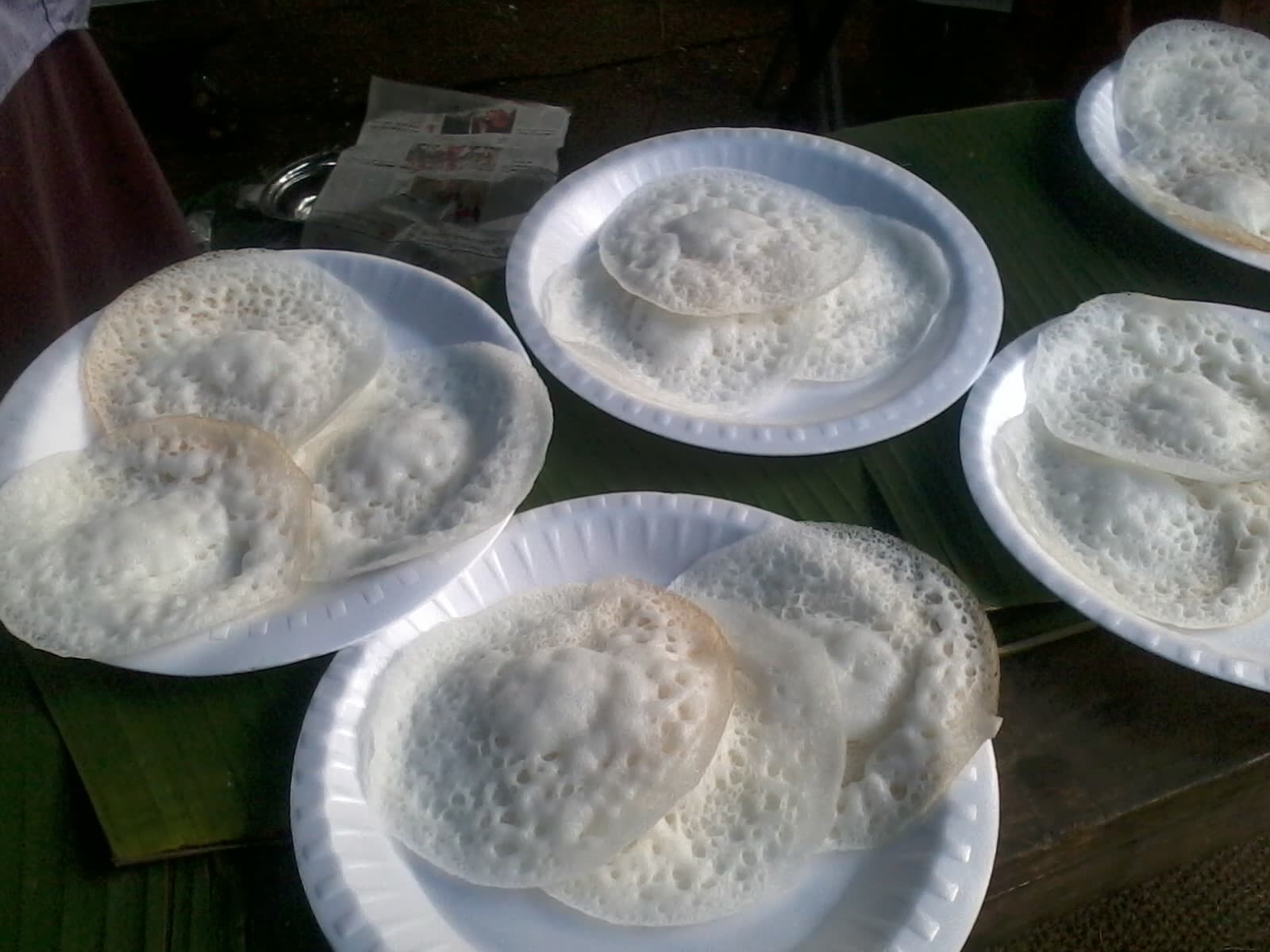
If you only know Kerala food from Onam, you know the feast and not the week. A sadya is a banana-leaf spread, often vegetarian, built for a festival or a wedding. Most Malayali dinners are smaller: red rice or leftover appam, a wet curry, a dry coconut vegetable, and something sour or crisp on the side. This page is that everyday table.
Seasoning often starts in coconut oil with mustard seed and curry leaf, then a souring agent or a pour of coconut milk. Fish shows up on a lot of weeknights. Meat shows up in many Christian and Muslim kitchens. Households differ by district, community, and what the market held that morning.
Lunch is rice, a wet pot, and a dry vegetable
The starch is often matta, Kerala’s parboiled red rice: chewy, a little nutty, pink-brown when cooked. Diaspora kitchens swap in regular rice when the bag is hard to find. Next to it sits a wet curry, frequently fish, and a thoran, vegetables stir-cooked with grated coconut until they stay dry and crumbly. Pappadam and a pickle or puli inji, a ginger-tamarind relish, handle crunch and concentrated sourness. That is a complete plate. You do not need twenty dishes to call it Kerala food.
Breakfast runs on a different starch. Appam is a fermented rice pancake with a soft middle and a lacy rim, cooked in a curved pan. It wants stew: chicken, vegetable, or egg in thin coconut milk with pepper, ginger, and curry leaf. Puttu, steamed rice-flour cylinders, often comes with kadala, a black-chickpea curry, or with banana and sugar. Idiyappam, pressed rice strings, takes the same stew or a pour of sweetened coconut milk.
Fish curry is not one gravy
Ask what sours the pot before you ask which fish. Many central and southern kitchens use kudampuli, a dried Garcinia fruit also sold as Malabar tamarind. It gives a smoky, deep sourness to a red fish curry cooked in an earthen chatti. Other pots use raw mango in season, or tamarind. Meen moilee, a milder golden stew often linked to Syrian Christian tables, leans on coconut milk, green chilli, and ginger instead of that dark souring fruit.
Karimeen, pearl spot, gets the restaurant headlines, especially when it is wrapped in banana leaf as pollichathu. Weeknight pots also run on sardine, mackerel, seer, or whatever the diaspora freezer holds. Method matters more than the exact fish: coconut oil in the tadka, curry leaf in the fat, then a sour or coconut-milk finish.
Community changes the meat and the bread
Syrian Christian kitchens, especially around Kottayam and nearby central districts, are known for appam with stew, meen moilee, duck or chicken mappas, and slow beef or pork fries. Beef ularthiyathu, meat cooked down with coconut slivers until the masala clings, is a toddy-shop and home plate in those communities. It is ordinary food there, not a statewide default.
Mappila cooking in the Malabar north, the Muslim table shaped by long Arab trade through Kozhikode and Thalassery, brings dum biryani, pathiri, thin rice flatbreads, and richer meat and seafood work. Thalassery biryani is a named style, not a generic Kerala biryani. Pathiri with a wet meat curry is a different breakfast from puttu.
Hindu vegetarian cooking, including the sadya tradition, still sits on the same coconut pantry: avial, olan, erissery, pulissery. Those dishes show up at feasts and in many weekday vegetarian homes. They do not cancel the fish pot next door. Coconut does three jobs here: oil for the tadka, grated flesh for thoran, and milk for stew.
What to cook or order first
- Fish curry with matta or plain rice, plus one thoran.
- Appam with vegetable or chicken stew.
- Puttu with kadala if you want a breakfast that is not a pancake.
- If the room cooks meat, a dry beef or chicken fry with parotta tells you more than a generic curry.
- For the feast version, open the Onam sadya guide instead of stuffing this plate.
Abroad, look for a Kerala or Malabar line on the menu, not the dosa page. On this site, Mayura in Culver City built a reputation on appam and fish curry, and Kidilum in New York is a Kerala-forward room with fine-dining discipline. Confirm what is actually on tonight. Names travel faster than kitchens.
Further reading
- Onam Sadya: How the Banana-Leaf Meal Is Served
- Tamil Nadu: Rice Meals, Dryland Grains, and Coastal Tables
- Bengali Table: Fish, Mustard Oil, and the Rice Sequence
- Mustard Seeds: Pop in the Tadka, Bite in the Paste
- The Indian Breakfast Map Goes Way Beyond Dosa
- A Kerala Chef Just Made Flatiron One of Manhattan’s Hardest Tables