
Bengali Table: Fish, Mustard Oil, and the Rice Sequence
Maach-bhaat culture, mishti placement, and why lunch and dinner follow different rhythms.
- bengali
- fish
- regional
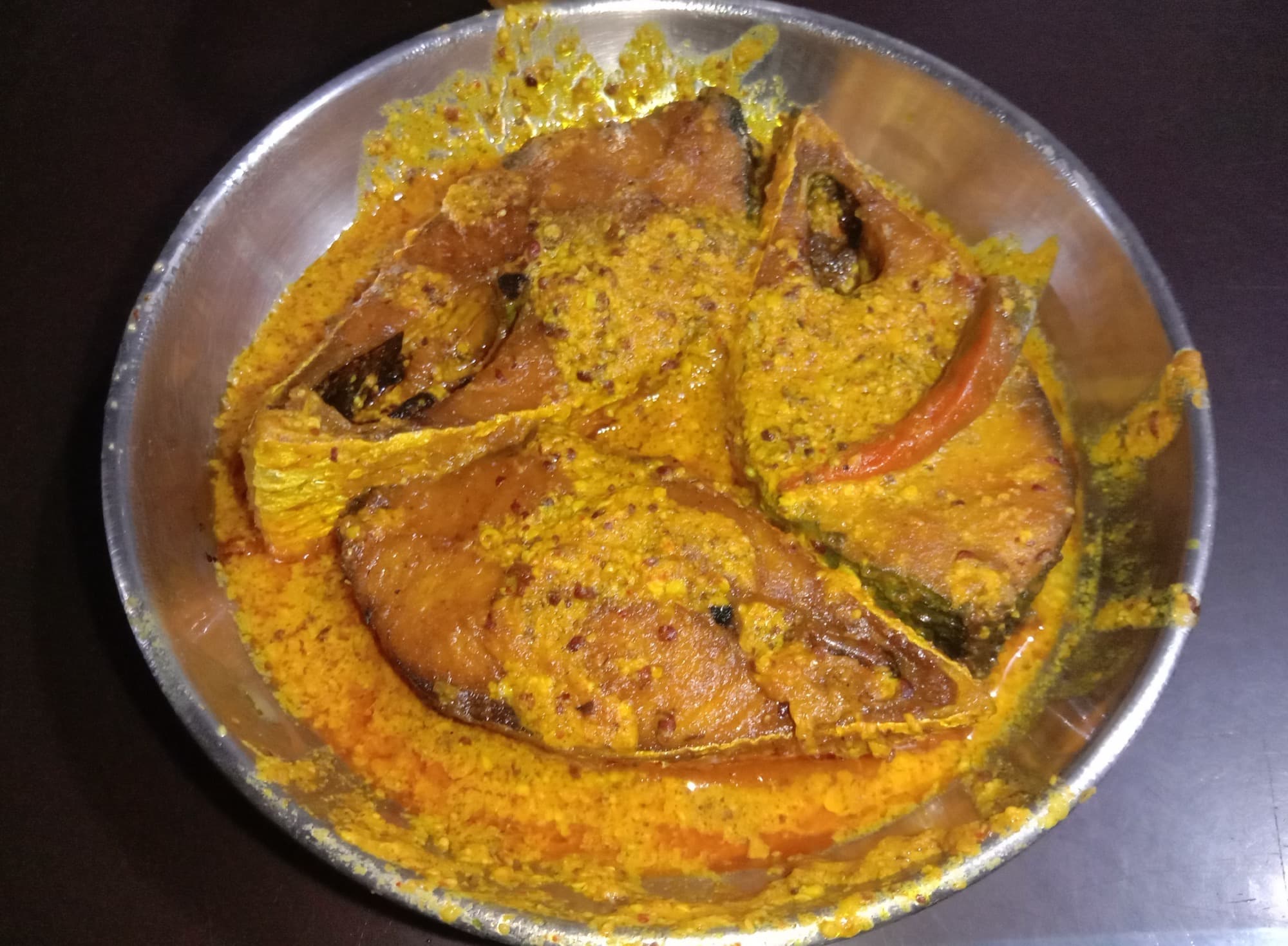
A Bengali rice meal is often paced, not piled. This page is a starter map of that sequence — bitter to sweet, mustard oil as a working fat, fish as a weekday center — with the usual caveat that West Bengal and Bangladesh kitchens, Hindu and Muslim tables, and diaspora apartments do not run one identical script.
How the sequence usually moves
Many fuller midday meals still move through flavour jobs rather than Western courses. A bitter opener (teto) — shukto, neem begun, or a simple karela bhaja — comes early. Fried bhaja and shaak follow. Dal (often masoor or roasted moong) softens the plate. Then come the heavier proteins: fish or prawn, sometimes meat. A sour or chutney note resets the palate before mishti. Steamed rice (bhaat) sits under almost everything; it is the reset button, not a side.
Mustard oil and mustard paste
Mustard oil is foundational in many Bengali kitchens: heated until the raw edge softens, then used for frying fish or building a jhol. Mustard paste (shorshe) defines dishes like shorshe ilish. The sharpness is part of the cuisine — something to learn, not something to “fix” with cream. Households differ on how aggressively they heat the oil and how much paste they use.
Fish is not one fish
Ilish (hilsa) gets the monsoon headlines, but everyday tables also run on rui, katla, pabda, and prawns. Light jhol, mustard-heavy preparations, and banana-leaf steam (bhapa / paturi) are different jobs. Diaspora cooks often substitute local white fish; the useful question is method and oil, not whether the plate can be called authentic only with Padma hilsa.
Lunch vs dinner rhythm
In many households, the heavier multi-dish rice meal sits at lunch; dinner may be lighter — leftover fish, roti, or a simpler curry. Festival and guest days stretch the sequence again. If you are learning the table from restaurants abroad, you are often seeing a compressed thali version of this logic, not the full home pacing.
Sources and further reading
- Wikipedia: Bengali cuisine
- Wikipedia: Ilish
- Slurrp: Bengali course-meal sequence
- Slurrp: Teto / bitter openers