
Tamil Nadu: Rice Meals, Dryland Grains, and Coastal Tables
A rice meal offers one starting point; Kongu pulses, Nanjil fish curries, Nagarathar cooking, and Tamil Muslim biryanis widen the table.
- tamil
- sambar
- regional
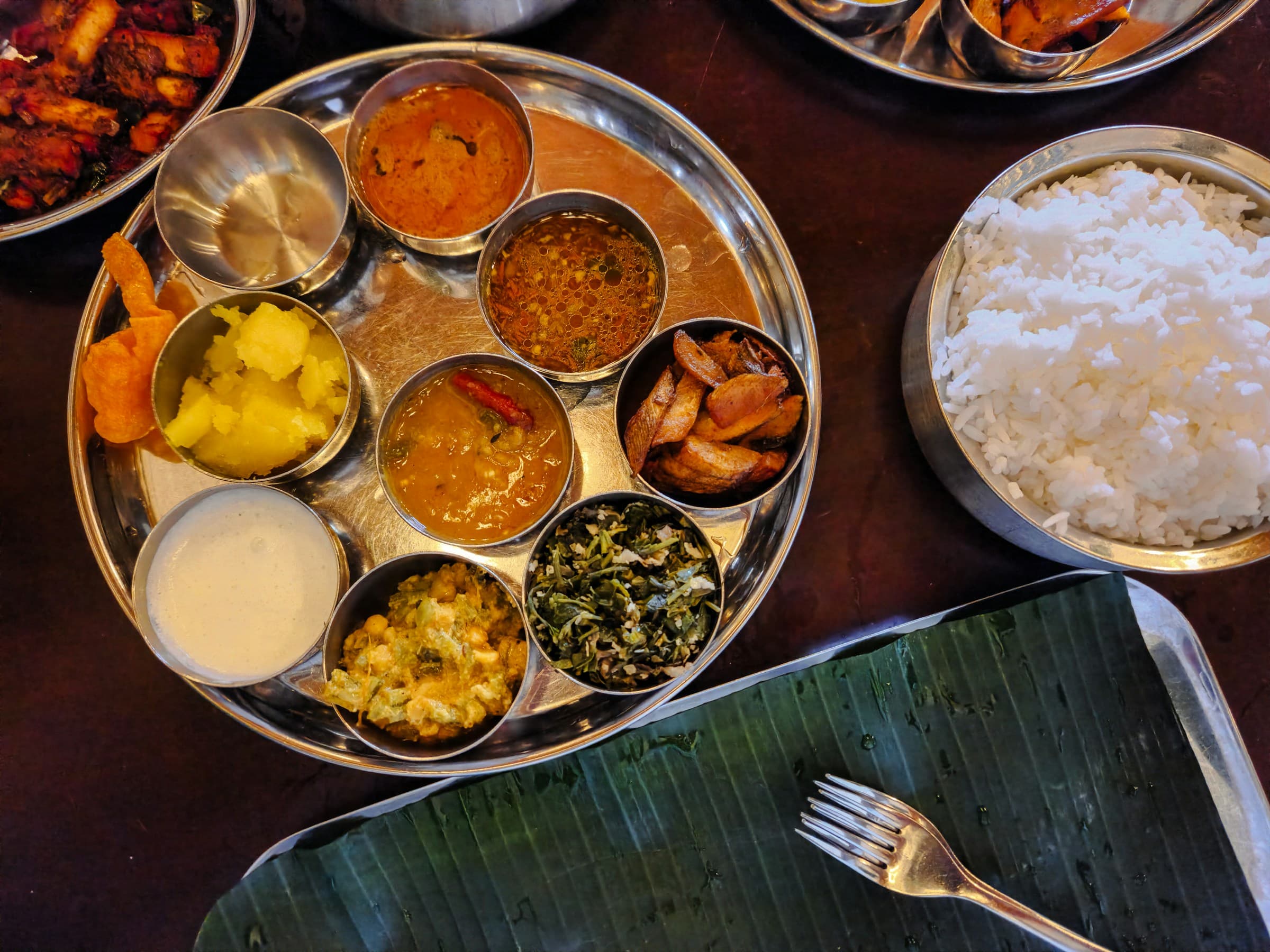
A rice meal is one useful way into Tamil Nadu's food, but it does not describe the whole state. Irrigated Cauvery delta towns, dry western districts, the Kanyakumari coast, trading communities, temple kitchens, and city restaurants work with different crops and histories. Tamil Brahmin vegetarian cooking is one important tradition among many, not the statewide default.
How a rice meal is organized
A familiar vegetarian saappadu may move from rice with paruppu and ghee to sambar or another kuzhambu, then rasam, then curd or buttermilk. Kootu pairs vegetables and lentils in a thicker preparation; poriyal is drier, often stir-cooked and finished with coconut. Pickle and appalam provide concentrated sourness and crunch. This sequence is common at feasts and in many homes, but it is not compulsory.
Sambar's origin remains disputed. The popular story credits a Thanjavur Maratha court and a dish named for Sambhaji, but versions disagree on the ruler, guest, and ingredients. It is safer to understand sambar within a broader South Indian family of sour lentil-and-vegetable stews than to assign it one inventor.
Land changes the staple
The Cauvery delta's irrigation supports paddy. In semi-arid Kongu Nadu, rain-fed fields have also supported kambu, ragi, cholam, groundnut, sesame, pulses, and kollu, or horse gram. Arisi paruppu sadam cooks rice and toor dal together; kollu appears in rasam and mashed preparations. These dishes make Kongu food distinct without turning western Tamil Nadu into one uniformly millet-based cuisine.
Farther south, Nanjil Nadu's history with Travancore shows in coconut, fish, reddish rice, and ulunthanchoru, rice cooked with black gram. Along Chennai's coast, fishing households make meen kuzhambu for home meals and a thick, coconut-free sunda kuzhambu that can keep during fishing trips. Ecology matters here as much as a state border.
Community widens the table
Chettinad cuisine belongs specifically to the Nagarathar community, whose banking and trading networks extended through Ceylon and Southeast Asia. Tamil Muslim traditions include Ambur biryani made with seeraga samba rice, while Madurai is known for kari dosai, mutton dishes, parotta, and late-night eating. Idli and dosai belong more naturally to the lighter tiffin frame than to the full midday rice meal.
The practical lesson is to ask where in Tamil Nadu, which community, and what kind of meal. Rice and sambar are useful starting points, alongside Kongu horse gram, Nanjil fish, Nagarathar cooking, and Tamil Muslim biryanis.