
Gujarati Thali Logic: Dal, Bhaat, Rotli, Shaak
The familiar restaurant spread begins with a simpler home meal, then changes with region, season, community, and occasion.
- gujarati
- thali
- vegetarian
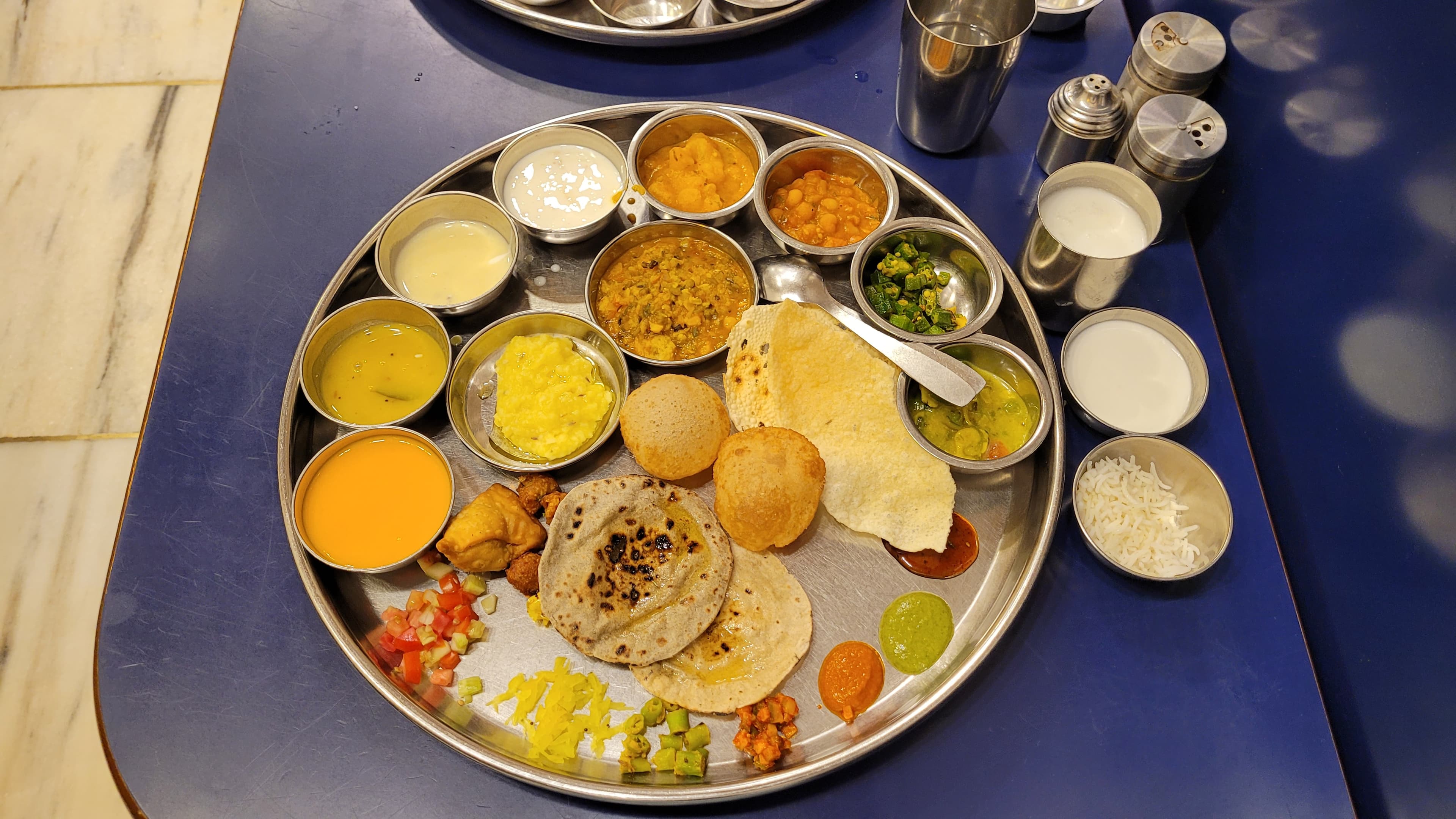
The unlimited Gujarati restaurant thali is a dressed-up relative of a smaller home meal. A useful everyday framework is dal, bhaat, rotli, and shaak: lentils, rice, thin wheat flatbread, and a vegetable or pulse preparation. It bends easily. Kadhi may stand in for dal, khichdi for plain rice, and a millet rotla for rotli.
Sweet and sour, selectively
Some Gujarati dals place jaggery or sugar against kokum, tamarind, lime, or raw mango. Kadhi may soften sour yogurt with a little sweetness. That contrast is recognizable, but it does not make every Gujarati dish sweet. Pickles and chutneys can carry the sharper work: grated-mango chhundo is sweet-hot, while methia keri brings raw mango, fenugreek, mustard, salt, and chilli.
Farsan also needs precision. The word covers savory snacks and accompaniments, not simply fried food. Gota, fafda, and sev are fried; dhokla, khaman, khandvi, patra, and some muthia are steamed or otherwise cooked. A weekday lunch may contain no farsan at all. Multiple snacks, sweets, and shaaks more often signal guests, festivals, weddings, or restaurant service.
The plate changes across Gujarat
Kathiawari and Kutchi meals may feature bajra rotla, garlic chutney, sesame, peanuts, pulses, and more chilli. Wetter south Gujarat supplies the winter vegetables of undhiyu: Surti papdi, fresh tuvar, green garlic, purple yam, and methi among them. Rotli and mild dal remain important elsewhere, but no neat border separates one household style from another.
Jain and Vaishnav traditions have shaped Gujarat's public image as vegetarian, yet the state is not uniformly vegetarian. Parsi cooking uses fish, meat, and eggs alongside sweet-sour seasoning; Dawoodi Bohra meals gather diners around a shared thaal; Koli, Memon, Adivasi, and other communities hold distinct repertoires. One commercial plate cannot carry all of them.
How to read the thali
Start with the quartet, then notice what season and occasion add: chaas in warm weather, rice served after rotli, a second shaak, a crisp accompaniment, or something sweet. Restaurant service often adds more dishes and repeated refills. Home meals are usually smaller, with combinations varying by household and occasion.