
The Odia Table: Pakhala, Dalma, and Light Mustard
Cool fermented rice, vegetable-loaded dal, temple kitchen rules, and mustard fish with a lighter hand than Bengal.
- odia
- odisha
- regional
- pakhala
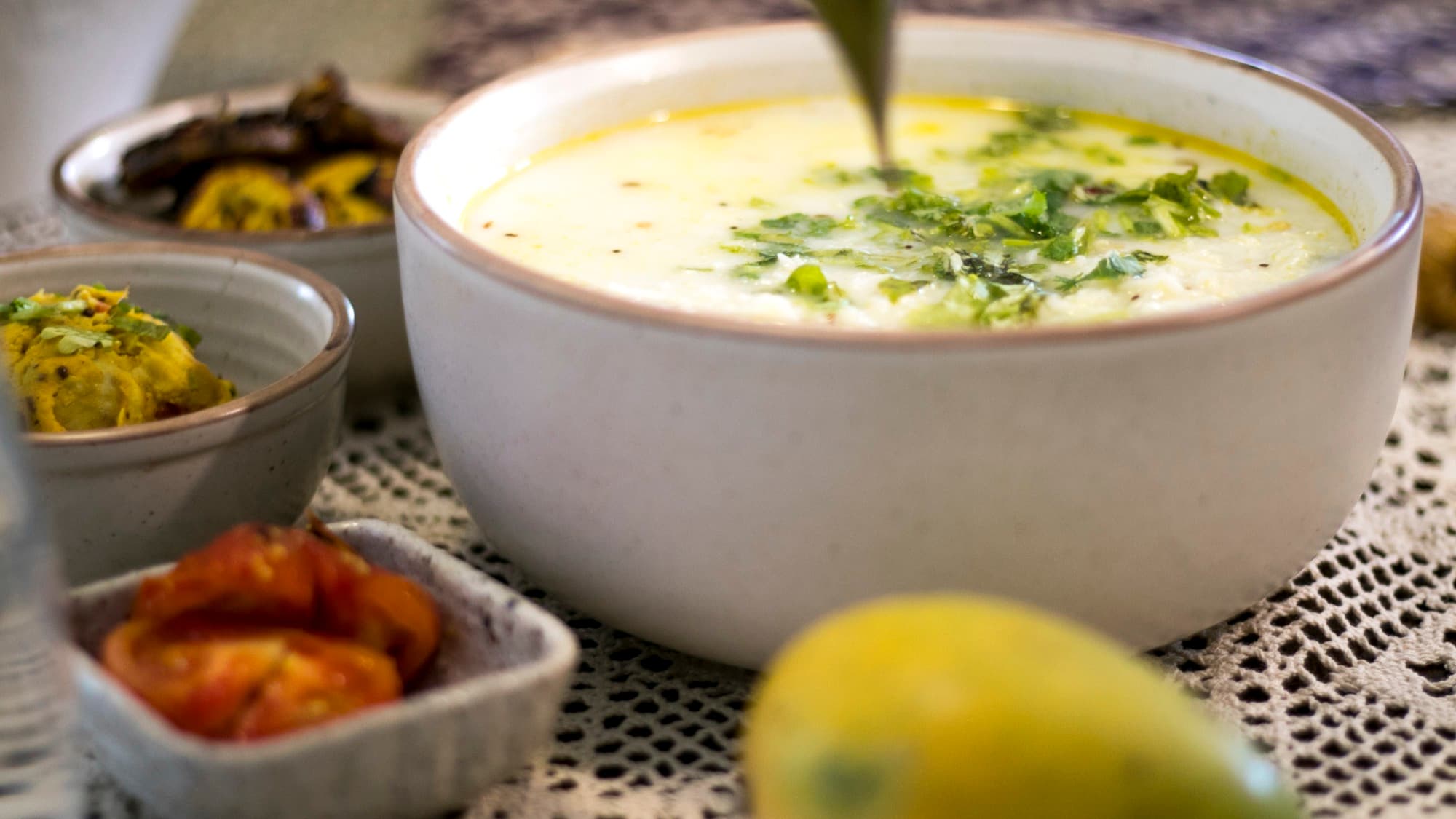
On a hot Odisha afternoon, the plate often arrives cool. Cooked rice sits in water, sometimes overnight, sometimes with a spoon of curd stirred in, and the bowl goes by pakhala. Next to it come fried greens, mashed potato, crushed sun-dried lentil dumplings called badi, lime, or a green chilli. This page is that weekday Odia table: cool rice, vegetable-loaded dal, mustard used lightly, and a temple kitchen with stricter rules than most homes.
Odisha sits on the Bay of Bengal between Bengal and the Telugu coast. The pantry overlaps with its neighbors: rice, mustard oil, freshwater fish, chhena sweets. The cooking usually pulls back. Savory pots lean less on sugar and cream. The everyday tempering is pancha phutana, a five-seed mix that smells familiar if you know Bengali panch phoron. Coast, inland district, community kitchen, and whether the cook follows Jagannath temple rules at home all change the plate.
Pakhala for hot days
Pakhala is cooked rice soaked or lightly fermented in water. Some bowls stay plain and watery. Others become dahi pakhala when curd joins the liquid. A finishing tadka of mustard oil with mustard seed, dried chilli, or curry leaf is common, then herbs on top. You eat it cool. In peak heat, that is the job: a lunch that cools you down instead of another gravy.
The sides do the seasoning work: bhaja (fried greens or vegetables), aloo bharta or other mashed roots, badi chura (those lentil dumplings fried and crushed with chilli and onion), and a pickle or tomato khatta for sharp-sweet contrast. March 20 is marked across Odisha as Pakhala Dibasa, a public day for a dish many kitchens already treat as ordinary summer lunch. Abroad, look for an Odia or Oriya line, or ask if the kitchen will do a cold fermented-rice plate. Many pan-Indian menus skip it because cool rice is harder to sell than a thick curry.
Dalma carries the vegetarian center
Dalma is lentils cooked with a heap of vegetables, then tempered. Pumpkin, raw banana, eggplant, papaya, and drumstick show up often; the mix follows the market. The tempering is usually pancha phutana in ghee or mustard oil: mustard, cumin, fennel, fenugreek, and nigella. That blend matches the eastern five-spice logic next door called panch phoron. Some Odia cooks lean harder on mustard or fenugreek; some add radhuni. Household jars differ.
Santula sits nearby: a lighter stew of steamed or gently cooked vegetables with less lentil body. With rice, dalma or santula is a complete vegetarian lunch. It is also what many non-Odia diners meet first in Bhubaneswar hotels that want a regional marker without putting fish on the plate.
Temple food and home food are different kitchens
At the Jagannath temple in Puri, the daily food offering, mahaprasad, is cooked in earthen pots on a vast wood-fired kitchen. Classic temple rules keep onion and garlic out. Potato, tomato, and other New World vegetables that are ordinary in city markets also stay outside that sacred menu. What leaves as mahaprasad is vegetarian cooking without the allium punch many home fish pots use: rice, dals, vegetable preparations, and sweets.
Home kitchens decide for themselves. Plenty of Odia households cook with onion and garlic every week. Fish and prawn are weekday food along the coast and in river towns. Fasting days and festival plates may borrow temple logic without copying the full temple menu. When a restaurant advertises “temple style,” ask what that means on tonight’s board: no onion and garlic, or ordinary dalma with a spiritual label.
Fish runs on mustard
Machha besara is the fish dish to learn first: firm freshwater steaks, often rohu or katla, in a ground-mustard gravy with green chilli and tomato. The mustard should taste sharp and clean. Coastal tables also run chingudi jhola, prawn curry, and crab when Chilika Lake, Odisha’s big coastal lagoon, and the Bay supply them. Inland pots stay closer to pond and river fish. Compared with many Bengali headline mustard fish dishes, Odia versions often keep the gravy thinner and the sugar lower. Method still travels: mustard oil for the fry, mustard paste for the sauce, rice underneath.
Chhena sweets, including the burnt one
Odisha’s sweet tradition runs heavily on chhena, fresh milk solids. Chhena poda is the signature: sweetened chhena baked until the top caramelizes and the crumb tastes toasted. Rasagola, soft chhena balls in syrup, also has deep Odia roots, especially around Pahala on the Cuttack-Bhubaneswar road. West Bengal and Odisha both hold geographical-indication claims on related rasgulla traditions. For eating, notice texture and syrup more than the paperwork.
What to cook or order first
Start with pakhala or dalma. Chakuli pitha, a thin fermented rice pancake often eaten with ghugni, is a good breakfast once you like that batter work. Enduri, manda, and other pithas belong to specific festival days; learn them from a cook who already makes them.
- Pakhala with one bhaja and aloo bharta, served cool.
- Dalma with plain rice when you want a hot vegetarian center.
- Machha besara if the kitchen does mustard fish cleanly.
- Chhena poda for dessert.
- Chakuli for breakfast if fermented rice batter is already in your kitchen.
Abroad, Odia restaurants are thinner on the ground than Bengali or South Indian rooms. Scan for Odia, Oriya, or specific dish names: pakhala, dalma, chhena poda. A generic “East Indian” thali may borrow the mustard oil and skip the cool rice. Confirm before you order.