
Indian Regional Cuisines Explained
North, South, East, West, Northeast, and Central cooking differ by grain, fat, sourness, and heat. Here is a working atlas for diners and home cooks.
- regional
- guide
- indian-cuisine
- north-indian
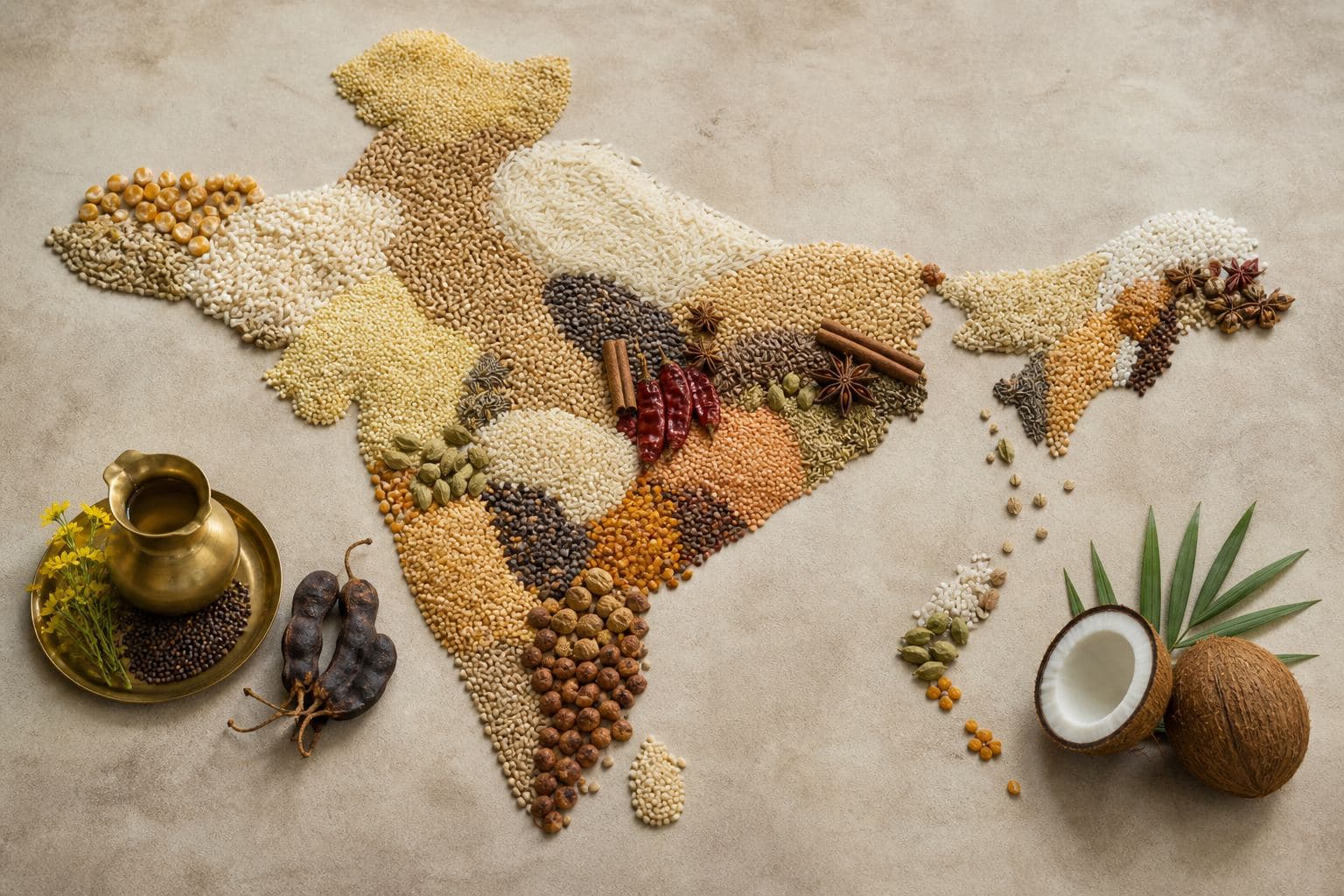
“Indian food” is a useful grocery aisle and a weak cuisine. The country holds dozens of cooking systems shaped by grain, fat, climate, caste and community rules, trade routes, and festival calendars. A Gujarati everyday thali, a Kerala fish curry, a Bengali mustard fish, and a Rajasthani dal baati churma do not share one gravy logic. Treating them as heat levels on a single menu flattens the map before the first bite.
This guide is a working atlas for diners and home cooks. It organizes traditions by broad geography, then names the staple grains, cooking fats, souring agents, heat habits, and aromatics that make each area cook differently. State borders, languages, and food regions do not line up perfectly. Chettinad is not all of Tamil Nadu. Kashmiri Pandit and Kashmiri Muslim tables fork hard. Coastal and inland versions of the same state can disagree about coconut, fish, and millet.
North
Staple grains: wheat for roti, paratha, and naan; basmati rice for pulao and biryani; corn (makki) with winter greens in Punjabi kitchens. Cooking fats: ghee and mustard oil both appear, with ghee louder in restaurant and festival cooking. Sourness: yogurt, dried mango (amchur), pomegranate seed (anardana), tomato in newer restaurant gravies. Heat: Kashmiri chilli for color, hotter powders and green chilli for punch. Key aromatics: cumin, coriander, garam masala whole spices (cardamom, clove, cinnamon), kasuri methi in Punjabi restaurant food, fennel and dried ginger in Kashmiri paths.
Representative dishes: sarson da saag and makki di roti; dal makhani and butter chicken as Delhi restaurant inventions with Punjabi refugee roots; Awadhi galouti kebab and dum biryani; Kashmiri rogan josh and dum aloo; Rajasthani dal baati churma, gatte ki sabzi, and laal maas; Himachali chana madra and siddu. Meat, vegetarian, and festival lanes all matter. Read more: The Punjabi Table, What “North Indian” on a Restaurant Menu Is Hiding, Oudh 1722.
South
Staple grains: rice first, including fermented batters for idli, dosa, and appam; millets in many older and revived plates. Cooking fats: coconut oil on the Kerala and coastal belt; gingelly (sesame) and groundnut oils inland; ghee for festival and restaurant finishes. Sourness: tamarind, kokum, buttermilk, raw mango, tomato. Heat: black pepper in Chettinad, dried red chilli and green chilli across Tamil, Andhra, and Telugu kitchens, Byadagi color in Karnataka. Key aromatics: mustard seed, curry leaf, asafoetida, urad and chana dal in tempering, coconut, shallot, fennel in some Chettinad blends.
Representative dishes: Tamil sambar, rasam, and poriyal; Chettinad pepper chicken; Kerala fish curry with matta rice and appam; Hyderabadi dum biryani and baghara baingan; Andhra and Telugu pulihora, gongura, and gunpowder dosas; Udupi vegetarian thalis; Mangalorean and coastal Karnataka fish curries with kokum or tamarind. Christian, Hindu, and Muslim southern kitchens do not cook the same pork, beef, and feast rules. Read more: Tamil Table, Kerala Table, Dosa Counter Ordering Guide.
East
Staple grains: rice as the daily center; flattened rice and other breakfast forms around it. Cooking fats: mustard oil is the signature, used raw as a finish and cooked as a base. Sourness: mustard paste, fermented elements, lemon, raw mango, tomato. Heat: green chilli and mustard bite more than cream-forward restaurant chilli. Key aromatics: panch phoron (mustard, fenugreek, fennel, nigella, cumin or radhuni), poppy seed (posto), ginger.
Representative dishes: shorshe maach (mustard fish), begun bhaja, dal-bhat, Chingri malai curry in some households, Odia dalma and pakhala in neighboring eastern tables. River fish and vegetarian fasting calendars both shape the week. Read more: Bengali Table and Odia Table.
West
Staple grains: millet and wheat in Rajasthan and parts of Gujarat; rice on the Konkan and Goan coasts; flatbreads and farsan snacks as daily architecture. Cooking fats: groundnut and sesame oils, ghee for sweets and festival food, coconut on the coast. Sourness: kokum, tamarind, yogurt, dried mango, cane vinegar in Goan Catholic cooking. Heat: Kashmiri or Mathania-style color chillies in some Rajasthani meat dishes; green chilli and ginger in Gujarati snacks. Key aromatics: cumin, coriander, mustard, curry leaf on the coast, jaggery as a balancing sweetness in Gujarati cooking.
Representative dishes: Gujarati undhiyu, dhokla, thepla, and thali logic of sweet-sour-spicy balance; Maharashtrian varan-bhaat, misal, and coastal fish; Goan vindaloo and sorpotel in Catholic homes; Rajasthani ker sangri and gatte. Jain and vegetarian rules are especially visible in western restaurant and home maps. Read more: Gujarati Thali Logic.
Northeast
Staple grains: rice across Assam and neighboring states; millets in hill kitchens. Cooking fats: mustard oil is common; smoked and fermented flavors matter as much as fat choice. Sourness: lemon, outenga and other local acid fruits, fermented bamboo, tengas. Heat: fresh and smoked chillies, including Naga chilli traditions that are about aroma and fire rather than cream. Key aromatics: ginger, garlic, sesame, bamboo shoot, alkali preparations such as Assamese khaar.
Representative dishes: Assamese tenga and khar-based dals and vegetables; pork with fermented bamboo in several Naga and neighboring kitchens; smoked meats; sesame chutneys; tea-country snacks. Indigenous and tribal foodways are central here, not a footnote. Diaspora rooms are still rare; KHAAR in Sunnyvale and Aakhol in Hyderabad are useful contemporary examples, not complete stand-ins for seven states.
Central
Staple grains: wheat and rice both appear; bafla and other baked breads in parts of Madhya Pradesh; corn and millet in pockets. Cooking fats: ghee and mustard or groundnut oils by community. Sourness: yogurt, dried mango, tomato. Heat: moderate to high in many meat gravies; tribal and forest kitchens use local greens and flowers more than restaurant chilli scales. Key aromatics: cumin, coriander, garam masala sets, and region-specific foraged ingredients.
Representative dishes: Indori and Bhopali snack cultures; meat and vegetarian court foods in older princely towns; forest and Adivasi ingredients such as mahua in festival and contemporary restaurant projects. Central India is often skipped on diaspora menus; when it appears, it is usually as a special, not a full card. See Most People Only Know Mahua as Liquor. This Festival Puts It on the Plate. for one contemporary bridge.
Beyond India: neighboring South Asian tables
Pakistani BBQ, nihari, and karahi rooms; Bangladeshi and Sylheti restaurant histories in Britain; Sri Lankan hoppers, short eats, and pol sambol; Nepali thakali and sekuwa; Indo-Caribbean roti and curry trails. These are South Asian cuisines with their own maps. Folding them into “Indian food” repeats the same category error at a larger scale. Start with Pakistani BBQ Diaspora Guide, Sri Lankan Short Eats, and Indo-Caribbean Table.
How diaspora menus distort the map
Almost every diaspora menu descends from one template: Punjabi and Mughlai eatery food, scaled through British curry houses and North American buffets. Beyond Butter Chicken covers that history. What matters when you are holding a menu is the list of things the template drops. Mustard oil. Toddy-shop fries. Alkaline Assamese dals. Millet breads. Kokum and raw mango as souring agents. Anything a server would have to explain before you could order it.
Newer rooms are correcting by naming. That is useful only if the kitchen’s technique matches the name. “Chettinad” without freshly ground pepper and spice roasting is a label. “Kerala” without coconut oil, curry leaf, and a souring agent is a mood. Our directory of rooms that name a region tracks the kitchens currently making that bet specific.
Menu terms and rough pronunciation
- Tadka / chaunk / vaghar / thalippu (TAHD-kah): spices bloomed in hot fat.
- Dum (doom): sealed low-heat cooking, often for biryani or slow meat.
- Bhuna (BHOO-nah): cooking until fat separates and the masala looks fried, not boiled.
- Tenga (TEN-gah): Assamese sour fish or sour broths.
- Khaar (khar): Assamese alkaline extract used in dals and vegetables.
- Milagai podi (mill-uh-guy PO-dee): South Indian lentil-chilli spice powder.
- Hopper / appam (HOP-per / UH-pum): fermented bowl-shaped rice pancakes.
- Galouti (guh-LOO-tee): melt-soft Awadhi minced kebab.
- Karahi / kadai (kuh-RAH-hee): wok-like vessel and the dry-ish meat curry cooked in it.
- Sekuwa (SAY-koo-wah): Nepali grilled marinated meat.
- Sadya (SAHD-yah): Kerala feast meal, often on banana leaf.
- Thali (TAH-lee): compartmented plate or the set meal served on it.
FAQ
Is North Indian the same as Mughlai?
No. Mughlai points to courtly imperial kitchen habits, which are one thread inside a much bigger north. North Indian is a loose geography that also holds Punjabi farmhouse cooking, Rajasthani desert food, and Himalayan tables that never ran on cream.
Is South Indian always vegetarian?
No. Udupi rooms and many Tamil Brahmin kitchens are vegetarian-led, which is why so many diaspora South Indian restaurants read that way. Kerala, Andhra, Hyderabadi, Chettinad, and the coastal belt cook fish, chicken, and mutton daily, and some communities cook beef or pork.
Why do restaurant menus still say curry?
Because English needed a catchall and colonial trade supplied one. Plenty of households never use the word for the dishes they actually cook. Ask for the dish name and the region and you will usually get a better answer, and often a better plate.
Where should a beginner start?
Pick one region and learn its fat and its souring agent first. Cook or order one plain staple from it: dal and rice, dosa and sambar, saag and roti. A named table guide will teach you more in a week than a forty-dish buffet.
Further reading
- Why “Indian Food” Is the Wrong Menu Category
- Beyond Butter Chicken: Why South Asian Dining Got Hyper-Regional
- Assamese Sour Fish and Kerala Toddy-Shop Plates: The New Rooms That Name a Region
- What “North Indian” on a Restaurant Menu Is Hiding
- The Banquet: The New Banquet India
- Goldscene: Drāvida maps South Asian cooking in the East Village