
Most People Only Know Mahua as Liquor. This Festival Puts It on the Plate.
Harshita Kakwani’s Forest & Fire wraps in Hyderabad with Central Indian forest cooking, while Wild Harvest shows how food-grade mahua leaves the buffet.
- mahua
- hyderabad
- indigenous
- festival
Forest & Fire, chef Harshita Kakwani’s Central Indian indigenous food festival at Novotel Hyderabad Convention Centre, runs through July 26, 2026. The menu is built from forest and village kitchens she has documented around Pench and neighboring regions: open fire, seasonal greens, grains, and ingredients most city menus still skip. The clearest entry point for diners who do not know the region is mahua.
Mahua (Madhuca longifolia) is a forest flower long used as food and ferment across Central India. Outside those communities it is still mostly talked about as liquor. Kakwani has spent years treating it as pantry material instead: pickles, sweets, ice cream at the festival, and everyday formats that travel beyond a hotel buffet. Coverage of Forest & Fire lists dishes such as mahua mushroom bao, jamun sabzi, Saoji chicken, bamboo bhurji, hay-smoked fish, and mahua ice cream alongside thalis and a short masterclass and bar takeover.
Where the story goes after the buffet
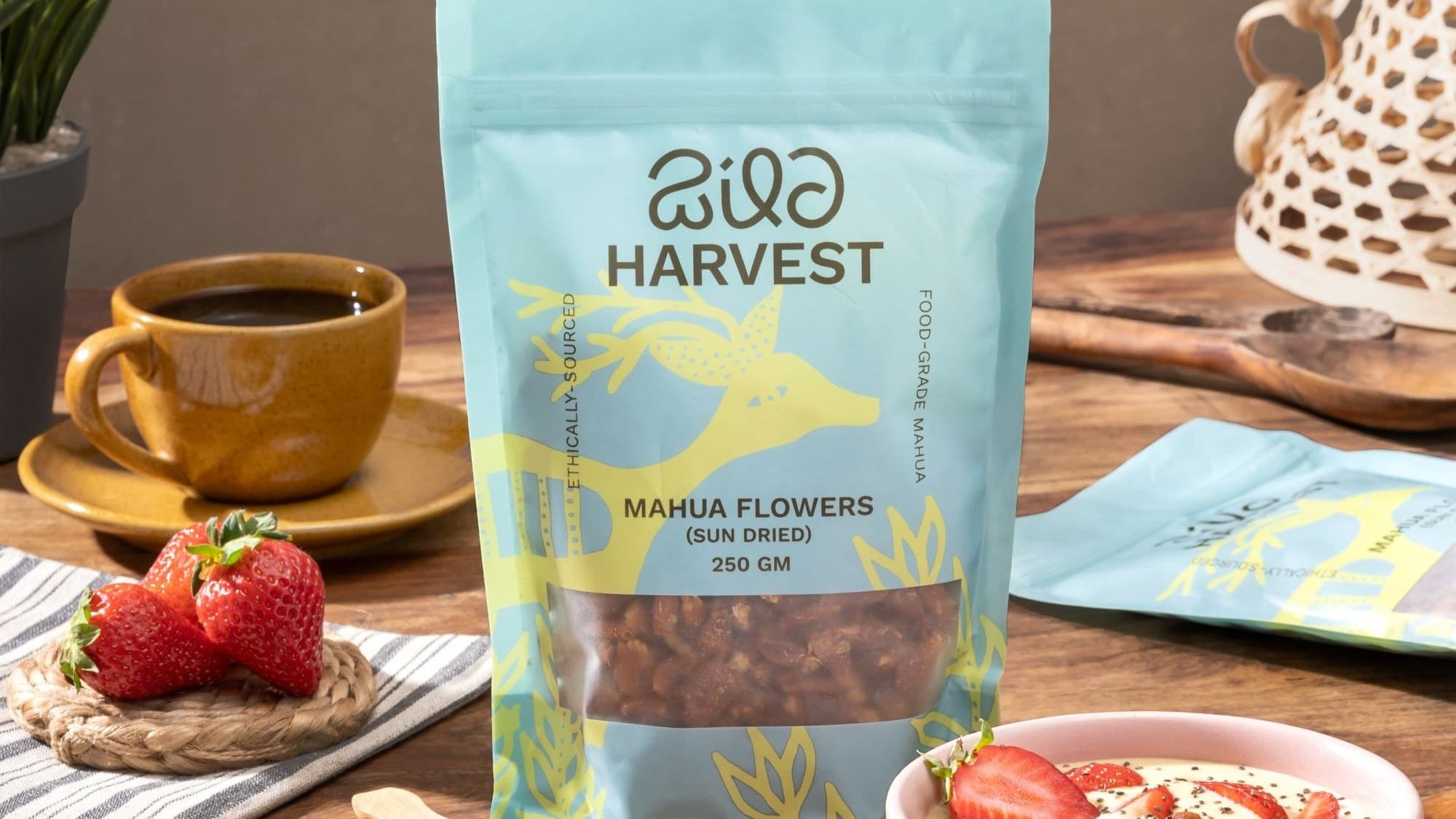
Kakwani’s longer project sits under Prana Superfoods and Earth Song, her Pench-linked work with local processing and indigenous ingredients. She has also worked with Wild Harvest, a food-grade mahua brand that sells sun-dried flowers, syrup, granola, and related products sourced from forest communities, including Jharkhand. That brand path matters for readers who will not make the Novotel window: the festival is a temporary stage; dried flowers and recipes are how mahua leaves the forest calendar and enters a home kitchen without requiring a pop-up reservation.
The useful caution, which Kakwani herself has voiced in earlier interviews, is not to turn one forest ingredient into a depleting trend. Buy from outfits that talk about harvest method and community pay. Taste mahua as food first: chewy, woody-sweet dried flowers over yogurt or in a simple sweet, then decide whether the festival vocabulary (bao, ice cream, taco formats) helps or flattens what you are eating.