
Spice Literacy: How to Read a South Asian Kitchen
Culture, history, region, memory, and taste from pantry to spice box
- spice
- identity
- media
- spice literacy
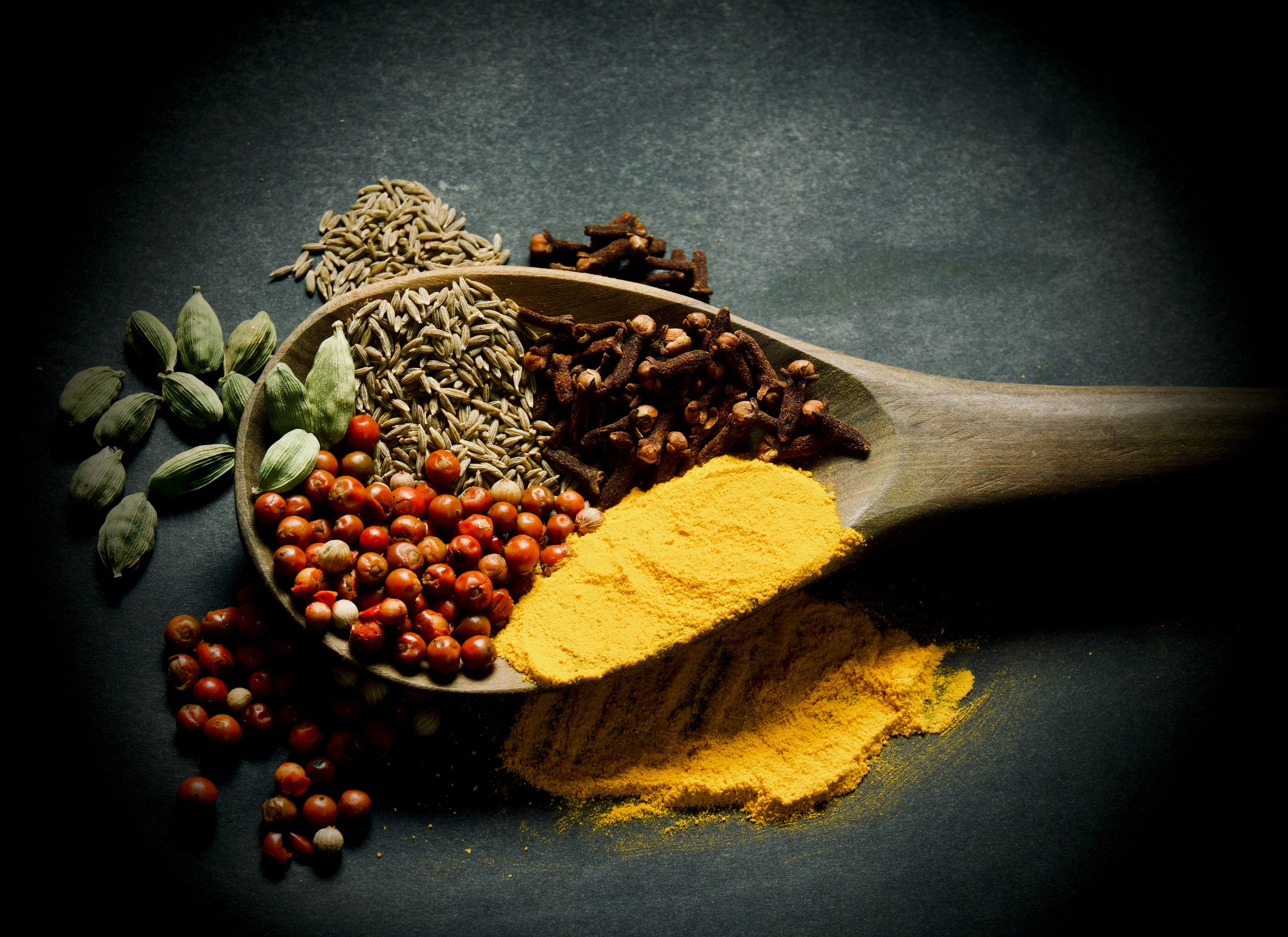
Food media often treats spices as color and heat. With South Asian cuisines as they are portrayed in North America and Europe, and even other parts of Asia, "spices" are just a nondescript way to denote "exotic food." But South Asia is a huge subcontinent, and regional cuisines treat spice literacy as a sort of grammar. You were either born destined for fluency, or you studied it so hard that your grammar is flawless. Spice literacy is one way diaspora cooks keep regions from collapsing into a single "curry powder" story.
Curry powder is not the grammar
In Indian kitchens, cooks reach for masalas — blends built for specific dishes, regions, and households — not a single yellow powder labeled "curry." Food historian Lizzie Collingham has argued that the very idea of "curry" as one category was largely a European imposition on India's food culture: Indians referred to dishes by specific names, while British traders and administrators lumped varied preparations together.
Commercial curry powder emerged in 18th-century Britain as a convenience product — turmeric-forward, shelf-stable, designed to approximate flavors encountered in colonial India without learning regional logic. The first known advertisement for curry powder in England appeared at Sorlie's Perfumery Warehouse on Piccadilly in 1784. Indian merchants sold spice blends to British buyers, but the standardized "curry powder" product was shaped by colonial demand for a single shortcut — not by any one South Asian tradition.
What spice literacy actually means
Spice literacy is knowing why mustard seeds pop in a Tamil tadka but fenugreek bitter first in a Bengali panch phoron. It is knowing that hing replaces allium in many Jain and Brahmin kitchens — not as a trendy substitute, but as centuries of dietary logic. It is knowing that black pepper on the Malabar Coast once moved Roman gold across the Indian Ocean, while turmeric at a North Indian wedding carries ritual weight beyond flavor.
The twenty spices below appear across the subcontinent with different emphasis, order, and meaning. None of them alone defines "South Asian food." Together, they map how culture, history, region, family memory, and taste interlock — from pantry shelf to masala dabba.
Twenty spices that teach you to read the kitchen
1. Cumin (jeera)
Archaeological finds include cumin seeds at ancient Syrian sites; the spice traveled early across trade routes and became foundational in South Asian cooking. India today produces a large share of the world's supply. Whole jeera in hot fat — taarka, chaunk, baghar — is often the first audible signal that cooking has begun. Ground cumin appears in dhana-jeera blends and garam masalas. Culture: the smell of jeera browning in ghee is weeknight dinner memory for millions. Region: North Indian dals lean on it heavily; it's universal but never interchangeable with caraway, despite what some Western recipes suggest.
2. Coriander (dhana)
Coriander seed is the dried fruit of the cilantro plant — citrusy, mild, stabilizing. Fresh cilantro and dried dhana share a plant but not a role: one finishes, the other builds body in gravies. Coriander appears in sambar powder, garam masala, and countless household blends. History: it moved along the same ancient trade networks as cumin and pepper. Taste: it rounds heat and acid; without it, many masalas taste sharp and unfinished.
3. Turmeric (haldi)
Turmeric colors dal, pickles, and marinades; in many Hindu wedding rituals, haldi ceremonies mark the body before marriage — the spice carries auspiciousness, not just pigment. Ayurvedic texts have long classified it among everyday kitchen medicinals. Region: used across the subcontinent, but quantity and timing vary — a Gujarati dal may use less than a Tamil rasam base. Memory: yellow-stained cutting boards and fingers are a diaspora kitchen tell. Note: piperine from black pepper helps absorb curcumin — many traditional combinations already reflect that pairing.
4. Mustard seeds (rai / sarson)
Black mustard seeds pop loudly in hot oil — the sound is part of the recipe. Bengali panch phoron combines mustard with fenugreek, cumin, fennel, and nigella; South Indian tadka often leads with mustard before curry leaves. Mustard oil defines much of Bengali and eastern cooking in ways that neutral oil never could. Region: essential in the east and south; less central in some Punjabi home cooking, though sarson da saag is its own landmark.
5. Dried red chili
Chilies arrived in South Asia after 1492 — they are newcomers that rewrote heat profiles within centuries. Kashmiri chilies prioritize color and mild warmth; Guntur chilies in Andhra Pradesh bring serious capsaicin. Before chilies, pepper and pippali (long pepper) carried heat. Culture: heat tolerance is regional pride and family debate. Taste: whole dried chilies in tadka add aroma; Kashmiri powder adds color without panic.
6. Green cardamom (elaichi)
Green cardamom perfumes biryani, kheer, and masala chai — sweet and savory both. Kerala and Karnataka grow much of India's crop; the Malabar Coast has long been associated with cardamom in trade records alongside pepper. Memory: cracking pods for chai is a morning ritual across regions. Whole pods in rice dishes are meant to be found on the plate — biting one is a lesson you remember.
7. Black pepper (kali mirch)
Indigenous to the Malabar Coast, black pepper drove Indo-Roman trade: Tamil Sangam literature references pepper moving through ports like Muziris; Pliny the Elder complained about Rome's silver flowing east for pepper. Ibn Battuta described Malabar pepper measured by the bushel. History made Kerala the "land of pepper" long before tourism boards. Today it's everyday — but its geography is specific, not generic.
8. Cinnamon (dalchini)
True cinnamon (Ceylon cinnamon) and cassia both appear in South Asian cooking — biryani, pulao, chai masala, some Kashmiri dishes. Mughal-influenced cuisines use whole bark where simpler everyday dals do not. Region: more prominent in festive and meat dishes in the north; southern sambar masalas may include it in small measure. Taste: warm and sweet; easy to overuse.
9. Cloves (laung)
Cloves are unopened flower buds — intensely aromatic, numbing if overdone. They appear in garam masala, biryani, and some pickle brines. Historically traded from the Maluku Islands through Indian Ocean networks; South Asia integrated them into both medicine and feast cooking. Memory: clove in pulao is a holiday signal — one or two, not a handful.
10. Fenugreek (methi)
Bitter when toasted wrong, nutty when handled right. Fenugreek leaves (kasuri methi) finish butter-rich gravies; seeds appear in panch phoron, sambar powder, and pickles. Region: Gujarati theplas, Bengali tempering, Punjabi kadhi — methi shows up differently in each. Taste: bitterness balances richness; diaspora cooks often learn methi last because it punishes impatience.
11. Asafoetida (hing)
Hing is resin from Ferula roots — native to Iran and Afghanistan, not historically cultivated in India until recent CSIR efforts. It appears in the Mahabharata and in medieval texts like the Manasollasa. Jain communities, many Brahmins, and others who avoid root alliums use hing for savory depth. Raw hing smells fierce; cooked in fat it mellows. Culture: Kolkata's hing kachoris, Gujarati dals, Tamil sambar — same spice, different grammars.
12. Curry leaves (karuveppilai)
The curry tree (Bergera koenigii) is native to the subcontinent. Tamil literature references the leaves by the first centuries CE. Fresh leaves sizzled in oil with mustard seeds define South Indian aroma for many diaspora cooks — the smell of home more than any powder. Dried curry leaves are a compromise; fresh is non-negotiable where available. No Western substitute exists.
13. Fennel (saunf)
Sweet, licorice-adjacent fennel seeds appear in Bengali panch phoron, Kashmiri cooking, and post-meal mukhwas across North India. Region: stronger in eastern and northwestern traditions than in typical Tamil everyday tadka. Taste: cooling finish; often confused with anise by newcomers, but the flavor profile in hot oil is distinct.
14. Nigella (kalonji)
Small black seeds with a sharp, onion-adjacent edge. Common in Bengali panch phoron and some North Indian naan toppings; also shows up in pickle masalas. More eastern and bread-adjacent than southern everyday tadka. A baker's kalonji topping is often a specific local memory.
15. Carom / ajwain
Ajwain's thymol-heavy aroma cuts through fried snacks — ajwain paratha, mathri, some pakoras. It's associated with digestion in Ayurvedic home logic. Region: North and West India more than coastal south. Taste: a little goes far; too much reads medicinal.
16. Black cardamom (badi elaichi)
Smoky, camphorous — nothing like green cardamom. Used in meat curries, some dal makhani-style preparations, and robust garam masalas. Region: North Indian and Himalayan-adjacent cooking. Taste: one pod can dominate; green and black cardamom are not interchangeable despite sharing a name.
17. Star anise (chakra phool)
Chinese-origin spice integrated into some Mughal-influenced biryanis and commercial garam masala blends — not ancient South Asian, but now part of certain regional canons. Used sparingly. Marks the difference between a household masala and a restaurant-scale biryani masala in some traditions.
18. Nutmeg and mace (jaiphal / javitri)
Nutmeg and its aril, mace, come from the same fruit — warm, sweet, used in kheer, biryani, and festive sweets. Historian Thomas Zumbroich has traced nutmeg and mace's South Asian roles from mouth fresheners to erotic perfumes in historical texts. Today: special-occasion spices more than daily tadka — their presence signals expense and effort.
19. Amchur (dried mango powder)
Sour without liquid — amchur brightens chaat, chutneys, and dry vegetable masalas across North India. Region: chaat culture, Delhi street food, Punjabi home sabzis. Taste: acid without tomato; essential where tamarind is less common. Memory: amchur on aloo is a specific flavor childhood, not generic "tang."
20. Tamarind (imli)
Tamarind pulp sours sambar, rasam, and chutneys across the south; imli chutney anchors chaat in the north. Literary references to sambar-related preparations appear in Telugu court poetry by the 16th century — sour lentil dishes have deep roots. Region: the south runs on tamarind acid; the north often pairs it with jaggery for balance. Taste: sour backbone — without it, many "South Indian" profiles simply don't exist.
Reading your own dabba
Spice literacy is not memorizing twenty names — it's noticing which slots your household refills fastest, which spices travel in a suitcase from visits home, which ones you substitute when you're tired. The masala dabba is a family document. Slot seven tells the truth.
Start with one region's grammar — a Tamil tadka, a Bengali panch phoron, a Gujarati dhana-jeera — before trying to cook "everything." Buy whole seeds where you can. Toast before grinding when the recipe asks for it. And when a recipe says "curry powder," ask which masala it actually means.