
Building a Masala Dabba That You'll Actually Use
Seven slots, infinite opinions — a practical guide to the spices worth keeping at arm's reach.
- masala dabba
- pantry
- storage
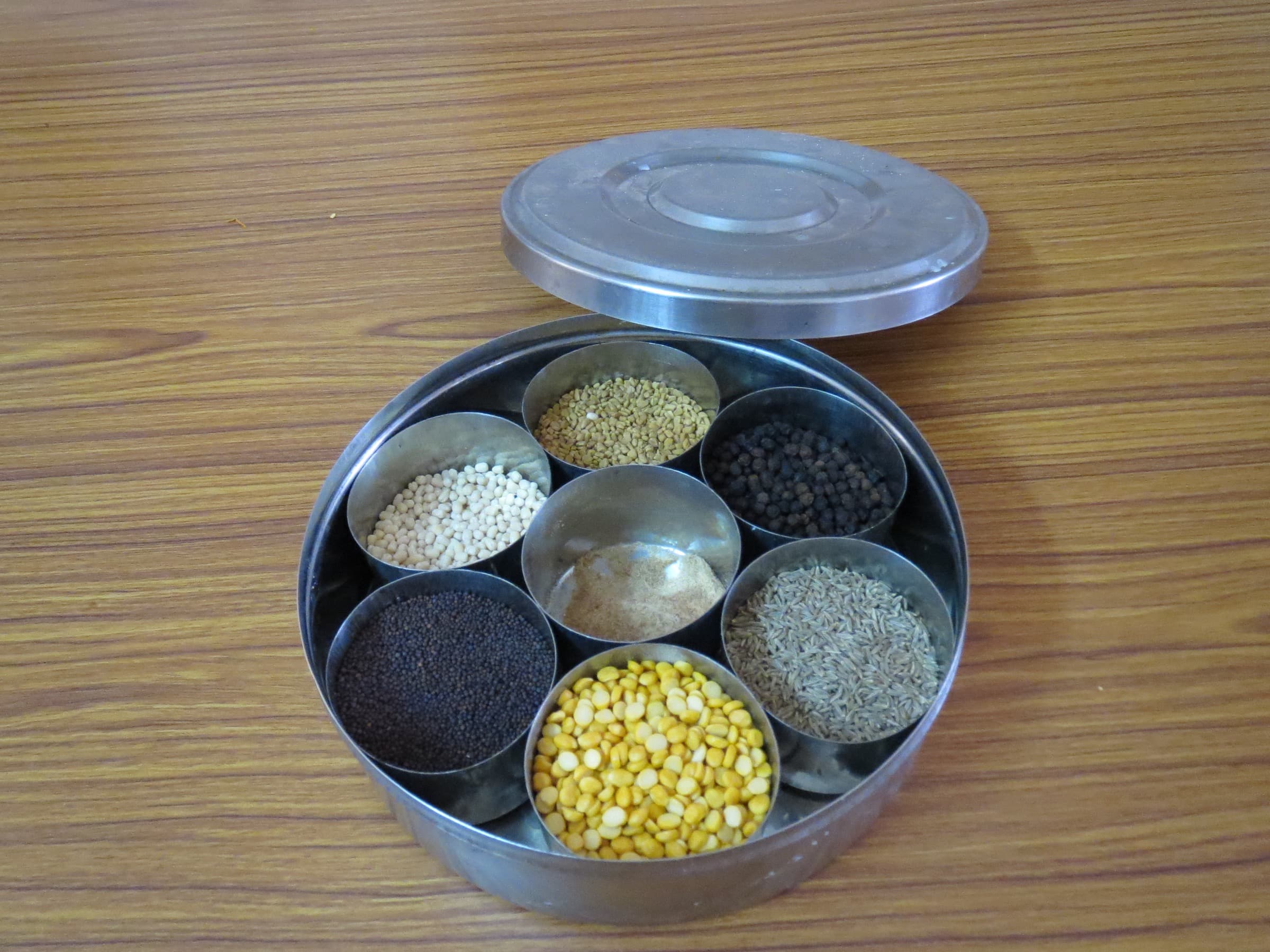
This page is about which spices earn a cup in a seven-slot masala dabba — not where to store the tin. A dabba only helps if it matches how you actually cook. Start with what you reach for weekly, then leave one cup open for the household argument.
A working North Indian weekday set
Many North Indian and diaspora kitchens fill the cups with a mix of tempering seeds and ground powders: cumin seeds, mustard seeds or kalonji, turmeric, red chili powder, coriander powder, and either garam masala or hing. Salt sometimes takes a cup; some cooks keep it separate so humidity does not clump the powders. If you temper with cumin more than mustard, give cumin the easier outer cup.
A Tamil / South Indian tempering set
An anjaraipetti often leans toward whole tadka ingredients more than ground chili and turmeric: mustard seeds, urad dal, chana dal, fenugreek, cumin or pepper, and hing. Curry leaves stay fresh or frozen nearby — they do not live well in a closed cup. Sambar powder or rasam powder may claim a slot if you cook those weekly; otherwise keep the blends in the pantry and leave the dabba for what hits hot oil first.
Gujarati and other household forks
A Gujarati home may prioritize dhana-jeera (coriander-cumin), hing, turmeric, chili, mustard, and a cup for methi or sesame depending on the cook. Bengali kitchens that use panch phoron often keep that blend whole rather than grinding it into the dabba. There is no single correct seven. Two dabbas — one for tempering seeds, one for powders — is a valid diaspora solution when one tin always overflows.
How to choose the seven
- List the last ten meals you cooked. The spices that appeared four or more times belong in the tin.
- Prefer whole seeds for anything you bloom in fat; keep large ground stocks in sealed pantry jars and only park a working scoop in the dabba.
- Give hing its own small lid or a jar if the smell migrates into neighboring cups.
- Leave one flexible slot — kasuri methi, ajwain, sambar powder, amchur — for what your household actually fights over.
- Do not fill cups from a “complete Indian kitchen” checklist you do not cook from.
Sources and further reading
- Chatelaine: A beginner’s guide to the Indian masala box
- Diaspora Co.: The minimalist magic of a masala dabba
- Wikimedia Commons: Anjaraipetti2.jpg