
What Is Tadka?
A practical guide to tempering — choosing fat, ordering ingredients, reading heat, and knowing when to pour.
- tadka
- technique
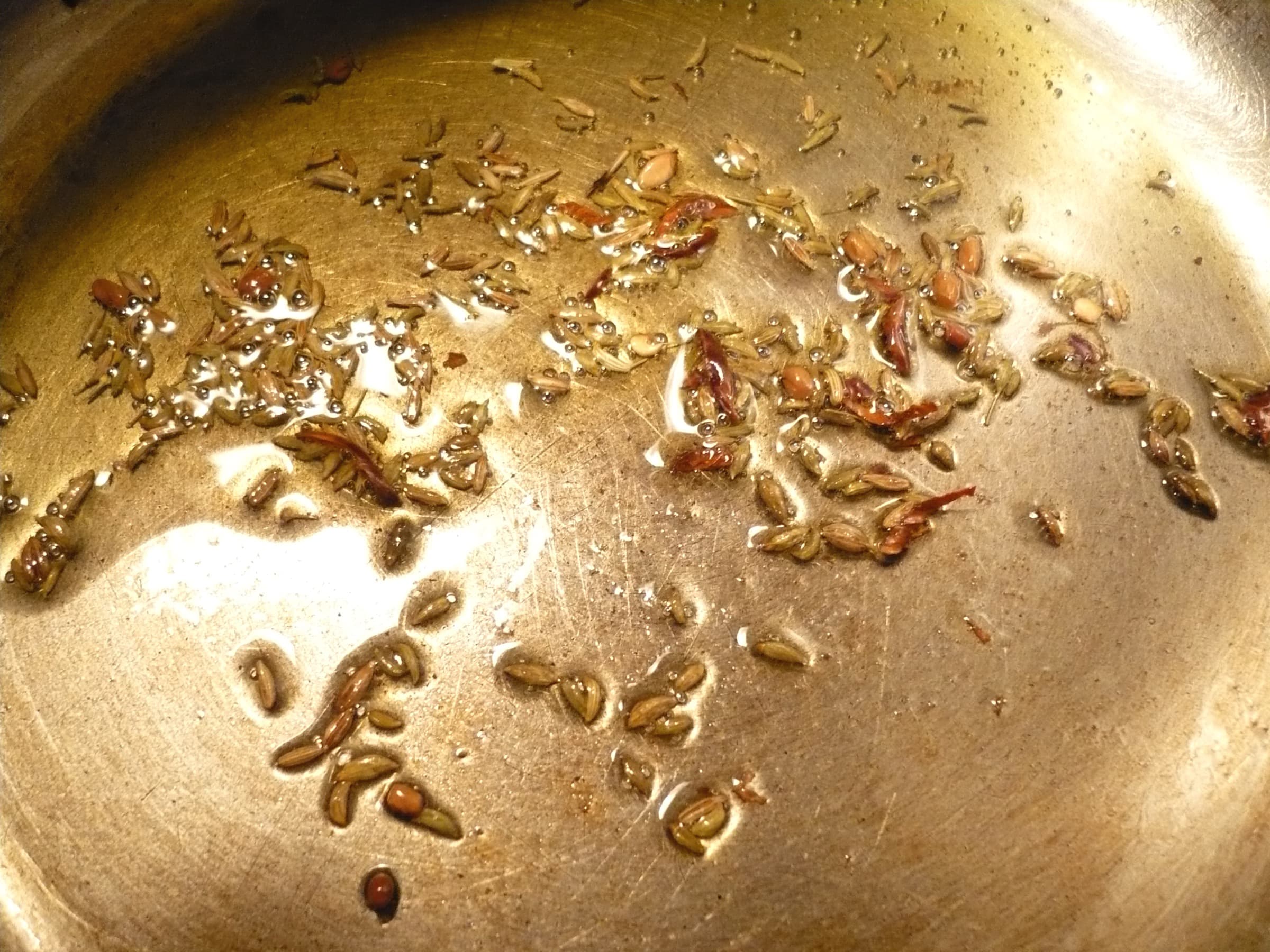
Tadka is a way of moving flavor from spices and aromatics into fat, then carrying that seasoned fat through a dish. It may be the first step in the cooking pot or a separate finishing pour over dal, kadhi, rasam, chutney, rice, or yogurt. This guide is about reading that short process: choosing the fat, ordering the ingredients, and stopping before fragrance becomes bitterness.
One technique, many names
Tadka is a convenient umbrella term, but South Asian kitchens name the technique in their own languages. You may hear chaunk or chhonk in Hindi-speaking homes, baghaar or tarka in Urdu, vaghar in Gujarati, phodni in Marathi, phoron in Bengali, thalippu in Tamil, popu or talimpu in Telugu, and oggarane in Kannada. In Nepal, jhaneko describes the finishing action used for dishes such as dal. Spellings and usage shift by region and household, so these words should not be treated as labels for one fixed spice mixture.
The names often point to sound or action: crackling, bursting, seasoning, or pouring over. That is more useful than trying to give the technique one birthplace. Heated fats and spices have a long history across the subcontinent, while the tadkas cooked now also contain ingredients that arrived later. Dried chillies, now central to many versions, entered South Asian foodways after the Columbian exchange.
What hot fat changes
Many aroma compounds in spices dissolve more readily in fat than in water. Heat helps release them from the spice, while the fat distributes them beyond the few seeds visible in the pan. Cumin contributes compounds including cuminaldehyde and terpenes; curry leaves carry citrusy, green, and sulfurous odorants; chilli gives the oil both capsaicin and red-orange pigments. Heating also changes some compounds and creates toasted aromas. The useful window is brief because those same volatile molecules can escape or degrade when the pan stays hot for too long.
Mustard seeds provide the clearest physical cue. Moisture inside the seed turns to steam in hot oil, building pressure until the seed coat ruptures and the seed jumps. Popping confirms that the oil is hot enough; once it becomes steady, add the next ingredient before the seeds scorch. Cumin is quieter: it sizzles, moves in the pan, smells warmer, and darkens by roughly one shade. Cumin should not blacken, while mustard should pop without smelling acrid.
A foundation or a finish
An opening tadka seasons the cooking fat before the main ingredients arrive. Whole spices bloom first; onion, ginger, garlic, vegetables, rice, or another substantial ingredient follows and cools the pan. The flavor becomes integrated as the dish cooks. This approach is common in vegetable preparations, rice dishes, upma, and many curries.
A finishing tadka is made separately and poured over food that is already cooked. Its aroma remains closer to the surface because it is not simmered for long afterward. Dal, rasam, kadhi, raita, and coconut chutney may be finished this way. Some dishes use both stages: an early seasoning for depth and a smaller final pour for fresh aroma. The double treatment is a choice tied to the dish, not a requirement for a better tadka.
Choose the fat as part of the seasoning
Ghee brings a nutty dairy aroma and is common in many northern dals and finishing baghaars. Mustard oil contributes its own sharpness in Bengali, Odia, Bihari, and other eastern cooking. Coconut oil belongs naturally with many Kerala and Sri Lankan preparations. Sesame oil, groundnut oil, and neutral vegetable oils have their own regional and household uses. A neutral oil will work when needed, but it will change the character of dishes that rely on mustard, coconut, or sesame oil.
Fresh fat matters more than chasing the highest possible heat. A useful tadka range is often around 163–180°C (325–350°F), but a thermometer is optional. The fat should shimmer, and one test seed should sizzle promptly. For most fats, visible smoke means the pan is too hot. Some recipes deliberately bring pungent mustard oil briefly to its first smoke, then cool it slightly before adding spices. Avoid oil that smells rancid, looks dark or murky, foams, or smokes unusually early.
Order follows burn time
Measure everything before heating the pan. Once the first seed goes in, the sequence may take less than a minute. The recipe decides the exact order, but this working pattern explains why ingredients move when they do:
- Start with sturdy whole spices that need direct contact with the hottest fat. Mustard should pop; cumin, fennel, nigella, or ajwain should sizzle and become fragrant.
- If the tadka includes chana dal or urad dal for crunch, fry until golden rather than brown. Chana dal generally needs a little longer than urad dal.
- Fresh aromatics such as sliced garlic, ginger, or shallot need enough time to lose rawness, but garlic can cross from gold to bitter quickly.
- Add whole dried chillies, carefully dried curry leaves, and green chilli close to the end. They cook quickly; fresh leaves and chillies may spit oil.
- Hing and ground spices need only residual or reduced heat. Chilli powder is often stirred in after the pan comes off the flame, immediately before pouring.
How regional temperings read differently
Regional identity appears in the combination of fat, spices, and destination dish—not in a single nationwide formula. These examples are reference points, with variation expected between households:
- A North Indian dal finish may use ghee, cumin, sliced garlic, dried red chilli, hing, and chilli powder added off heat. Mustard seed and curry leaf are not automatic additions.
- Tamil thalippu often begins with mustard, then may add chana dal or urad dal, dried chilli, curry leaves, and perungayam (hing). In a chutney or vegetable dish, the fried lentils contribute deliberate crunch.
- Bengali phoron may use panch phoron in mustard oil. Common mixtures include fennel, fenugreek, nigella, mustard, and either cumin or radhuni; the blend is kept whole, and some cooks reduce the fenugreek because it bitters quickly.
- Gujarati vaghar changes with the dish. Dal and kadhi may use cumin, mustard, hing, curry leaves, dried chilli, cloves, or cinnamon in ghee or groundnut oil; handvo and dhokla can bring sesame into the tempering.
- Nepali jhaneko dal may finish with ghee or mustard oil, cumin or fenugreek, garlic, dried chilli, hing, and jimbu, a dried Himalayan allium whose aroma is released in the hot fat.
- Sri Lankan tempering often works in coconut oil with mustard, curry leaves, onion or shallot, chilli, garlic, and sometimes pandan, cinnamon, or fenugreek. The onions may cook longer than they would in a quick seed-only tadka.
A starter tadka for cooked dal
For about four servings of plain cooked dal, use this as an editorial starting ratio: 1½ tablespoons ghee or oil, ½ teaspoon cumin or mustard seed, one dried chilli, and a small pinch of compounded hing. Optional additions include two thinly sliced garlic cloves or a few curry leaves, depending on the dal and regional direction.
- Warm the dal and adjust its salt and consistency before starting.
- Heat the fat in a small, deep pan over medium heat. Test with one seed; it should sizzle at once.
- Add the remaining seed. Let mustard pop, or let cumin darken slightly and smell toasted.
- Add any sliced garlic and cook until pale gold. Add the dried chilli and any patted-dry curry leaves; let them crackle for a few seconds.
- Add hing for a few seconds. If using chilli powder, remove the pan from the heat before stirring it in.
- Pour immediately over the dal from close range, angling the pan away from your face. Stir for even flavor or leave some tadka visible on top.
Troubleshooting the pan
- Seeds sit quietly: the fat is too cool. Raise the heat briefly rather than leaving them to soak.
- Mustard seeds launch violently or the fat smokes: move the pan off the flame and lower the heat before continuing.
- The tadka tastes bitter: cumin, fenugreek, garlic, hing, or powdered chilli probably scorched. Discard the small batch and begin again; burnt oil cannot be repaired with more spice.
- The flavor seems dusty or raw: ground spice did not get enough contact with warm fat, or too much was added after the pan cooled.
- The aroma disappears into the dish: a finishing tadka may have simmered too long. Pour closer to serving and cover the pot briefly if you want to retain more aroma.
Work safely with hot fat
A small saucepan with high sides is safer than a shallow spoon when you are learning. Dry the pan, spoon, curry leaves, chillies, and other fresh ingredients well; water flashes into steam and throws oil. Keep a lid nearby for popping mustard and never pour water onto an oil fire. When adding a finished tadka to a liquid dish, pour close to the surface and away from yourself.
Sources and further reading
Technique and food-science references include Nik Sharma's guide to tadka, America's Test Kitchen on blooming spices in fat, research on the aroma compounds of curry leaves, and high-speed research on why mustard seeds pop. Historical context comes from the Indian Journal of History of Science on capsicum in India. Regional references include Bong Eats' Bengali panch phoron, Jyoti Pathak's Taste of Nepal, and Cynthia Shanmugalingam's Sri Lankan cookbook Rambutan.