
Asafoetida (Hing): The Savory Substitute
Resin that traveled into South Asian kitchens — how hing replaced allium logic without becoming "just funk."
- hing
- asafoetida
- tadka
- fundamentals
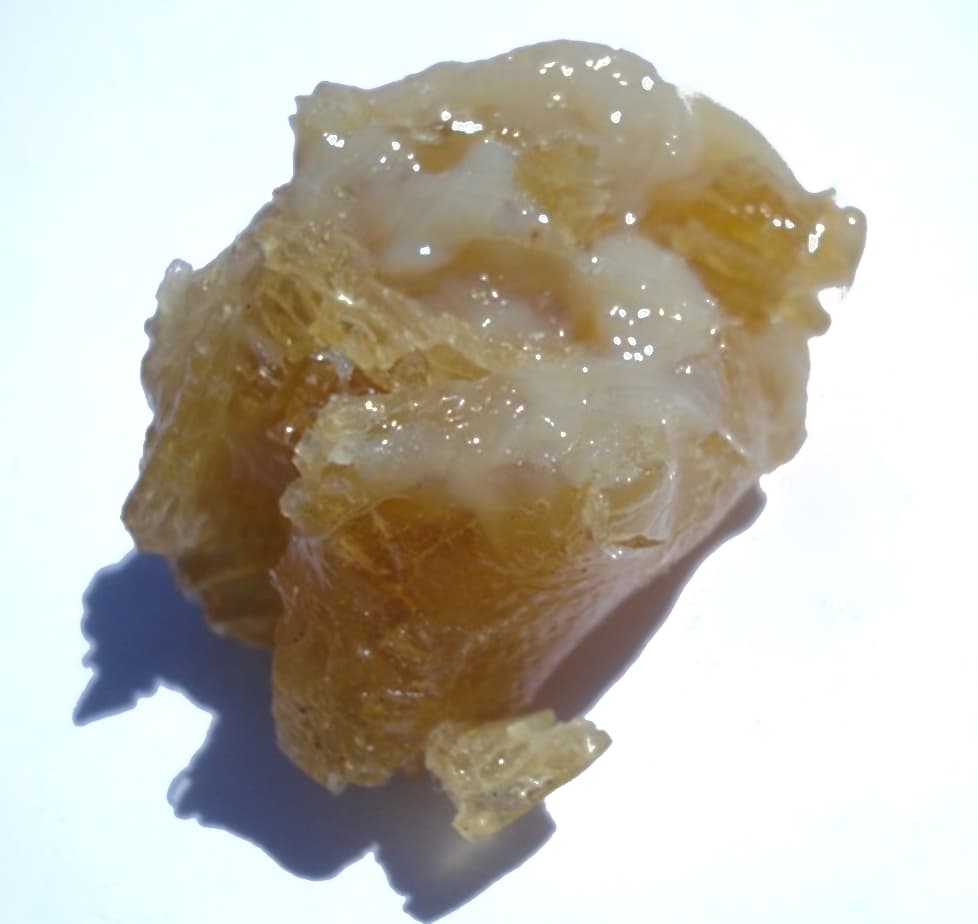
Asafoetida, or hing, is an oleo-gum-resin collected from Ferula plants, especially species native to the dry highlands of Iran and Afghanistan. A mature plant is cut at the crown of its thick taproot; the milky latex that seeps out is scraped away, then the root is cut again. Repeated collections harden into the tan or reddish-brown resin traded as hing.
An imported spice with a South Asian home
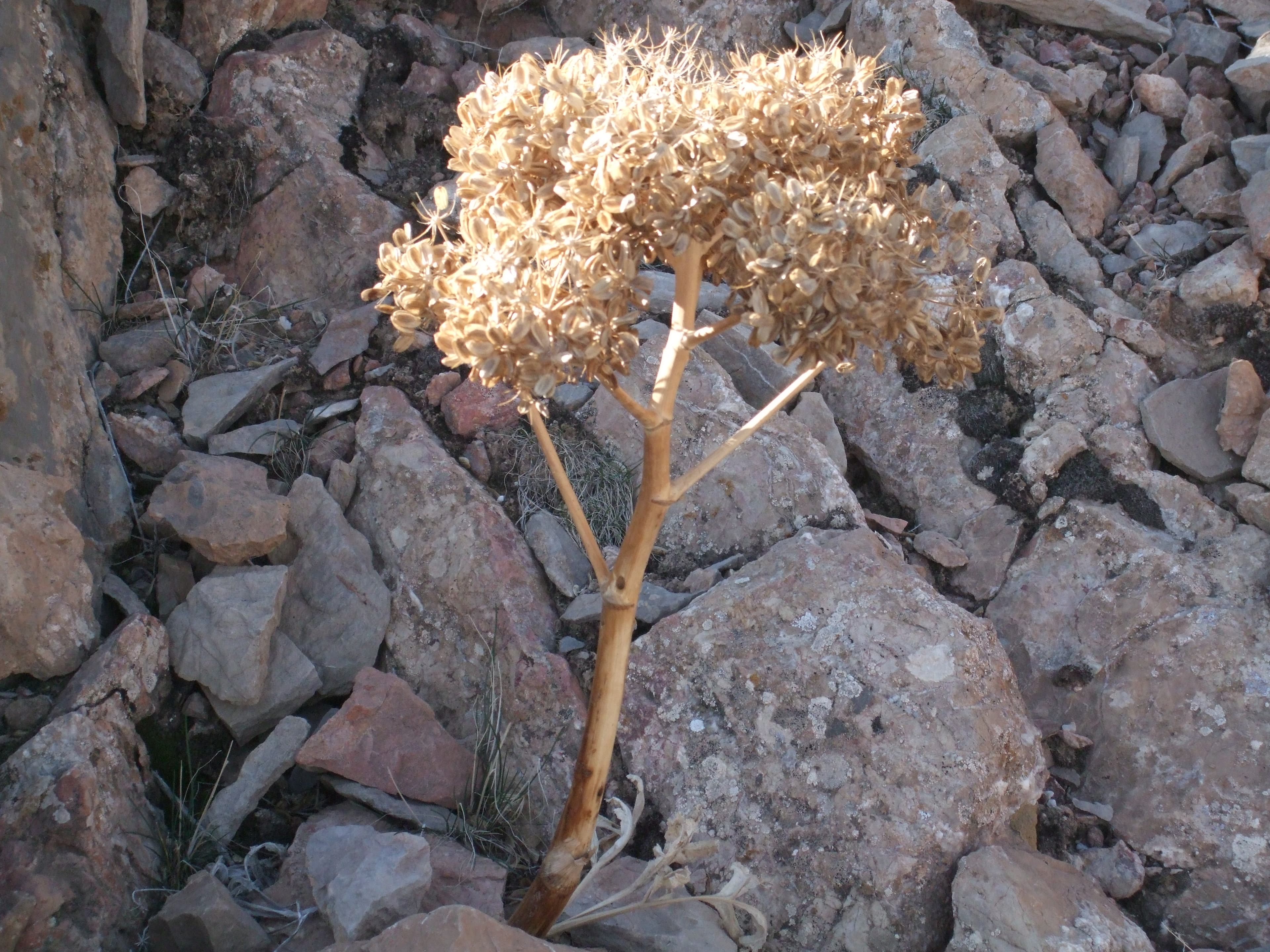
The plant was not historically cultivated at scale in India, even though India became its largest culinary market. Crude resin came through trade with Afghanistan, Iran, and Central Asia. In 2020, CSIR-IHBT began a modern Indian cultivation trial in Kwaring village in Himachal Pradesh's Lahaul Valley, using Ferula seed imported from Iran. The location matters: the plant needs a cold, dry climate and takes roughly four to five years to build the taproot from which resin can be collected.
That history is visible in Kolkata, where nineteenth-century Afghan traders known as kabuliwalas sold hing alongside dried fruit and attar. Hinger kochuri — fried bread filled with a spiced lentil mixture in which hing is the defining aroma — gives the imported resin a distinctly Bengali form.
What it does in the pan
Uncooked hing smells sulfurous and can seem medicinal. Its volatile fraction contains organosulfur compounds, including 2-butyl-1-propenyl disulfide, that register in the same broad aromatic family as onion and garlic. A brief bloom in fat disperses those compounds through the dish and changes the impression from sharp to rounded, onion-like, and savory. Hing is not a literal garlic replacement: it supplies background depth rather than garlic's sweetness, texture, or roasted flavor.
This made hing particularly useful in cuisines shaped by restrictions on alliums. Many Jain cooks avoid onion and garlic because they grow underground and harvesting them uproots the whole plant, in tension with the principle of ahimsa. Some Brahmin traditions have treated alliums differently for ritual or dietary reasons. The details are not interchangeable: Tamil Brahmin cooking may use hing in paruppu, rasam, sambar, and vegetable preparations; Kashmiri Pandit cooking pairs it with dried ginger and fennel in gravies that may include meat; Bengali niramish cooking uses it in selected dals, potato dishes, and kochuri fillings.
Resin, compounded hing, and the label
Most supermarket tins contain compounded hing, also called bandhani hing: resin blended with edible starch or cereal flour and gum arabic. Compounding makes the sticky, extremely concentrated resin easier to grind, measure, and distribute evenly. Formulas vary, so two brands can differ noticeably in strength. Check the ingredient list if you avoid gluten; some blends use wheat flour, while others use rice flour.
Solid or lumpy resin is much more concentrated. Some cooks dissolve a tiny piece in warm water before adding it; others keep it in a separate jar because its aroma travels through cupboards. Compounded powder is the practical everyday choice. Keep either form tightly sealed, dry, and away from tea, coffee, and other ingredients that readily absorb odors.
How to use it without taking over
- For a pot serving four, start with about 1/16 to 1/8 teaspoon of compounded hing. Resin requires much less — a fragment, not a spoonful.
- Add powdered hing after whole seeds have begun to crackle but before wet ingredients go in. Give it only a few seconds in hot ghee or oil; scorched hing turns bitter.
- In Gujarati dal, hing often enters a mustard-cumin tadka that sits against the dal's sweet-sour seasoning.
- In Tamil sambar and rasam, perungayam may be added to the simmering pot, the final mustard-seed tempering, or both; household method and product strength vary.
- In chana, rajma, or urad preparations, a small pinch adds savory depth, but it does not replace the body and sweetness of browned onion.
Sources and further reading
This guide draws on a phytochemical review of Ferula asafoetida, Sharmila Vaidyanathan's culinary-history paper for the Oxford Symposium on Food and Cookery, the Indian government's CSIR-IHBT cultivation record, and NIFTEM's processing guide to compounded asafoetida.