
Soak the Basmati, Then Use Less Water
Soaked basmati in a covered pot starts near 1½ cups of water per cup of rice. The mark in a rice cooker uses a smaller cup. A knuckle of water assumes the rice is still dry.
- basmati
- rice
- technique
- fundamentals
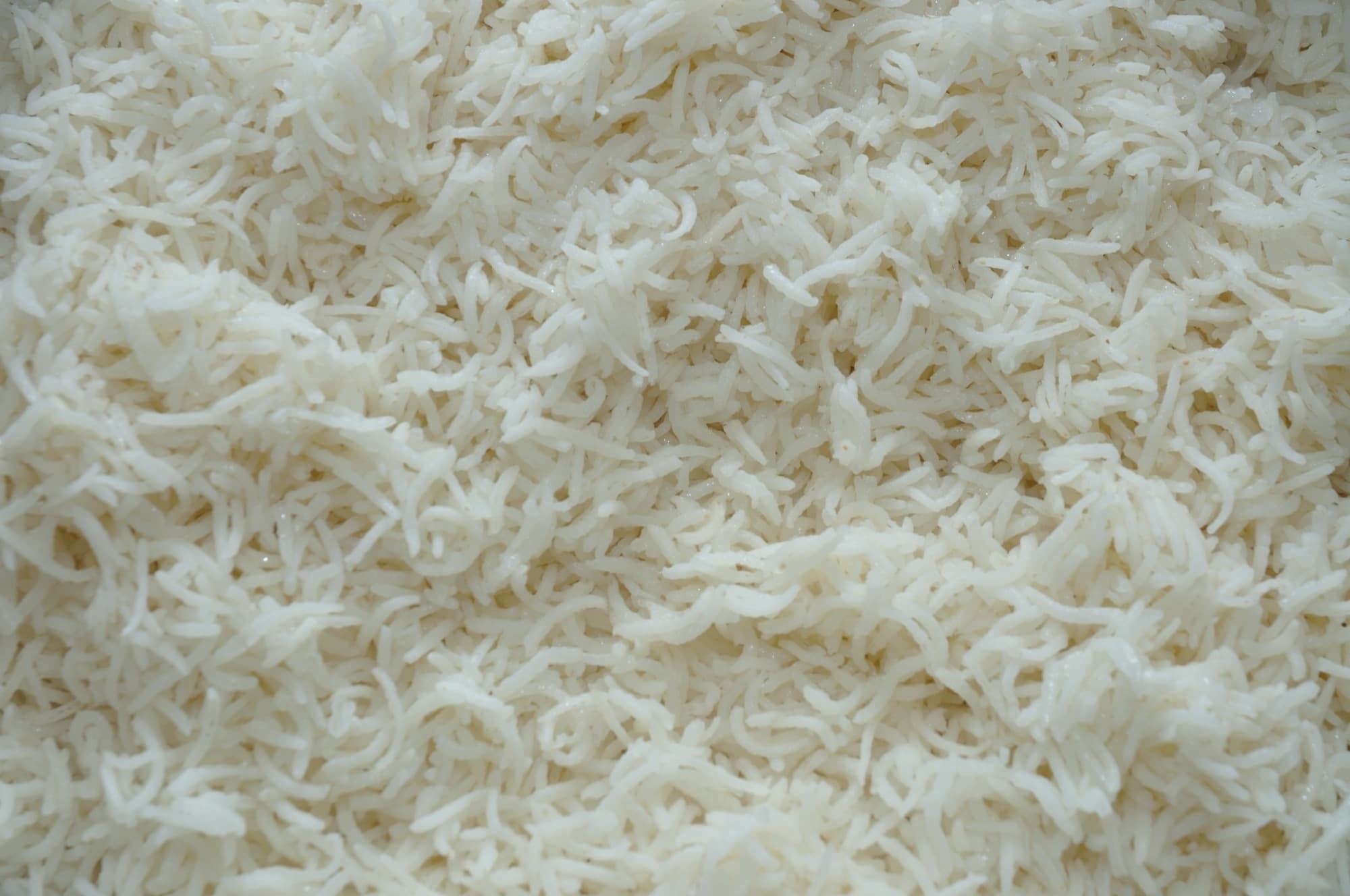
The bottom of the pot is wet and the top is still firm. That is what happens when you measure water for dry rice, then cook rice that has been sitting in a bowl. The line in a cooker was drawn for the dry grain. So was a knuckle of water.
Cover the pot when you want the cumin to stay in the rice. You live with the water you poured. Boil it in a big pot when the bag is new, so you can fish out a grain and pour the rest away. How long you soaked, how tightly the lid fits, and how old the rice is will push you one way or the other.
Rinse, soak, and shake it dry
Swirl the rice in cold water and pour it off. A few changes are enough, until the water is only faintly cloudy. Keep rubbing and the tips break. Those bits cook into paste and glue the rest of the pot.
Let raw basmati sit for 20 to 30 minutes. A dry grain takes water from the outside in, so the outside can be done while the center is still hard, and the grain splits instead of getting longer. A soak gets ahead of that. Drain it and shake the colander hard. Water still clinging to the rice is water you never counted. Leave the rice for hours, though, and the grains go soft and burst as soon as they hit the boil.
Look at the bag for the word sella. That is parboiled basmati, steamed before it is milled. The grain is firmer, and often a little yellow. It wants a longer soak, and more water, than the amounts below. If the bag never says sella, cook it as raw.
You bought this rice because the grain grows in the pot. In India, a variety has to cook to at least 1.7 times its raw length before it can be called basmati. Older rice in the cupboard drinks more water and breaks less. Rice milled recently goes soft on you, so soak it a little less and hold back a few tablespoons. A lot of water that splits the grains is working against the length.
Keep the lid on
This is the pot for Jeera Rice, and for plain rice next to dal. The water you add is the water you eat, so the salt and the cumin stay. A tejpat leaf can go in with them. It is the dried leaf that smells of cinnamon and clove. Pull it out before you serve. If the shop jar only says bay, Tejpat and Bay Leaf Are Not the Same Leaf will sort it.
Aged raw basmati, soaked and shaken dry, wants about 1½ cups of water for each cup of rice. Skip the soak and start closer to 2 cups. The jeera rice recipe is that ratio in a real pot: 1½ cups of rice, 2¼ cups of water if you soaked, about 3 cups if you did not. Salt the water now. Once the grain has drunk it, salt scattered on top will sit there.
A tight lid lets less steam escape, and the rice can finish wet. Next time, take a couple of tablespoons off. Some lids fit so well that the pot settles near 1¼ cups of water per cup of soaked rice. You find that by cooking the bag, a spoon or two at a time. A thin pot, or a lid that rattles, loses steam the other way. Add a splash.
Bring it to a boil, cover, and turn the heat down. Soaked rice often needs 12 to 15 minutes. Leave the lid alone. The bottom stays wetter than the top until the steam has had time to even them. Off the heat, lid still on, 8 to 10 minutes. Then fluff once with a fork. A spoon mashes the grains and smears the starch you rinsed off.
Boil it when the bag is new
Use a large pot and at least 6 cups of water for each cup of rice. Salt it until a spoonful tastes seasoned. You are about to pour that water away, and the grain has to take its salt first. Boil uncovered. Taste a soaked grain around 5 minutes, an unsoaked one around 8. The center should give, with no chalky bit left, and the grain should still hold its shape. Drain, and do not rinse. A rinse now cools the rice and washes the salt off. Set the colander on the empty pot, or tip the rice back in with the lid cracked, and give it a few minutes. The surface dries in its own steam.
Some of the smell goes down the drain with the starch. What you get is separate grains, including from a bag you have never cooked, because you stopped when the grain was ready.
For biryani, stop sooner, while the center is still a little firm. The covered pot finishes the rice. That seal is Dum: Seal the Pot and Let Steam Finish the Dish. Once the same rice is on a restaurant menu, How to Order Biryani When the Menu Just Says Biryani is the plate-by-plate version.
The line, and the knuckle
The cup that lives in the rice-cooker drawer is usually 180 milliliters. A US measuring cup is 240. The lines in the pot were drawn for the smaller one. Scoop two of your kitchen cups of rice, fill to the line marked 2, and there is more rice in there than the line was expecting. The water looks correct and comes up short.
Those lines also assume ordinary white rice that never sat in a bowl. Soaked basmati wants less water than that, even with the right cup. If the cooker has a basmati or long-grain mark, use it, and drain the rice well first. If the only mark is the white-rice line, leave it alone and measure the covered-pot ratio above. Same cup for the rice and the water.
A knuckle measures a height, not a volume. You set a fingertip on the rice and fill to the first crease. On dry rice, the water hiding between the grains is about what they will absorb, and the water above them is there to turn into steam. That extra height suits a pot about 8 inches across. The same finger in a wider pot pours a much deeper puddle. Two hands will not even agree on where the crease is. Soak the rice for half an hour and it has already drunk part of the water your finger is adding. In the narrow pot where you learned the trick, on dry rice, it can be right. In a wide pot of soaked basmati, it drowns the grain.