
Tejpat and Bay Leaf Are Not the Same Leaf
Tejpat smells of cinnamon and clove and goes in the rice. Bay is herbal and belongs in a stew.
- tejpat
- bay-leaf
- biryani
- spice-literacy
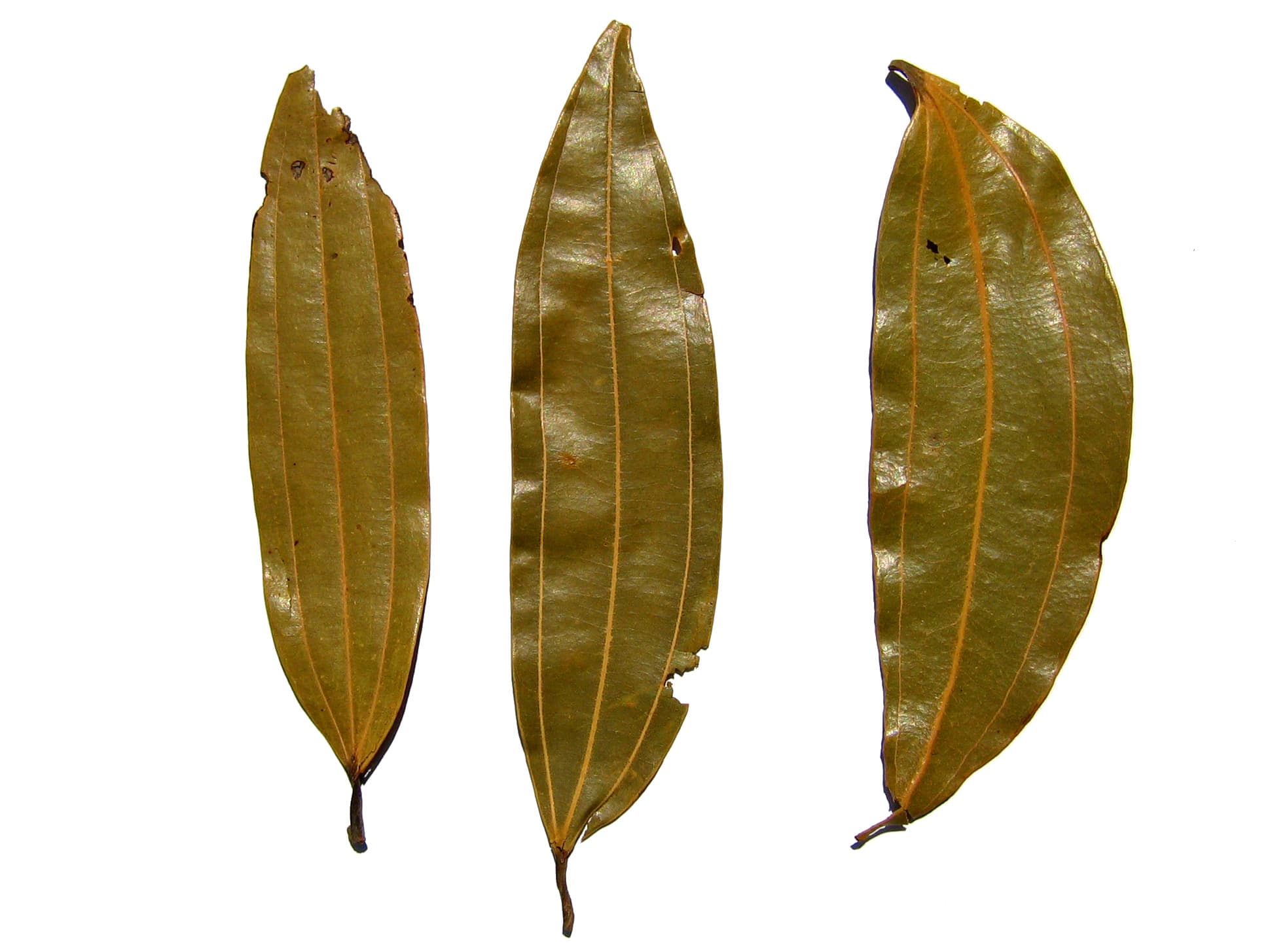
Most biryani recipes just say bay leaf. Reach for the small herbal one in the stew jar and the rice smells like soup. That line means tejpat, the dried leaf of a cinnamon tree from the Himalayas and Northeast India.
This page is for telling the two apart in your hand, and for knowing which pot gets which.
Three veins, then the smell
Tejpat comes from Cinnamomum tamala, a cinnamon-family tree. The dried leaf is large and olive-brown. Three long veins run from the stem toward the tip. Crush a corner and you should get clove, cinnamon, and a little dried citrus. Mediterranean bay, Laurus nobilis, is smaller, with one midrib and side veins like a feather. It smells greener and more herbal, the leaf you already know from soup. A packet that only says bay leaf can be either plant. For rice and a North Indian meat pot, look for the three veins.
At an Indian grocer the bag usually says tejpat or tejpatta. In a Bengali shop it is tejpata. Some Marathi shops call the leaf darchini, which is also a name for cinnamon bark, so smell it before you trust the word. Spices Board of India, the export spice agency, places the trees through the Himalayas and the Northeast, and also in Nepal, Bangladesh, and Myanmar. Leaves are picked from about October into March, once a tree is about ten years old. A healthy tree can keep giving for decades. A packet from this season should still smell sweet and woody. If it smells like paper, it is tired. Keep the bag airtight, cool, and dark. Whole leaves hold their smell longer than a crumbled jar.
Which pot gets the leaf
Warm a spoon of ghee or oil and drop in one or two whole leaves with the other whole spices, early enough that the fat picks them up. A few seconds is enough. Then the onion. If the leaf blackens, it turns bitter. Biryani and pulao can take the leaf in that base, or laid in with the rice so the steam carries it. Korma, rajma, and chole work the same way. Fish the leaves out before you serve, so nobody bites into one.
Bengali cooks reach for tejpata on ordinary days: in the mustard oil for a fish jhol, often with cumin, and in a slow meat kosha with cardamom, clove, and cinnamon. Two mild leaves are enough for a family batch. A handful turns woody.
Mediterranean bay belongs in a European stew or a stock. In biryani it stays herbal, and the sweet woody smell never arrives. If it is the only leaf in the house, use one and expect that greener taste. Curry leaf is a different plant, the one that crackles in a southern tadka. Cinnamon bark is the cousin for chai and garam masala. Use the stick when you want sweet wood in a cup, and the leaf when a long pot needs perfume. Some blends grind a little tejpat into the masala. Most home cooks still keep the leaves whole.
A California bay from a yard tree is louder and more medicinal. Leave it out of the rice. A bag marked Indonesian bay, or daun salam, is a different leaf again, milder and a little sour, for a Javanese stew. Keep that one out of the biryani too.
Tonight, crush a corner of the leaf in the store. If it smells sweet and woody, buy a small bag and put one leaf into the rice or the dal. The short card is Tejpat (Indian Bay Leaf). The bark is Cinnamon / Cassia (Dalchini). The southern tadka leaf is Curry Leaf (Karuveppilai).