
Ajwain and Kalonji Are Not the Same Seed
Carom is thyme-hot and belongs in dough. Kalonji is onion-pepper and belongs on bread. English labels keep swapping their names.
- ajwain
- kalonji
- nigella
- carom
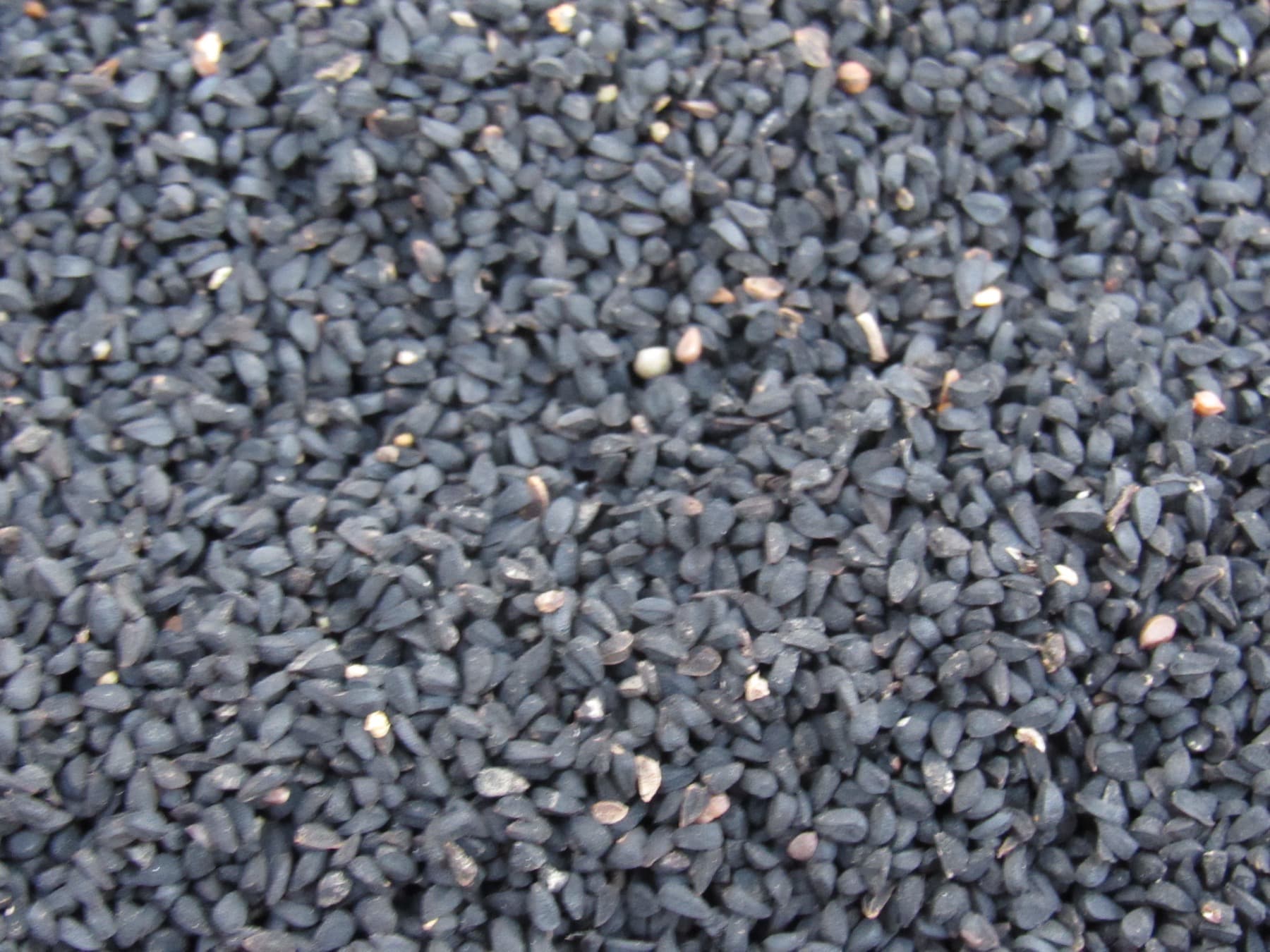
Bite an ajwain paratha and the thyme heat shows up in the first chew. Tear a naan with black specks and that is usually kalonji: peppery, a little oniony. In the grocery they often sit side by side. English stickers still say carom, onion seed, black cumin, or bishop’s weed. Treat those names as guesses.
This page is for telling the two apart at the store, and for using each where it actually works.
Look first, then smell
Ajwain (Trachyspermum ammi) is a parsley-family fruit, sold as carom or bishop’s weed. Crush one and you get thyme and oregano, hotter and more bitter than the dried leaf. The seed looks like a tiny, pale cumin. Kalonji (Nigella sativa) is a buttercup-family seed. Crush one and you get pepper, a little bitterness, and a faint onion edge. That onion hint is why labels say onion seed, even though these are not seeds of an onion.
If the jars are unlabeled, crush one seed from each. Ajwain will smell like a loud thyme. Kalonji will smell savory and a little sharp. Then the first bite of dough tells you whether you grabbed the right jar.
Ajwain goes in the dough
Crush a pinch into paratha, poori, and mathri, the flaky North Indian fried snack. Fold a little into pakora or bhajiya batter. Bloom it briefly in oil or ghee for some dals, vegetables, and fish when you want that herbal heat. A pinch can dominate a batch. Keep it out of a garam masala you already like; it is not a warm-blend spice.
Spices Board of India, the country’s export spice agency, lists bishop’s weed in its catalog and places the crop mainly in Rajasthan and Gujarat. Hindi and Urdu kitchens say ajwain or ajowain. Further east it is jowan. In much of the south the bag says omum, oma, or vamu. Households keep a small jar. Large bags go stale before you finish them.
North Indian tables sometimes offer a few seeds after a heavy meal. Treat that as custom, not a medical claim. In hot fat, bloom it for a few seconds and pull the heat. Burned ajwain turns harsh fast.
Kalonji goes on the bread
Scatter kalonji on naan and kulcha before they hit the tandoor or tawa. Bloom it in Bengali and other eastern panch phoron, the five-seed tempering mix, with mustard, fennel, fenugreek, and either cumin or radhuni. Add a pinch to pickle masalas and achaari-style vegetable or meat bases. Use the seeds whole. Ground kalonji is rarely worth keeping.
North Indian and Urdu names cluster around kalonji or kalaunji. Bengali bags often say kalo jeera. Kannada and Tamil bags may say kari jirige or karunjeeragam. That “black cumin” wording is where people pick up the wrong seed for biryani.
If you are mixing panch phoron and the fifth seed looks like ajwain, you may be holding radhuni, a Bengali celery-family seed that resembles carom. Ajwain does not belong in that mix. Keep fenugreek light; it turns bitter faster than the nigella around it.
What the packet usually means
- Carom or bishop’s weed: ajwain. Dried thyme is softer and leafier. Do not swap them spoon for spoon.
- Onion seed: usually kalonji. It is not onion, and it is not ajwain. True onion seed has no spice aroma.
- Black cumin: unreliable. In many eastern and southern languages that phrase means nigella. In a North Indian biryani recipe, kala jeera or shahi jeera usually means a thinner, floral cumin-family seed, often Bunium persicum. Open the packet. Curved brown-black seeds that smell like wild cumin are not kalonji.
- Celery seed or lovage: different parsley-family lookalikes. Do not use them as ajwain.
If you only buy one jar this month, pick by the dish you will cook. Paratha, poori, or pakora: ajwain. Naan, kulcha, pickle, or a Bengali-style vegetable tadka: kalonji. Households differ on how much of either they want. Start with a pinch, then taste.