
One Tadka, Five Tempering Traditions Across India, Pakistan, Bangladesh, Nepal, and Sri Lanka
Fat, spice order, and whether tempering starts or finishes a dish change more than the shared name does.
- tadka
- technique
- tempering
- dal
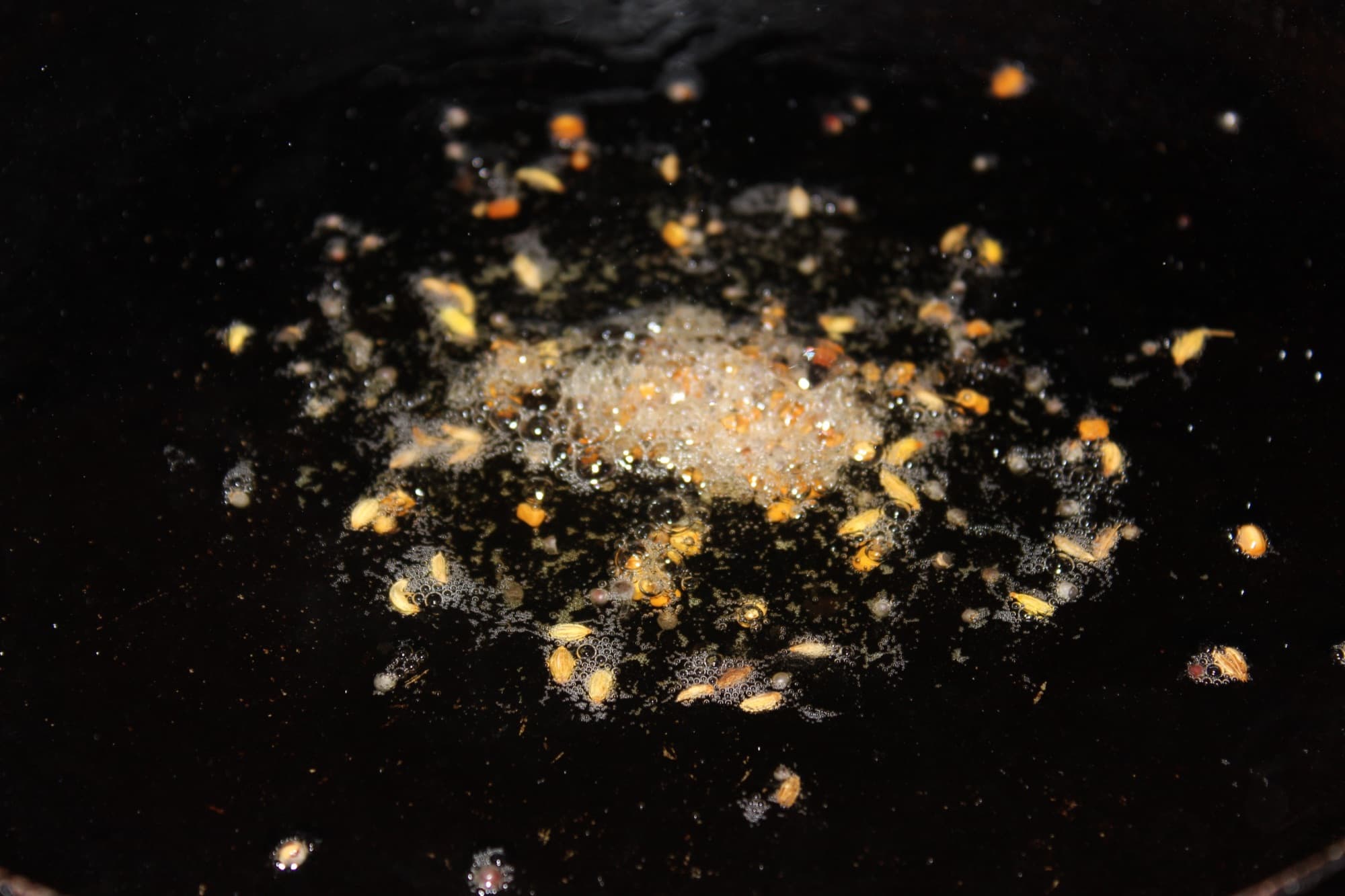
The same short move shows up across South Asia. Heat fat, bloom whole spices, then either cook into a dish or pour the seasoned fat over something already done. The names change. The fat changes. The order changes. The job stays the same: a plain pot of lentils or a quiet vegetable dish picks up aroma it did not have before.
This page compares tempering habits linked to India, Pakistan, Bangladesh, Nepal, and Sri Lanka. No country has one official tadka. Households and regions fork hard. Use the page to spot the differences, then cook the version that matches the dish in front of you. For heat, order, and burn cues in more detail, see What Is Tadka?.
What stays the same
Tempering works because many aroma compounds dissolve more easily in fat than in water. Heat helps pull them out of seeds, chillies, and leaves. That window is short. Mustard pops when steam cracks the seed. Cumin darkens one shade and smells toasted. Garlic goes from pale gold to bitter fast. Hing and chilli powder often want residual heat, not a very hot pan.
Placement matters as much as the spice list. An opening tempering seasons the fat before vegetables, rice, or dal go into the same pot. A finishing tempering is cooked separately and poured over food that is already done, so the aroma stays closer to the surface. Many homes use both on different nights. Neither is more correct.
India: many names, not one pan
Inside India alone, the technique answers to tadka, chaunk, vaghar, thalippu, and several other regional names. A North Indian finishing pour for everyday dal often leans on ghee, cumin, sliced garlic, dried chilli, and a pinch of hing. Mustard seed and curry leaf are not automatic.
A Tamil thalippu, the South Indian tempering, often begins with mustard, then may add urad or chana dal for crunch, dried chilli, curry leaves, and hing. That tempering can open a vegetable dish or finish a chutney. Bengali and other eastern kitchens may start with mustard oil and panch phoron, a whole-seed mix of mustard, fenugreek, fennel, nigella, and cumin or radhuni. Fenugreek turns bitter quickly, so many cooks keep it light.
A useful first plate is Everyday Dal Tadka for a cumin-garlic finishing pour, or a mustard-and-curry-leaf tempering for a South Indian poriyal, a dry vegetable stir-fry, or coconut chutney. Match the fat and spice set to the dish. Do not treat any one combination as national.
Pakistan: baghaar and the loud finish
In many Pakistani homes and dhabas, the roadside restaurants known for that hard sizzle, cooks call the same move baghaar or tarka. Ghee is common for dal finishes. A quick version often starts with cumin in hot fat, then garlic and dried red chilli. A longer dhaba-leaning version browns onion toward deep gold, sometimes with tomato, before the pour. Either way, the fat is meant to sizzle hard when it hits the dal.
Try masoor dal, or mash dal made from split white urad, with a finishing baghaar. The beginner failure is burnt garlic. Once garlic turns gold, the next ingredient has to go in. A baghaar that smells acrid cannot be fixed by more cumin.
Bangladesh: mustard oil and phoron
Bengali-speaking kitchens in Bangladesh and West Bengal often call the bloom phoron. That word can mean the seasoning itself or the act of adding it. Mustard oil appears often, especially with vegetables and fish, but it is not required for every temper. Some cooks bring mustard oil briefly toward its first smoke, then cool it slightly before the seeds go in. Panch phoron may open a vegetable dish. A shorter garlic-and-dried-chilli finish in ghee or oil may go over cooked dal instead.
Try masoor or mug dal with a garlic-chilli finish, or a simple potato or bottle-gourd shaak, a vegetable dish started in panch phoron. Do not treat every Bangladeshi phoron as the full five-seed mix. Watch fenugreek. It turns bitter faster than the mustard and nigella around it. If the oil smells harsh and scorched rather than sharp and clean, start over with a smaller pan.
Nepal: jhaneko and jimbu
In Nepal, the finishing action is often described as jhaneko or jhanne: spices bloomed in ghee or mustard oil and poured over cooked food. Jimbu, a dried Himalayan allium, shows up in many hill kitchens and in Thakali cooking, the mountain inn tradition associated with that community’s dal and tarkari. It is not a nationwide rule. Jimbu looks like dried grass until it hits hot fat, then browns and smells garlicky and oniony within seconds.
Try maas ko dal, the black-lentil dal often finished with jimbu, garlic, dried chilli, and sometimes fenugreek. Jimbu burns quickly. Five to ten seconds of fragrance is often enough. If it blackens, the tempering tastes harsh. Households without jimbu still temper. They simply lose that specific Himalayan note.
Sri Lanka: coconut oil and a longer onion temper
Sri Lankan tempering often starts in coconut oil or another neutral oil. Mustard seeds, curry leaves, dried chilli, garlic, and sliced onion or shallot are common. Unlike a seed-only finishing tadka, the onions may cook until lightly golden before the mixture goes onto the dish. Pandan leaf can sit in the simmering dal even when it is not in the tempering pan.
Try parippu, the everyday red-lentil curry cooked with coconut milk and finished with a fragrant temper. Mallung, a shredded-greens side, is another place mustard and curry leaves often lead. The beginner failure is leaving the onion raw, or burning the curry leaves until they taste acrid. The dish should smell coconut-warm and leafy, not scorched.
How to read the pan anywhere
- Sound: mustard should pop; cumin should sizzle and move. Silence usually means the fat is too cool.
- Aroma: toasted and warm, not bitter or dusty. Jimbu and curry leaves turn fragrant fast, then turn harsh.
- Color: cumin one shade darker, garlic pale gold, dried chilli blistered but not blackened.
- Timing: measure everything before the fat heats. Once the first seed goes in, the sequence may last under a minute.
- Safety: use a small deep pan, pat curry leaves dry before they hit the oil, and pour a finishing tempering close to the surface, away from your face.
Treat the country label as a starting map, not a rulebook. Match the fat and spice set to the dish, watch the burn points, and stop when the kitchen smells right.