
Dum: Seal the Pot and Let Steam Finish the Dish
After the fry, trap the steam. A dough seal, a low flame, and a short rest finish biryani, potato, and some dals.
- dum
- technique
- biryani
- fundamentals
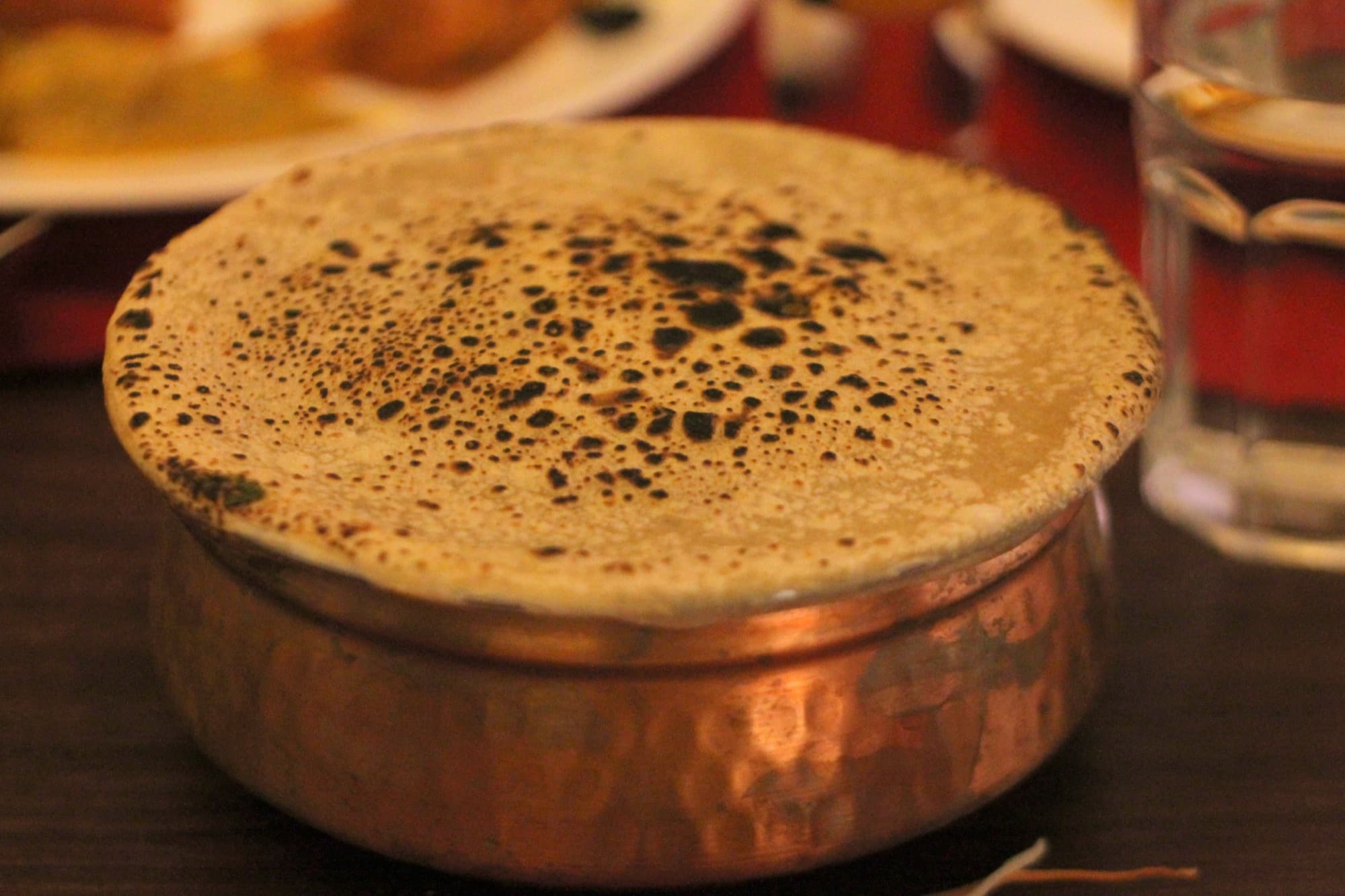
The noisy part is already done. The onions are fried, the meat is browned or the rice is parboiled, and the pot smells right. Dum is the next move: stop stirring, seal the lid, and let a low flame and the trapped steam finish the food.
Biryani is the dish most people mean by that seal. A potato gravy, and some slow dals, use the same lid.
Seal the lid
Press a rope of dough into the seam where the lid meets the pot. Atta, whole-wheat flour, and water, kneaded stiffer than roti dough, holds its shape and does not slide off the rim. Lay the rope on the rim, set the lid on, and press until the gap is gone.
A heavy lid with a flour-and-water paste, or foil tucked under the lid, is enough for a smaller pot on a weeknight. Use the dough rope when the cook is long and the flame stays low. Some kitchens let that dough bake into a thin bread and eat it with the meal. Many biryani shops crack it off and throw it away.
Keep the flame low
Set the sealed pot on the lowest flame you can. A tawa, the flat griddle, under the pot spreads that heat, so the bottom does not scorch while the top is still cooking. If steam jets from the seam, or the pot hisses, the flame is too high or the dough has a hole. Patch the rope and turn the heat down.
Some older kitchens set live coals on the lid, so the food heated from above as well as from the base. A home burner only heats from below. Use a heavy pot, and keep the griddle under it. Thin metal on a lively flame burns the bottom layer and leaves the top half raw.
When the time is up, take the pot off the heat and leave the seal closed so the steam can settle into the rice or the meat. Break the dough at the table if you are serving biryani. That smell does not last a walk down the hall.
How long to leave it
There is no single time. A pakki biryani, meat already cooked and rice only finishing, needs less time under the seal than a kacchi biryani, where raw marinated meat is still under the rice. Bone-in mutton needs longer than chicken. A full pot needs longer than a small one. How those show up on a menu is in How to Order Biryani When the Menu Just Says Biryani.
Dum aloo is the same lid on a potato. Small potatoes sit in a spiced gravy until the center tastes like the sauce. Kashmir and Awadh season that gravy differently. You still close the pot the same way.
Some restaurant dals stay covered for a long time after the onions are cooked and the tempering is done. That wait is dum. The hot-fat tadka poured on at the end is a separate finish. The open-pan fry that usually comes before you seal anything is Bhuna: Cook Until the Oil Separates. If the gravy is still thin, cook that water off with the lid off. Sealing it will not thicken it.
Where the name comes from
K.T. Achaya, the food historian, described dum pukht as meat baked in a seal of dough. The Persian name is already in the Ain-i-Akbari, the late-16th-century record Abul Fazl wrote of the emperor Akbar’s court. Lucknow tells a later story about the same seal. In the famine of 1784, Nawab Asaf-ud-Daulah, ruler of Awadh, put people to work on the Bara Imambara, the great hall that still stands in the city. Cooks there say the workers ate from huge dough-sealed cauldrons, and the smell reached the nawab. The hall dates from those years. Whether he first met the dish in the workers’ kitchen is the part nobody can check.
When it goes wrong
- The lid comes off halfway. The top stays firm, and the steam is already gone.
- The dough is too soft. It slides, the seam leaks, and the pot is simmering with the lid ajar.
- The flame is high and the pot is thin. You will smell the bottom catching before you see it. Lower the heat. More time will not fix a scorched layer.
- Raw meat gets the short seal you would use for a pakki pot. The rice can look done while the meat is not. If the meat went in raw, leave the seal on longer.
The dough dries hard. Crack it with the back of a spoon, and serve from the pot.