
How to Cook an Onion-Tomato Masala Base
How far to brown the onions, when to add ginger, garlic, and spices, and how to tell when the tomatoes are ready.
- onion
- tomato
- masala
- technique
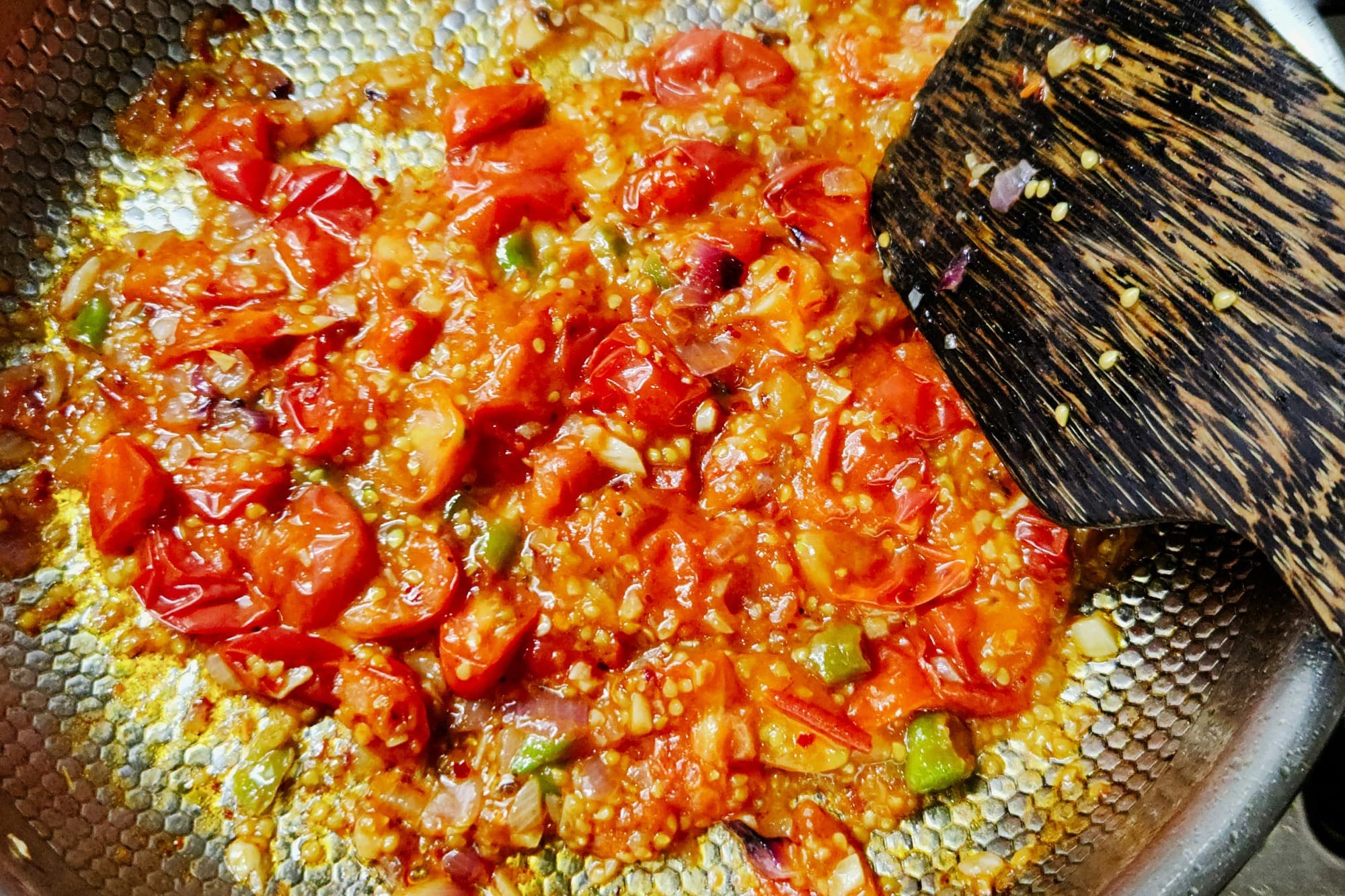
A recipe that says “brown the onions, add tomatoes, and cook the masala” leaves most of the useful instruction out. Onion color sets the sweetness and depth. How wet the tomatoes still are decides whether the next ingredient fries or steams.
This page is for the onion-tomato base common in many North Indian and Pakistani dals, bean dishes, vegetable sabzis, and meat curries. It is a flexible technique, not a default starter for every South Asian dish. Plenty of kitchens begin with coconut, yogurt, lentils, mustard, or no onion and tomato at all.
First, choose how brown the onions need to be
Use the finished dish as your guide. Soft onions keep a lighter, fresher base. Golden onions bring more sweetness and body. Deep brown onions make a darker, more concentrated masala, but the line between brown and bitter is narrow.
- Soft and translucent: the pieces have relaxed and lost their raw white center, but have little color. Stop here for a lighter gravy, or when tomato, greens, or another ingredient should stay forward.
- Pale gold: brown flecks appear around the edges and on the pan. A useful middle point for everyday dal, beans, and many vegetable dishes.
- Deep gold to brown: the onions have shrunk, browned evenly, and started to merge into a paste. This gives a thicker, sweeter, darker base for dishes that can carry it.
- Birista or beresta: thinly sliced onions fried in plenty of oil until crisp, then drained. They show up in biryani, korma, haleem, and other dishes. Birista is not simply the next stage of chopped onions in this pan.
Cut matters. Finely chopped onion melts into the sauce; slices keep more shape. Even pieces cook at the same rate. A wide, heavy pan lets water escape faster than a narrow, crowded pot. Salt draws moisture from onion, so the pan may look wetter before browning begins.
A working order for the pan
There is no single correct sequence. This one makes each stage easy to read:
- Heat enough ghee or oil to coat the pan. Bloom whole spices first if the dish calls for them.
- Add evenly cut onions and salt. Start around medium heat. Stir less while they release water, then more often as the pan dries and the edges color.
- When the onions reach the color you want, add ginger and garlic. Fry until their sharp, raw smell softens. Keep them moving, because a fine paste catches quickly.
- Add ground spices briefly. If the pan is very dry, lower the heat or stir in a spoonful of water so chilli, turmeric, and other powders do not scorch.
- Add chopped, grated, or puréed tomato. Scrape up the browned layer on the pan and cook uncovered until the tomato loses its watery look.
Some cooks add ground spices with the tomato, where its water protects them. Others fry the powders briefly before the tomato for a stronger bloom. Both routes work. Leaving dry spice powder on a hot, bare pan while you hunt for the next ingredient does not.
How to tell when the tomatoes are cooked
When tomato hits the pan, it releases water and bubbles hard. As it cooks, the pieces collapse, the bubbling slows, and onion and tomato stop looking like separate ingredients. Drag a spoon through the pan: a thickened masala should leave a track for a moment instead of flooding it right away.
Oil beading at the edge is another useful cue. It means enough water has cooked off for some fat to pull free of the paste. With less oil, you may see only a glossy rim rather than a puddle. That longer fry-down has its own page: Bhuna: Cook Until the Oil Separates.
What went wrong
- The onions are pale but the pan is dry: lower the heat and add a small splash of water. They need time to soften before they can brown evenly.
- The onions browned in patches: the cut was uneven, the heat was too high, or the pan needed more stirring near the end.
- The garlic tastes bitter: it caught on a dry pan. Lower the heat, keep the paste moving, and have tomato or a splash of water ready.
- The finished curry tastes sharp and thin: the tomato base probably needed more uncovered cooking before the main ingredient and liquid went in.
- The masala is sweet and very dark: the onions may have gone farther than the dish needed. Next time, stop at pale gold and let the tomato do more of the work.
Batch it carefully
A plain onion-tomato base can be made ahead. Keep the seasoning restrained if it will feed several different dishes. Cool it promptly in shallow containers and refrigerate within two hours. Use refrigerated portions within three to four days, or freeze smaller portions for later. Label the container with the date and any spices already in it.
On the next dal or sabzi, stop watching the clock and watch the onions. Pick soft, gold, or brown on purpose, then cook the tomatoes until the pan looks thick rather than wet. If your kitchen skips onion and garlic, start with Asafoetida (Hing) instead.