
Bhuna: Cook Until the Oil Separates
The long fry-down behind thick curries: what oil separation means, how it differs from tadka, and how to read the pan.
- bhuna
- technique
- masala
- fundamentals
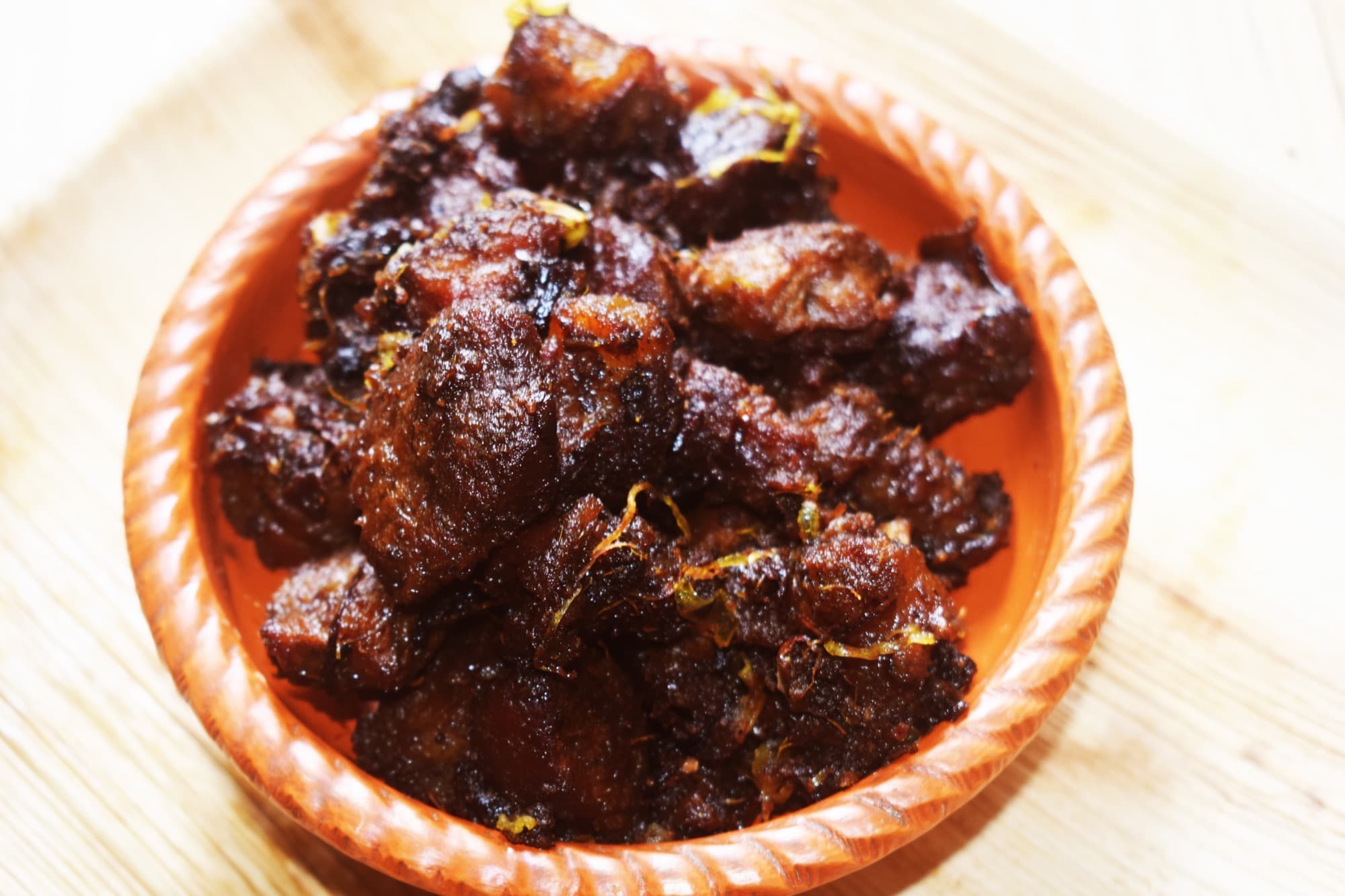
Bhuna (also spelled bhoona or bhuno) is a cooking method, not a fixed spice mix. The word points to frying or roasting: you cook an onion-ginger-garlic base, often with tomato and ground spices, in fat while stirring, until moisture cooks off and the mixture concentrates. On many restaurant menus, “bhuna” names a thick, clingy curry. In the kitchen, it names the work that makes that texture.
The cue most recipes hide in one line is this: cook until the oil separates. When enough water has left the pan, the emulsion of fat and vegetable juices breaks. Oil beads at the edges or sits in thin slicks on top of a darker, thicker paste. That is your green light that the raw edge of onion, tomato, and spice has cooked through.
How it differs from tadka
Tadka blooms whole spices (and often aromatics) in hot fat for a short window, then either starts a dish or finishes one with a pour. Bhuna is longer and wetter at the start. You are reducing a paste, not only crackling seeds. Many curries use both: a brief whole-spice tempering, then a longer bhuna of onion and tomato before the main ingredient goes in.
What you are watching for
- Color deepens from pale and watery to a denser yellow, brick, or brown, depending on chilli and how far you take the onions.
- Spluttering slows as free water evaporates; the paste looks glossy rather than soupy.
- Oil separates at the sides or on the surface. With less oil you may only see a shiny film rather than obvious puddles.
- The smell shifts from raw onion and sharp tomato toward something sweeter and rounder. Scorched bitterness means you went past the window.
Timing is not fixed. Juicy tomatoes, finely chopped or pureed onion, and a crowded pan all stretch the wait. Medium heat and steady stirring matter more than a stopwatch. If the paste threatens to burn before the oil moves, splash in a spoon or two of water, scrape the fond, and keep going. That small deglaze is part of the method, not a failure.
A working sequence
Households and regions reorder steps, but this pattern explains most North Indian, Pakistani, and Bangladeshi curry bases:
- Heat enough fat to coat the pan (ghee, mustard oil, or a neutral high-heat oil, depending on the dish).
- Optional: bloom a few whole spices, then add sliced or chopped onion and cook toward golden.
- Add ginger and garlic; cook out the raw smell.
- Add tomato (chopped or pureed) and ground spices. Stir and reduce.
- Keep frying until oil separates and the paste looks thick enough to cling.
- Add protein or vegetables, then deglaze lightly as needed and continue cooking. Tough meats may go through more reduce-and-scrape cycles.
Salt early can help onions and tomatoes release water. Ground chilli and turmeric burn faster than coriander; many cooks add powders after the onion has soft color, or bloom them briefly in the fat once the paste is nearly dry.
Region and menu language
In Bengali cooking you may hear tel chhara for the oil-separation moment. Chittagong’s kala bhuna takes the idea far: repeated browning with little added liquid until meat and spice turn very dark and dry. Bangladeshi wedding roast chicken uses bright red masala (often with Kashmiri-style chilli color) and fewer cycles. British curry-house “bhuna” usually means a thick, reduced sauce rather than a precise home recipe.
Not every South Asian gravy needs a full bhuna. Coconut-forward Kerala sauces, light tomato broths, and some yogurt-based dishes build flavor differently. Use oil separation when the dish wants a concentrated, clingy base.
Common snags
- Too little fat: hard to see separation, and the paste sticks and scorches.
- Heat too high: brown before the water is gone; bitter, not deep.
- Stopping early: thin, sharp, “raw” tasting curry even if the spices are expensive.
- Confusing menu bhuna with the technique: order the dish for the texture; cook at home for the oil cue.
Next time a recipe says “bhuno the masala” or “cook until oil leaves the sides,” treat that as the doneness test. When the oil moves, you are ready to build the rest of the dish.