
Mustard Seeds: Pop in the Tadka, Bite in the Paste
Whole seed in hot fat turns nutty. Crushed with water it goes sharp. Yellow table mustard is a different product.
- mustard
- rai
- kadugu
- tadka
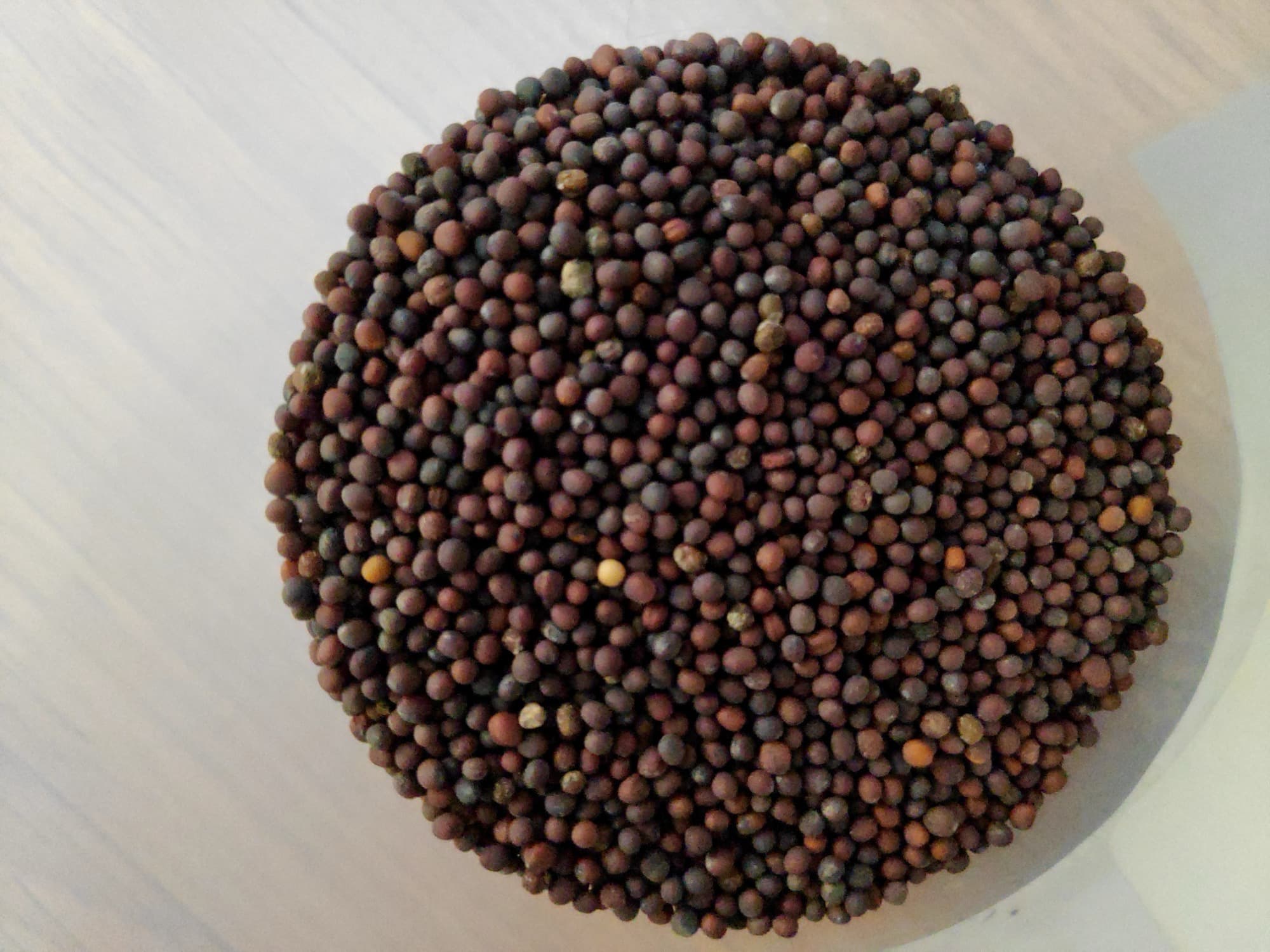
In a lot of South Indian and Gujarati kitchens, dinner starts with a crackle. Dark mustard seeds hit hot oil, pop, and turn the fat nutty. Crush those same seeds with a little cold water and they do the opposite job: they go sharp, closer to wasabi than to toast. This page is for that split, and for the mix-up that sends people to the yellow bottle on a sandwich.
The jar you want for tadka is the small, dark, round seed sold as rai or kadugu. Yellow mustard seed is milder and built for condiments and some pickles. It can pop. It will not taste the same. Dijon will not do either job.
The dark seed in the dabba
Indian grocery jars labeled rai are usually brown mustard, even when the seeds look nearly black. Black mustard runs a little smaller and sharper. For a weeknight tadka, use whichever dark seed you have. Save the pale yellow seed for pickles or a milder paste. If a recipe says sarson and you are staring at a bunch of greens, that is a different ingredient: mustard leaves for a winter saag, not a spoon of seed.
You will also see kadugu on Tamil bags, avalu in Telugu, and shorshe in Bengali kitchens. The useful move is still the same: look at the color of the seed, then decide whether the recipe wants a pop or a paste.
When it pops
Heat the oil or ghee until it shimmers. Add the seed. When moisture inside turns to steam, the coat splits and you get that rattle. The sound tells you the fat is hot enough for curry leaves, dal, or chilli. The flavor changes too. Raw seed is sharp. Bloomed seed is toasted, a little bitter, and it seasons the oil more than it seasons the spoon.
A Tamil tempering often starts here, then may add urad or chana dal for crunch, dried chilli, curry leaves, and a pinch of hing. Pour that over coconut chutney or rasam and you get the smell a lot of people mean by South Indian food. A Gujarati dal vaghar may put rai in the same pan as cumin and chilli. Many North Indian dal finishes skip mustard and lead with cumin and garlic instead.
In Bengali and other eastern kitchens, mustard often arrives as one seed in panch phoron, a whole mix with fenugreek, fennel, nigella, and cumin. Some homes swap in radhuni, a celery-scented seed. Watch the fenugreek. It turns harsh first. Do not wait for every seed to look the same color.
When it bites
Grind the same dark seed with cold water and it stops being toasty. An enzyme in the seed wakes up and makes that sinus-clearing vapor you also get from horseradish. Hot water, or a long cook before the paste is ready, shuts the reaction down. That is why a Bengali mustard gravy can make your eyes water, and a tadka only smells like dinner.
The everyday paste is shorshe bata: seed ground with green chilli and salt. Some cooks soak the seed a few minutes so it grinds smoother, and some add poppy seed (posto) to round the bitterness. Strain the husk if you want a silkier gravy. Use it on fish or a simple potato. Kasundi is the other Bengali mustard, a fermented relish you dip into, not a tadka you pour. Jarred yellow mustard, with vinegar and sugar, will not stand in for either.
The oil stays in its own bottle
Mustard oil is pressed from the seed and used as the cooking fat in a lot of Bengali, Bangladeshi, and other eastern kitchens. It can taste related. It cannot pop. Plenty of fish and vegetable dishes use both: oil in the pan, seed in the tempering or the paste. A common habit is to heat the oil until it just smokes, then lower the flame before anything else goes in, so the raw edge calms down. That still does not replace a teaspoon of whole seed.
What not to swap
- Recipe says rai, kadugu, or mustard seeds in a tadka: whole dark seed in hot fat.
- Recipe says shorshe bata or mustard paste: freshly ground seed with cold water, not table mustard.
- Recipe says mustard oil: the pressed oil. Seed will not become that fat.
- Recipe says sarson as a green: mustard leaves. Seed will not bulk a saag.
- Yellow seed can pop in a pinch. It will taste milder. Dijon will not do the tadka job.
Buying and storing
Buy whole seed that looks even and hard. Crush one. It should smell sharp, not like cardboard. Keep the jar closed, cool, and away from the stove. Whole seed holds up much longer than powder. If a tadka smells flat even when the oil is hot enough, the jar is tired. Replace the seed before you blame the recipe.