
Why “Curry Leaf” Is a Terrible Name for One of South India’s Most Distinctive Ingredients
The leaf is a citrus-family seasoning that only becomes itself in hot oil. Curry powder cannot replace it, and supermarket recipes keep pretending otherwise.
- curry-leaf
- karuveppilai
- tadka
- spice-literacy
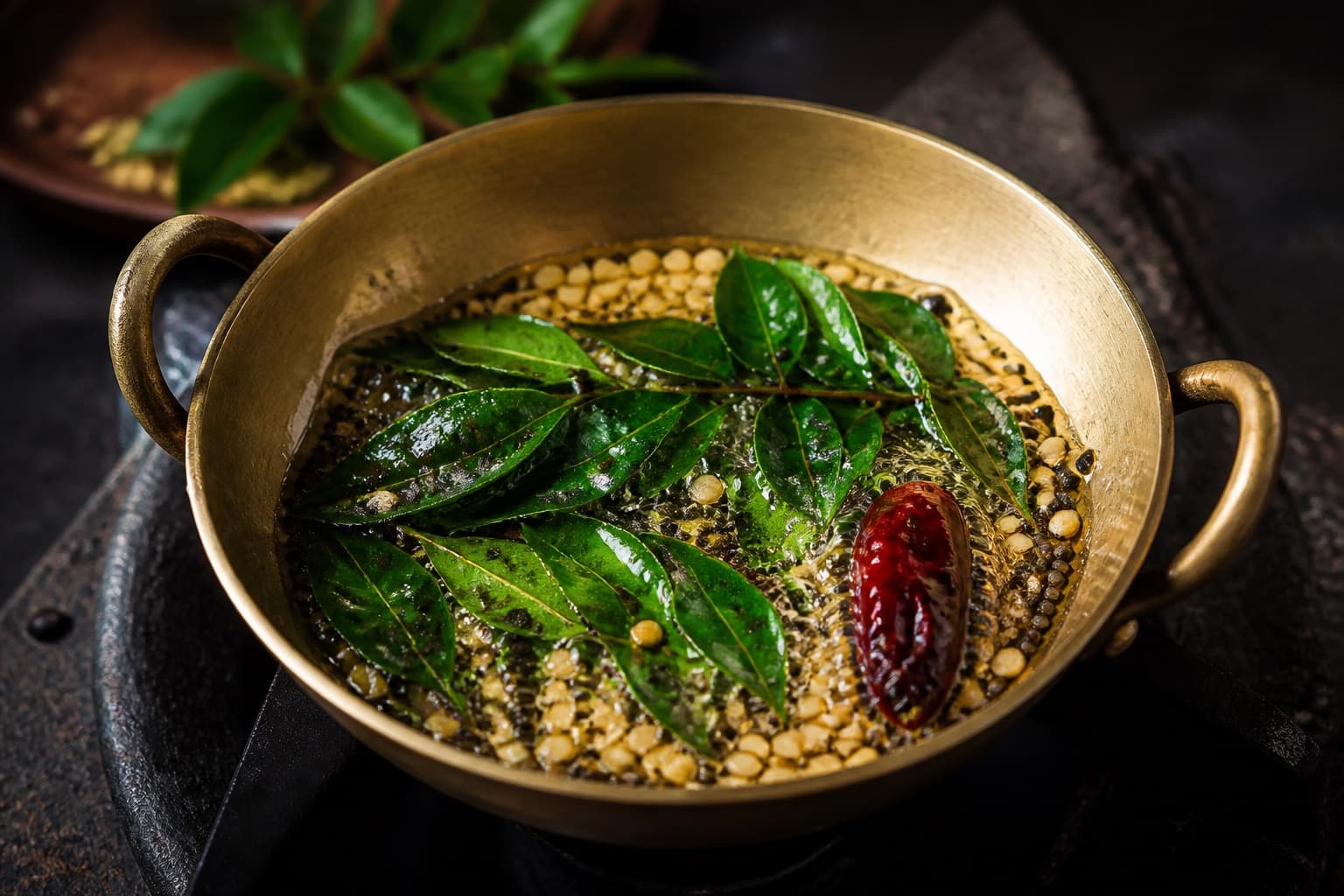
The English name does half the damage before the pan is hot. “Curry leaf” sounds like the plant that makes curry, or the leaf ground into curry powder. Fresh curry leaf actually comes from a citrus-family tree. Curry powder is a British export blend that usually contains no leaf at all. Put the powder into a recipe that asks for fresh leaves and the gravy may turn yellow, but the kitchen never gets that resinous, citrusy crackle.
The mix-up persists in supermarket recipes, where curry leaf, curry powder, bay leaf, and even an unrelated garden plant are offered as substitutes for one another. Learning the ingredient starts with smelling one fresh leaflet, then hearing what happens when it hits hot oil.
A citrus-family leaf with a bad English nickname
Many grocery labels and older botanical papers call the tree Murraya koenigii; newer taxonomy often prefers Bergera koenigii. Both names refer to a member of Rutaceae, the citrus family. Crush a fresh leaflet and the smell runs through citrus peel, resin, a soft sulfury edge, and faint bitterness. A 2015 aroma analysis identified 1-phenylethanethiol, linalool, and α-pinene among its most potent odor compounds. The chemistry also varies among plants grown in different locations, so one useful test at the market is still the simplest: crush a leaflet and smell it.
In Tamil the leaf is karuveppilai. Malayalam speakers say kariveppila. Kannada has karibevu. Telugu has karivepaku. Hindi markets often sell it as kari patta or meetha neem. Those names point at a cooking leaf, not at a jar of yellow powder. The English word curry drifted from kari, a Tamil term for a spiced relish or sauce, into a colonial catchall. The leaf got dragged along. The powder was invented later as a shortcut blend for British kitchens that wanted “Indian flavor” in one spoon.
Why tempering is not optional
Many of the leaf’s aroma compounds dissolve readily in fat. A whole sprig can perfume a simmering stew, but hot oil makes the change immediate. In a South Indian thalippu or tadka, mustard seeds usually go first. Their pop signals that the fat is hot enough. Curry leaves follow, often with dried red chilli, urad dal for crunch, and a pinch of hing. The leaflets shiver and blister; within seconds the oil smells citrusy, toasted, and unmistakably southern. The cook can build a dish in that oil or pour it over dal, rasam, chutney, or rice.
The window is short. Leaves added before the mustard has popped can scorch while the seed catches up; leaves dropped into cooling oil stay raw and grassy. Crisped curry leaves are tender enough to eat, unlike Mediterranean bay leaves that are usually removed after a long simmer.
How the South uses the same leaf differently
Kerala kitchens often bloom kariveppila in coconut oil for fish curry, avial, vegetable ishtu, and everyday thoran. Its citrus and resin cut through coconut richness and sit comfortably beside tamarind or other souring agents. Tamil thalippu sends the leaf into sambar, rasam, coconut chutney, lemon rice, and poriyal, the dry vegetable stir-fry. In both cases it seasons the fat early instead of decorating the plate at the end.
In Karnataka, karibevu shows up in oggarane for bisibele bath, chitranna, upma, and coconut chutneys. Cooks also toast and grind it into dry spice powders, where the leaf becomes brittle and concentrated. Across Andhra and Telangana, karivepaku joins mustard and dried chilli in temperings for rice dishes, pappu, and vegetable fries. Recipes and households vary, but none of these uses asks the leaf to behave like curry powder.
Sri Lankan cooking uses the same tree generously across rice-and-curry meals. Many North Indian weekday dals skip it. Curry leaf is distinctive because its use is regional, not because every South Asian pot requires it.
Fresh, frozen, dried: what you actually lose
Fresh leaves are the standard. Look for glossy, deep green leaflets on a pinnate stem, with a lemony smell when crushed. Younger, smaller leaflets tend to be more tender. Strip leaves from the tough central stem for tempering. Whole stems can go into a simmering pot if you plan to fish them out later.
Freezing preserves more of that aroma than drying. Pat the leaves dry, press excess air from the bag, and freeze them; they can go into hot oil without thawing. They will darken and soften, but their perfume survives. Commercial dried leaves are convenient and much quieter. Research comparing fresh and shade-dried leaf oils found a changed volatile profile, not simply a weaker copy. Use extra dried leaves when necessary, while expecting a different result. Powdered curry leaf has a place in some podi blends, but it cannot replace a fistful of fresh leaflets in tadka.
Storage, growing, and the wrong plant at the garden center
In the fridge, dry leaves wrapped so they do not sweat usually keep about one to two weeks. Use your nose: if a crushed leaflet has no citrus left, it is decoration. For longer keeping, freeze. Many South Indian homes grow a curry tree in the yard or a pot by the kitchen door precisely so the leaf never has to wait in a plastic bag.
If you buy a plant outside the tropics, read the Latin name. Garden centers often sell Helichrysum italicum, a Mediterranean daisy relative marketed as “curry plant” because sun-warmed leaves smell vaguely like curry powder. It is not Murraya or Bergera. It will not do the tadka job. Ask for the curry leaf tree by botanical name, and treat any unlabeled “curry plant” as the wrong purchase until proved otherwise.
How supermarket recipes misuse it
- Substituting curry powder for curry leaves, or the reverse. One is a turmeric-forward blend. The other is a fresh citrus-resin leaf. They do not trade.
- Treating curry leaf like bay leaf: simmer whole, discard, expect woody perfume. Bay is a different plant with a different job.
- Adding dried curry leaf at the end like parsley. Late leaf never gets the oil bloom that makes it itself.
- Calling for “curry leaves or curry powder” as interchangeable options. That line is a recipe-writing failure, not a helpful tip.
- Buying Helichrysum and cooking with it because the nursery tag said curry. Smell is not cuisine.
Buy fresh leaf when you can and frozen leaf when you cannot. Let mustard pop, add well-dried leaflets carefully because surface moisture makes the oil spit, and cook only until fragrant. If neither form is available, choose a dish that does not depend on curry leaf that night. Curry powder belongs in its own recipes.