
Assamese Sour Fish and Kerala Toddy-Shop Plates: The New Rooms That Name a Region
A directory of the openings worth knowing, from a Sunnyvale kitchen built on alkaline khaar to a Manhattan toddy-shop counter, and what to order once you are in the room.
- regional
- restaurants
- diaspora
- openings
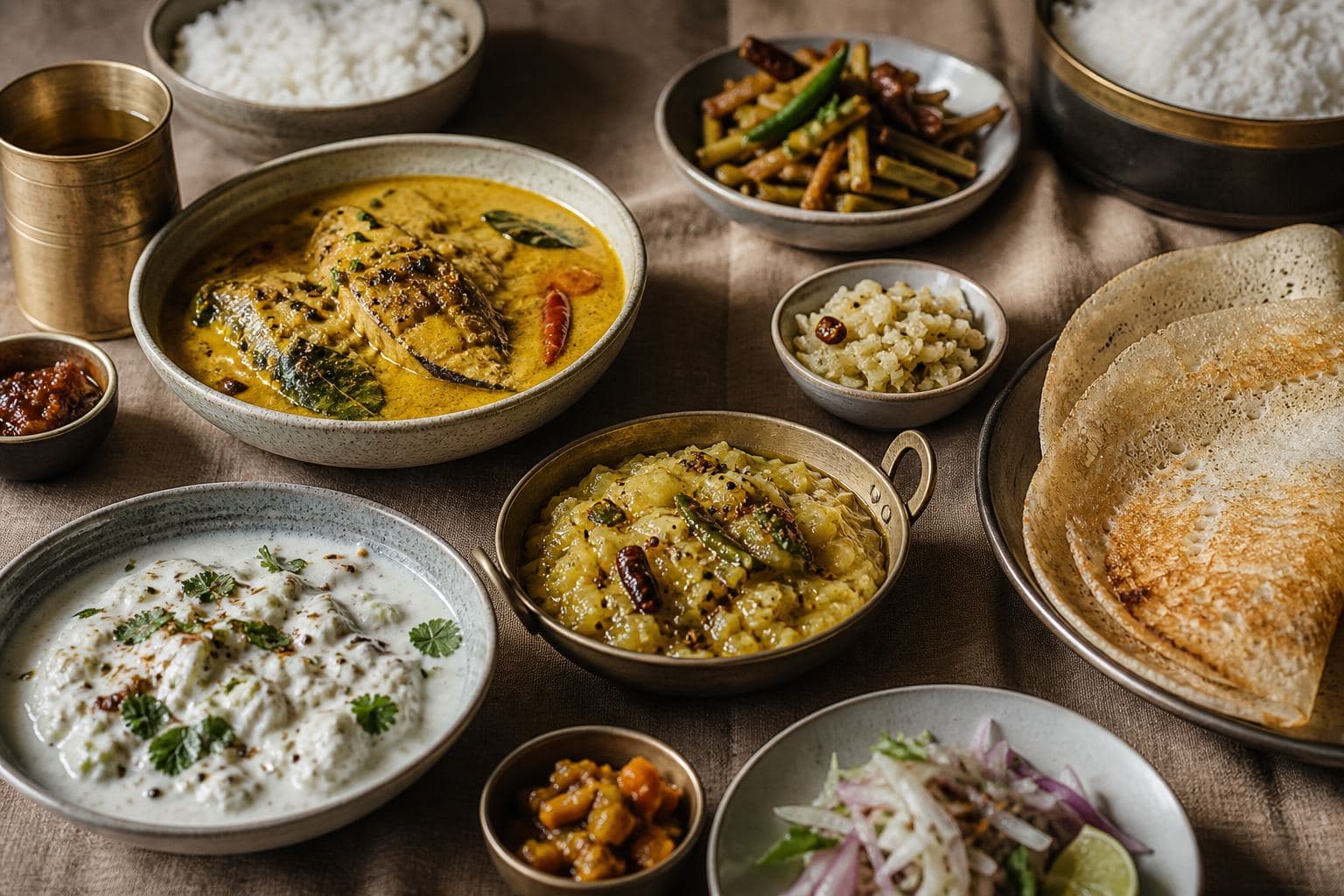
In Sunnyvale, California, KHAAR soft-opened on August 5 with Assamese sour fish, Naga smoked chile, and fermented bamboo on a printed dinner card. Eight days later, Aaha Truly South marked a grand opening in Oshawa, Ontario, for vegetarian idli, dosa, and pesarattu. Those two rooms do not share a cuisine, a price band, or a neighborhood type. What they share is a refusal to sell “Indian food” as one cream-gravy page.
This is a directory of that shift across North America, Britain, Australia, and South Asia: kitchens that name a region, a community, or a micro-cuisine, then cook to that brief. Butter chicken is not going anywhere, and plenty of new rooms still lead with it. The change worth tracking is that a diner in a mid-size suburb now has named alternatives, which was not true five years ago.
What “regional” means here
Regional, on this page, means a kitchen that leads with a place smaller than a country: Kerala toddy-shop food, Chettinad from Tamil Nadu, Assamese and wider Northeast Indian cooking, Hyderabadi plates, Awadhi Lucknow technique, Pakistani BBQ and chaat rooms, Sri Lankan short eats, Nepali sekuwa. India is not all of South Asia. A Pakistani nihari counter and a Sri Lankan hopper bar are South Asian without being Indian. A pan-Indian tasting menu can still be regional in spirit if it refuses the mild-to-hot heat ladder and names its sources.
The directory: rooms that name a place
Some of these opened in the last month, some in the last two years. They are here because the card names a place and the kitchen cooks to it. Statuses change, so confirm hours and menus before you go, and remember that no single restaurant stands in for an entire region.
KHAAR: Sunnyvale, California
Region: Assamese and wider Northeast Indian (the Seven Sisters states). Chef-owner Nandana Hazarika soft-opened August 5, 2026, at 193 South Murphy Avenue. Signature language on the card includes branzino tenga (Assamese-style sour fish), heritage pork with fermented bamboo, Naga smoked-chile plates, and dishes built on khaar, the alkaline banana-ash extract that gives the restaurant its name. Service is dinner-forward sit-down during soft opening, roughly midweek evening hours. Pricing sits above strip-mall thali rooms and below tasting-menu fine dining. Full write-up: Sunnyvale Finally Has a Dedicated Northeast Indian Restaurant.
Aaha Truly South: Oshawa, Ontario
Region: South Indian vegetarian tiffin, with Andhra cues such as pesarattu. Third location after Scarborough and downtown Toronto; grand opening August 13, 2026, at 1180 Simcoe Street North. Signature dishes: idli with sambar and podi, dosa, MLA-style pesarattu with upma, pongal, filter coffee. Casual breakfast-and-family service with takeaway and catering. Price band is everyday, not special-occasion. See Oshawa’s New South Indian Breakfast Room Is Built Around Tiffin.
Sangam Chettinad: Cedar Park / Leander, Texas
Region: Chettinad, Tamil Nadu. Third Austin-metro room announced for late July 2026 on Ronald Reagan Boulevard, after Parmer Lane (2018) and Round Rock (2025). Look for pepper-forward Chettinad egg masala and Karaikudi nattu kozhi varuval, a country-chicken fry, alongside biryani and tiffin. Suburban family dining, strip-mall service, mid-market pricing. Coverage: A Tamil Chettinad Kitchen Just Added a Third Austin Address in Leander.
Raani: Toronto (opening)
Region: princely-court and regional heritage cooking, framed by Ambica Jain and MJAJ Hospitality rather than a single state label. Planned for 360 Bay Street; summer 2026 opening still unconfirmed as of mid-August local press. Two levels, about 162 seats, chef’s table, vault space below. Expect special-occasion pricing once the card lands. Track After Adrak Yorkville, Ambica Jain Is Building Raani on Bay Street. Nearby, BlogTO has also flagged a Shaaz expansion toward the Danforth for Hyderabadi cooking from the Scarborough original; treat that as planned until a door date posts.
Chatti: New York City
Region: Kerala toddy-shop micro-cuisine. Chef Regi Mathew, of Kappa Chakka Kandhari in Chennai and Bengaluru, opened February 12, 2025, at 252 West 37th Street in the Garment District. Signature ideas: “touchings” (hand-eaten toddy-shop small plates), Calicut mussels, coconut clams, beef dry fry, Idukki potatoes, filter coffee pudding. Upscale communal dining with lunch, happy hour, and dinner on Resy; mid-to-high check. The room still matters in 2026 because it showed Manhattan would book a Kerala micro-cuisine instead of another North Indian fine-dining default.
Saadi: Melbourne
Region: pan-Indian seasonal cooking rooted in the chefs’ Punjabi, Tamil, and navy-family maps, not a cream-north template. Saavni Krishnan and Aditya Suresh opened permanently September 3, 2025, at 18 Punch Lane; Gourmet Traveller named them Best New Talent for 2026. Signature plates rotate, but the house logic shows in idli with fire-grilled carrots and milagai podi, kadhi pakora, Corner Inlet flathead with pulikachal. Contemporary CBD dining, short seasonal menu, reservation room. See Idli With Fire-Grilled Carrots Just Won Australia’s Best New Talent Award.
Aakhol: Hyderabad
Region: Assamese. A dedicated Assamese room in Kokapet gives Hyderabad diners river-valley cooking instead of another Hyderabadi biryani palace. Coverage: Hyderabad Finally Has the Assamese Restaurant Expats Were Waiting For. The useful signal is destination reverse: regional specialists are opening inside India for diners who already know the local default and want another state’s table.
Khan Saab: Santa Monica
Region: Pakistani and North Indian craft cooking, 100% halal. Third Southern California room opened mid-July 2026 at 115 Santa Monica Boulevard after Fullerton’s Michelin Bib Gourmand run. Signature plates include nihari, Peshawari chicken karahi, charcoal beef kabob, and the Sloppy Khan keema pav riff. Shareable evening service, Bib-adjacent pricing without tasting-menu length. See A Bib Gourmand Pakistani Kitchen Just Opened Blocks From the Beach.
Drāvida: New York City
Region: labeled South Asian diaspora routes rather than one Indian state. Chef Aarthi Sampath’s East Village room maps Tamil, Pakistani, Nepali, Indo-Caribbean, and other plates with origin tags on the card. Useful as a reminder that “regional” can mean a migration path, not only a district inside India. See Aarthi Sampath’s Drāvida Is Building Indian Food Around Diaspora, Not Borders.
Oudh 1722: London
Region: Awadhi / Lucknowi. Aktar Islam’s Borough opening puts dum, galouti, and Lucknow naming on a London fine-dining map that still often files everything under “Indian.” See Oudh 1722 Brings Awadhi Lucknow Cooking to London.
Jamil’s Chaat House: Toronto
Region: modern Pakistani chaat and home cooking with a natural-wine list. Opened on Queen West in December 2025 after a pop-up run. Casual-to-mid check, snack-to-tasting flexibility. It sits beside Karachi-style BBQ rooms in Scarborough as proof Toronto’s Pakistani map now has both neighborhood institutions and downtown wine-bar formats.
Hoppers Shoreditch: London
Region: Sri Lankan and South Indian heartlands, with the February 2026 Shoreditch menu drawing on Chettinad, Madurai, Bengaluru, Kochi, and Chennai after co-founder Karan Gokani’s research trip. Hoppers remains one of the clearest diaspora cases where Sri Lankan hoppers and short eats sit beside named Tamil and Kerala plates without collapsing into a single curry-house card.
Mungdi: Dhaka
Region: Chittagong Hill Tracts, Bangladesh. Tara Bikash Tripura, who grew up in Khagrachari, opened this Mohammadpur room on June 15, 2025, to sell mungdi: a light chicken-stock noodle soup built on handmade rice noodles carried down from the hills, offered in egg, chicken, fish, prawn, and house versions. Everyday neighborhood pricing, delivery included. It makes the same argument inside South Asia that KHAAR makes in California. The cooking left off the national menu is often Indigenous or hill cooking, and it usually takes a dedicated room to put it in front of city diners.
Gaps worth naming. This list is still thin on Nepali and Bhutanese rooms, on Tibetan kitchens in the hill diaspora, and on the Sylheti families who built Britain’s curry-house trade and are now opening under their own regional names. Price bands are described in ranges rather than dollar figures because we confirmed menus and regions, not current checks.
Do these menus preserve distinctions, or simplify them?
Both happen. KHAAR and Chatti preserve by narrowing: alkaline Assamese cooking, toddy-shop touchings, spice powders named on the plate. Aaha preserves by staying pure vegetarian and tiffin-led. Saadi and Drāvida simplify geography on purpose, then rebuild specificity dish by dish, which works when the menu still explains souring agents, breads, and community paths. The failure mode is the old one: a card that says “regional Indian” while every gravy tastes like the same tomato-cream base.
Watch the words that survive editing. Galouti, tenga, milagai podi, nihari, hopper, sekuwa, and Chettinad on a printed menu do more work than a paragraph of brand copy. When those words disappear into “chef’s special curry,” the regional claim is already gone.
Neighborhoods and newer markets
The first wave of diaspora regional rooms often grew inside dense corridors: Devon in Chicago, Jackson Heights in Queens, Scarborough and Brampton in the GTA, Southall and Tooting in London, Artesia and Sunnyvale in California. What is changing is the second address. Shaaz eyeing the Danforth, Aaha reaching Oshawa, Sangam adding Cedar Park, Khan Saab taking Santa Monica, and Saadi holding a Melbourne CBD laneway all move named cooking into office districts, suburbs, and coastal zip codes that used to get only the generic card.
Pricing follows the real estate. Tiffin and BBQ rooms stay weeknight-accessible. Princely-court and toddy-shop fine dining ask for reservations and a higher check. Both formats matter. A regional boom that only exists at tasting-menu prices leaves most diners stuck with the steam-table default.
How to order without treating one room as a whole region
- Read the region before the spice level. Ask which state, city, or community the kitchen is cooking.
- Order the dish that needs the house’s special technique: dum, toddy-shop fry, alkaline khaar, mustard-oil sour fish, hopper batter, charcoal karahi.
- Match bread to gravy: appam or parotta with Kerala stews, warqi paratha with Awadhi kebabs, naan with tandoor rooms, plain rice with Assamese tenga.
- If a menu mixes five regions, pick one lane for the table instead of sampling every gravy.
- Treat “first” and “authentic” claims as marketing. Judge the plate, then decide if you need a second restaurant from the same map.