
Aarthi Sampath’s Drāvida Is Building Indian Food Around Diaspora, Not Borders
Her East Village restaurant turns migration routes into labeled dishes, a two-floor service plan, and a menu that refuses one regional canon.
- opening
- nyc
- diaspora
- chef
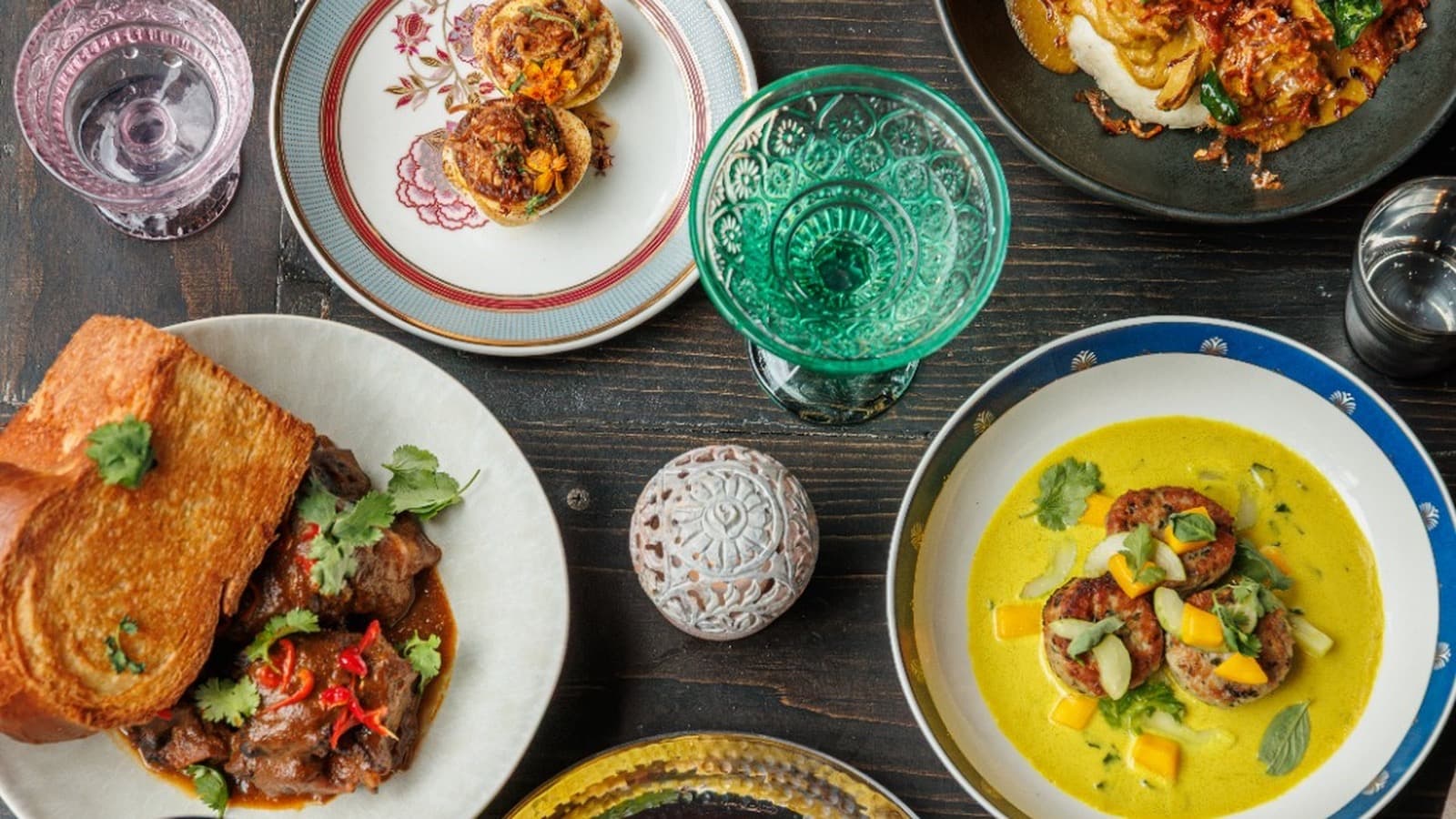
Most Indian restaurants in New York still organize themselves by place: a North Indian house style, a South Indian breakfast room, a hyper-regional brief named after one state. Chef Aarthi Sampath’s Drāvida, at 211 First Avenue in the East Village, organizes itself by movement. The menu follows South Asian communities that left the subcontinent, adapted to new ingredients, and built dishes that still read as home food without sitting inside one national border.
Sampath, who was born in Chennai, raised in Mumbai’s Chembur neighborhood, and opened Drāvida on May 21, 2026 after years of New York kitchen work, treats diaspora as the restaurant’s organizing idea. Dishes carry named origins. The card moves across continents in one sitting. The building itself splits the experience into a full dining floor and a quieter downstairs lounge. That is the story worth tracking: not that the kitchen is “global,” but how those choices turn identity into a workable restaurant structure.
Label the route, then cook the plate
Drāvida’s public menu does not hide behind a vague fusion banner. A snack can be Myanmar-style deviled egg bejo. A small plate can be Uyghur sirloin kawap, a Pakistani-influenced duck nihari hand pie, or Lhasa lamb momos with tomato-sesame chutney. Sides include asparagus poriyal from Tamil Nadu. Larger plates have included Trinidadian doubles, South African oxtail bunny chow, an Indo-Malay nasi kandar feast, Bangladeshi summer shukto, and wild branzino puyabaise with clams and coconut rice.
Those labels do the structural work. They tell a diner where the dish lives before the first bite, and they keep Guyana, Nepal, Durban, and Penang from collapsing into one “diaspora sauce.” Sampath has described meeting New Yorkers whose family food came from Guyana, Trinidad, Malaysia, Sri Lanka, Pakistan, Bangladesh, Nepal, and places rarely seated together on an American card. The restaurant’s answer is to keep specificity on the page: name the community, then let shared tools (spice, shallot, sourness, heat, wood fire) make the meal coherent.
That coherence is practical, not sentimental. A Guyanese curry can still feel Indian while using wiri wiri pepper, thyme, and parsley that local pantries made inevitable. Nepali timut pepper, which Sampath has pushed as a citrusy, tingling seasoning, shows up on wood-fired steak from the room’s old brick ovens. The ovens are not décor. They are a cooking system that lets the diaspora brief use fire the way a single-region grill house would.
Two floors, one argument
The restored century-old building at First Avenue between 12th and 13th Streets gives the concept a physical plan. Upstairs is the main dining room: exposed brick, warm seating, and the brick ovens that helped sell Sampath on the lease after Luzzo’s left the address. Downstairs, Jam & Jaggery is a roughly 20-seat lounge for cocktails, nonalcoholic drinks, tea, small plates, and private events. One ticketed dinner upstairs; a lower-commitment introduction below. Same kitchen logic, different occasion.
Hours run Tuesday through Saturday, 4:30 p.m. to 10:30 p.m., and Sunday to 10:00 p.m., with Monday closed. Reservations open up to 14 days out. The cocktail list mirrors the food’s method: Passionfruit Lassi, a Drāvida Highball, Orange Cream, and other drinks that treat South Asian flavors as bartending material rather than garnish. The point is hospitality structure. Guests who want the full diaspora map can stay upstairs. Guests who want one plate and a drink can test the idea downstairs without committing to a multi-continent tasting.
Why the structure had to be self-funded
Sampath wrote the concept in 2019. Investors, she has said, often liked the food and still rejected the pitch as too niche or too hard to explain. She kept refining it while moving through Junoon (where she rose from intern to chef de cuisine under Vikas Khanna), The Breslin, the Rainbow Room, food-truck work, Food Network wins on Chopped and Beat Bobby Flay, and CookUnity prepared meals that she has said reach on the order of 50,000 a week. Delivery revenue helped her open without reshaping the restaurant for someone else’s category language.
That history matters for how the room reads now. A diaspora menu fails if it becomes a souvenir shelf: one Trinidad plate, one Nepal plate, one Malaysia plate, no kitchen grammar holding them. It also fails if every dish is sanded into New York fine-dining sameness. Drāvida’s defense is the labeled, evolving card and the two-floor service plan. Confirm current dishes before you go; the house treats the menu as a living map, not a frozen canon.