
Indo-Caribbean Tables: Doubles, Curry, and Diaspora Reinvention
Trinidad, Guyana, and Suriname — where South Asian food took root and rewrote itself.
- indo-caribbean
- diaspora
- doubles
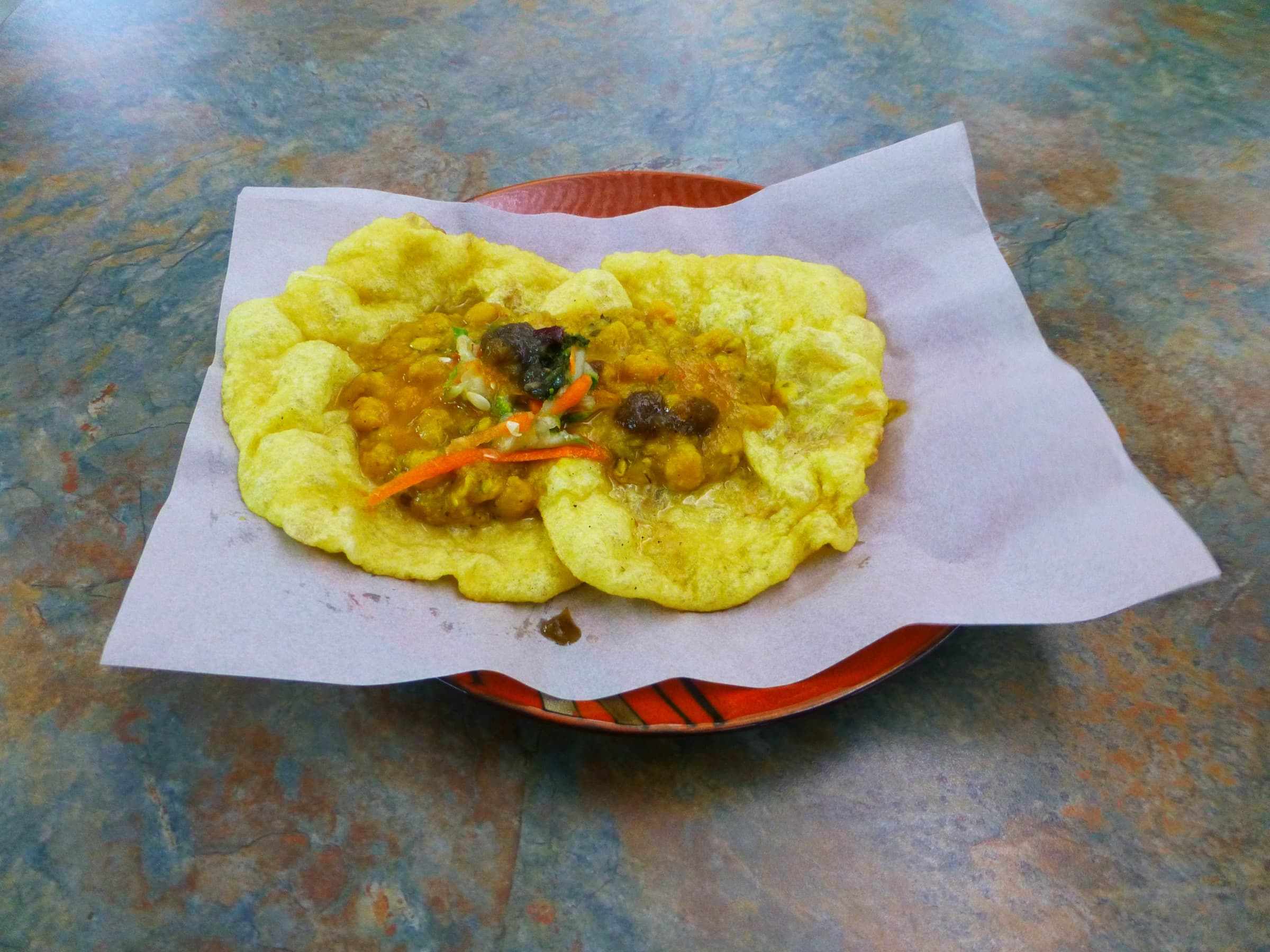
Indo-Caribbean cooking is a South Asian diaspora cuisine with its own grammar — not a branch of North American “Indian takeout.” This page is a starter map of Trinidad, Guyana, and Suriname tables: indentureship history, doubles and roti shop culture, and the local peppers and herbs that rewrote the spice box.
How the kitchen got here
After slavery was abolished in the British Empire, colonial sugar estates recruited indentured labour from India. From the mid-nineteenth century into the early twentieth, hundreds of thousands of workers went to Trinidad, British Guiana (Guyana), and elsewhere; related movements sent Indians to Dutch Suriname (where communities are known as Hindoestanen). Many stayed. Foodways from Bihar, Uttar Pradesh, and other source regions met plantation rations, tropical produce, and neighbors’ cooking — and kept changing.
Early rations often included rice, dal, oil or ghee, sugar, salt, and turmeric. Fresh coriander and curry leaf were not always available; Trinidadian cooks leaned on shadow beni (culantro), Scotch bonnet heat, coconut milk in many pots, and ready curry powders that give island curries a consistent base. White flour — not atta — became the default for many roti styles, because that was the flour at hand.
Doubles: the street grammar
Doubles is Trinidad’s iconic street snack: curried channa (chickpeas) between two pieces of fried bara, finished with chutneys, kuchela, and pepper sauce. Most tellings place its rise in Princes Town in the 1930s with the Deen family — customers asking to “double” the bara gave the dish its name — though relatives still contest details of the origin story. The clear ancestor is chole bhature logic; the finished plate is Trinidadian.
Roti shops and the wrap
In Trinidad, “roti” can mean the bread or the foil-wrapped parcel of curry inside it. Dhalpuri (split-pea–stuffed) wraps chicken, goat, duck, or vegetable curry for the road. Buss-up-shut (paratha torn into shreds, “burst-up shirt”) is eaten beside the curry rather than as a wrap. Sada roti is the plainer everyday bread. Guyana shares much of this roti-and-curry vocabulary, with wiri wiri chili and coconut milk as frequent signatures; Surinamese Hindoestaanse cooking has its own Dutch-Caribbean afterlife, including large communities in the Netherlands.
What not to assume
- It is not “Indian food with Caribbean hot sauce.” Techniques, breads, and spice mixes have decades of local development.
- Jamaica’s curry goat sits in a related but different story — smaller Indo-Jamaican population, wider national adoption of curry goat as Jamaican.
- Diaspora cities (Toronto, New York, London) keep doubles and roti shops as comfort infrastructure, not novelty fusion.
Sources and further reading
- Wikipedia: Doubles (food))
- BBC Travel: Doubles — Trinidad’s addictively spicy street snack
- Scroll.in / Colleen Taylor Sen: How Indian curry acquired its Caribbean flavour
- Wikimedia Commons: FOOD Doubles 2.jpg