
The Auntie Food Business Model
Home kitchens, WhatsApp orders, and the informal economy that feeds diaspora neighborhoods.
- diaspora
- business
- community
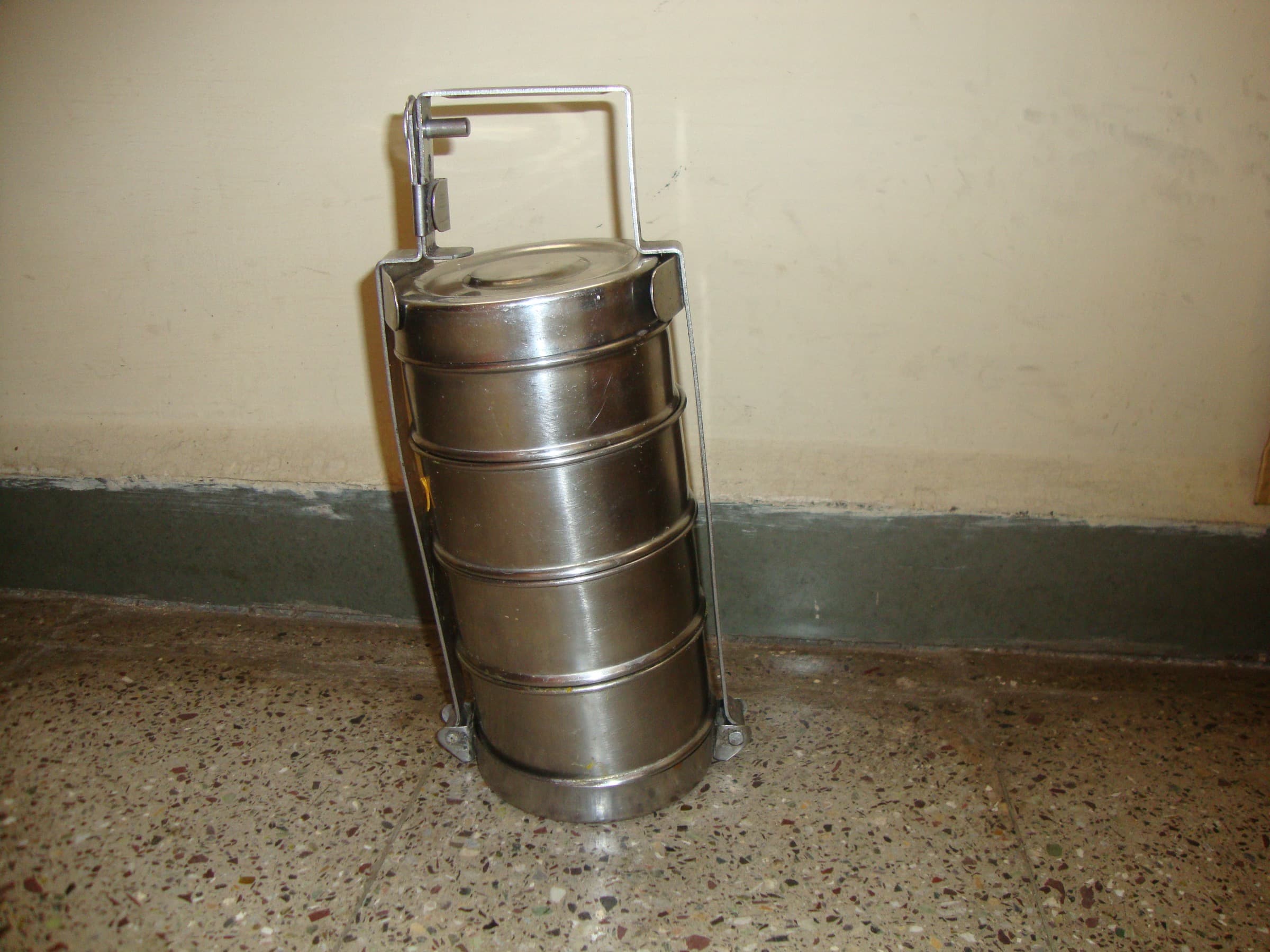
Before the restaurant lease, there was often a home kitchen taking WhatsApp orders. This page is about that informal diaspora food economy — tiffin runs, festival trays, mosque and temple fundraiser cooking — and why “just scale it” misses how the model actually works.
What the model looks like
Orders arrive by group chat, temple bulletin, or a cousin’s referral. Payment is Venmo, Interac, cash on pickup. The menu is short: what the cook already knows how to make well, and what travels in a dabba without falling apart. Capacity is the constraint — one oven, one fridge, school pickup at 3 — not a branding problem.
In South Asia, stacked steel tiffin carriers (dabbas) already encode the idea of home food moving to someone else’s table. Mumbai’s dabbawala networks made that logistics famous. In diaspora neighborhoods the spirit is similar, even when the courier is the cook’s teenager with a cooler bag.
Informal does not mean unskilled
- Consistency under time pressure: same dal texture for twelve boxes, not twelve experiments.
- Trust networks: customers are often from the same language, mosque, gurdwara, or office cluster.
- Festival spikes: Diwali trays and Ramadan iftar orders can out-earn quiet Tuesdays.
- Reputation risk: one bad batch travels as fast as the WhatsApp forward that built the business.
The regulatory gap
In the U.S. and Canada, “cottage food” rules usually cover low-risk, shelf-stable items — baked goods, jams, dry mixes — not hot curries, rice, and meat that need temperature control. Selling daily cooked meals from a residential kitchen often requires a commercial kitchen, a food-premises permit, or a special home-kitchen program where one exists.
California’s Microenterprise Home Kitchen Operation (MEHKO) path — authorized statewide in 2019, adopted county by county — is one example of a legal route for small home restaurants with meal and sales caps. Los Angeles County, for instance, began permitting MEHKOs with limits such as 30 meals per day and 90 per week. Many cities and provinces have no equivalent. Operators should check the local health department; this site is not legal advice.
When people do scale
Some move into shared commercial kitchens, ghost kitchens, or a small storefront. Others keep the home channel and add a licensed bakery line under cottage rules. The ones who keep community trust usually change packaging and permits before they change the recipes that made people text “aunty, are you cooking this week?”
Sources and further reading
- California Department of Public Health: Microenterprise Home Kitchen Operations
- Los Angeles County Public Health: MEHKO
- Washington State Dept. of Agriculture: Cottage Food (example of low-risk home-sales limits)
- Wikipedia: Tiffin carrier
- Wikimedia Commons: Tiffin box.jpg