
Cardamom: Whole Pods vs Ground
Green cardamom behaves differently depending on how you deploy it — chai, biryani, and mithai each have a preference.
- cardamom
- chai
- storage
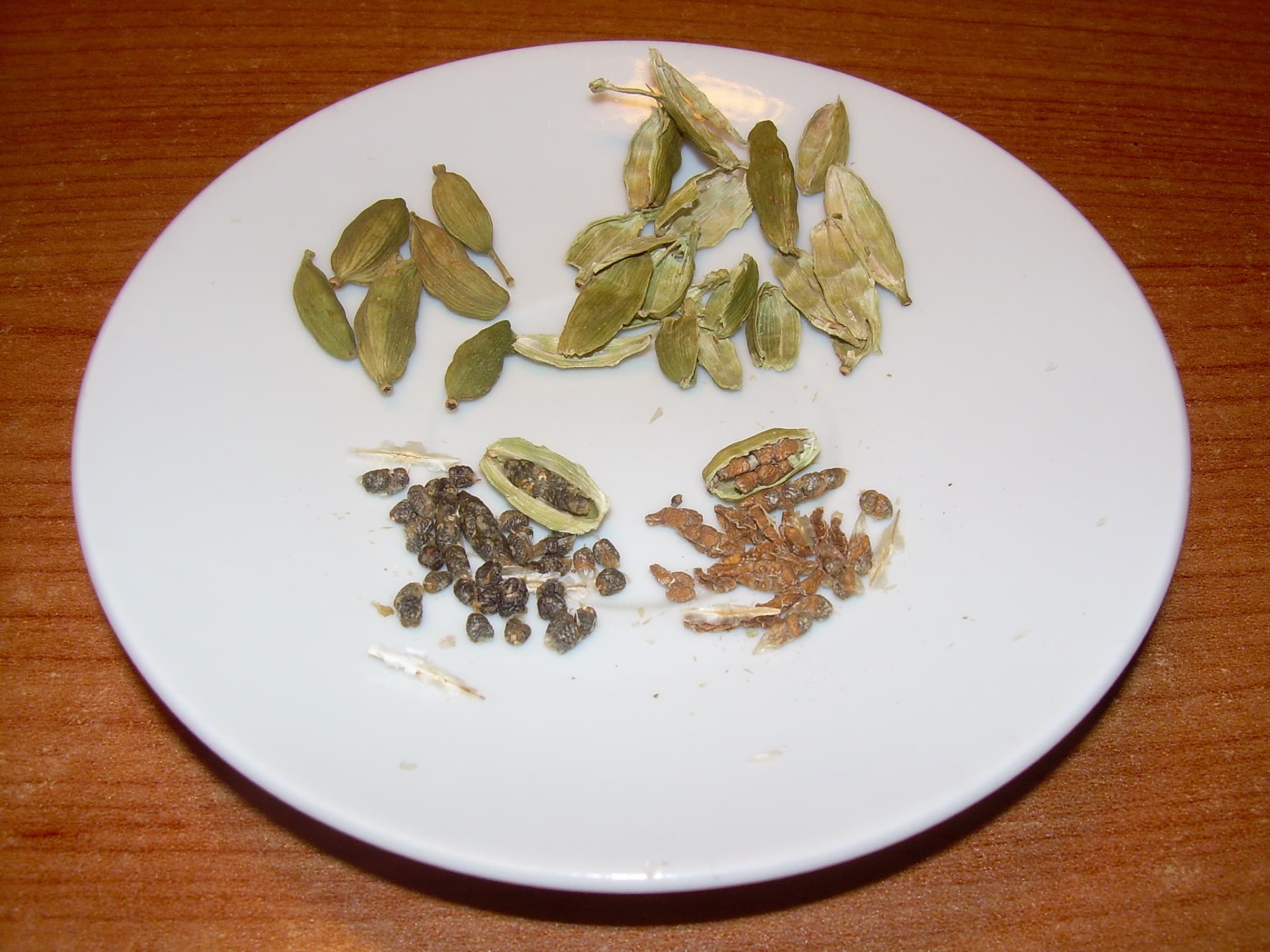
Green cardamom (chhoti elaichi, Elettaria cardamomum) is the floral, resinous pod that shows up in masala chai, biryani, and mithai. This page is about when to keep pods whole, when to crack them, and when ground powder is good enough — not a ranking of brands.
What the pod is protecting
The thin green husk holds small dark seeds. The aroma lives mainly in those seeds' essential oil; once the seeds are exposed or ground, the volatile fraction fades faster than it does inside an intact pod. Wikipedia and kitchen practice agree on the storage rule of thumb: buy and keep cardamom in the pod when you can. India, Indonesia, and Guatemala dominate commercial production; Kerala's Western Ghats (including the Idukki belt) remain closely associated with high-grade green cardamom in Indian trade.
Whole pods: chai, rice, and slow simmer
For chai and other liquid simmer, lightly crack 2–3 pods so liquid can reach the seeds, then leave them in the pot. You can fish them out before pouring if you dislike biting a husk. In biryani and other long-cooked rice, whole pods are meant to perfume the steam; diners usually push them aside on the plate. A whole pod is also the right form for a garam masala blend you will toast and grind yourself later.
- Light crack: press with the flat of a knife until the husk splits — do not pulverize.
- Heavy crush or mortar grind: for mithai fillings, cake batter, or a chai when you want faster release.
- Bleached white cardamom is green cardamom with the color removed; aroma is usually weaker. Prefer green pods for cooking.
Ground cardamom: convenience with a shelf-life cost
Pre-ground cardamom is useful for baking, quick doughs, and days when you will not crack pods. It will not taste as bright as seeds ground from a fresh pod, and open jars go flat in weeks to a few months depending on heat and air. A working diaspora compromise: keep a small jar of powder for baking, and a larger stock of whole pods for chai and rice. A common kitchen equivalence is about 10 pods ≈ 1½ teaspoons ground — treat that as a starting point, not a lab conversion.
Do not confuse green and black
Black cardamom (badi elaichi, Amomum subulatum) is larger, darker, and smoky from drying over fire. It belongs in robust meat curries and some North Indian garam masalas. It is not a 1:1 swap for green cardamom in chai or kheer. If a recipe says elaichi without qualifier in a sweet or chai context, it almost always means green.
Storage
Airtight jar, cool and dark, away from the stove. Whole pods keep usable aroma far longer than powder. Skip the fridge — moisture clumps and dulls spices. If a pod smells dusty or papery when cracked, replace the jar.
Sources and further reading
- Wikipedia: Cardamom
- Spices Board of India: Small cardamom
- Wikimedia Commons: Green cardamom seeds.JPG