
Pressure Cooker Logic for Dal and Rice
Whistles, ratios, and why the pressure cooker still earns counter space.
- pressure cooker
- equipment
- dal
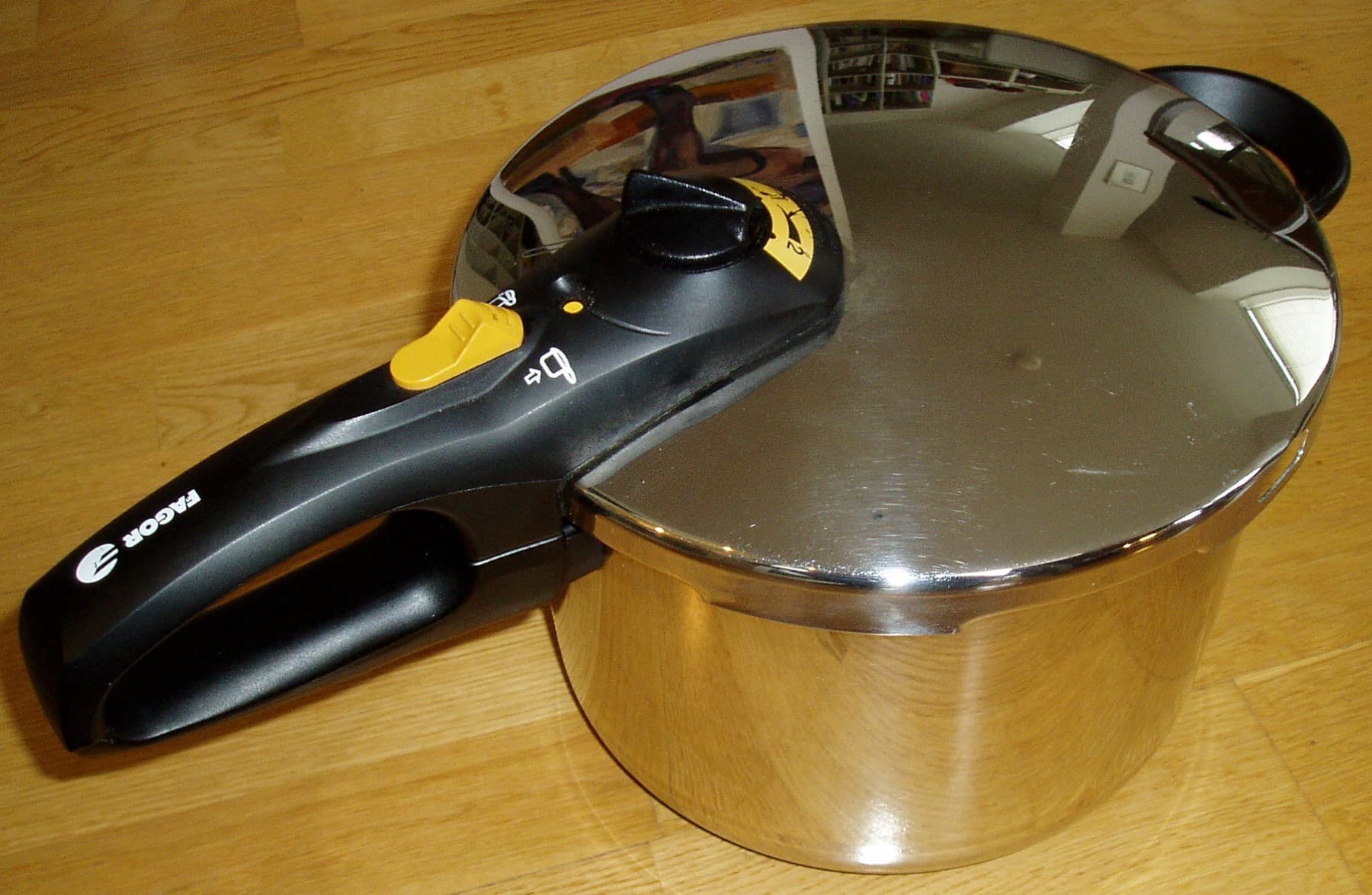
A stovetop whistle cooker still earns counter space because it compresses dal and rice time without a second appliance. This page is working logic — liquid ratios, whistle counting, heat management — not a brand review. Instant Pots and electric multicookers use minutes, not whistles; translate the idea, not the number.
What a whistle is telling you
On a classic Indian-style cooker, the regulator (whistle) vents when the pot is at working pressure. Recipes that say “3 whistles” mean: bring to pressure, then count those release cycles while holding a steadier heat. Whistles are a household timer, not a laboratory unit — altitude, cooker size, flame, and how full the pot is all change how fast they come.
Dal: start with ranges, then tune
Split dals (moong, masoor, soaked toor) often land around 2–4 whistles. Chana dal needs more. Whole legumes — rajma, kabuli chana — need soaking and a longer whistle count; do not treat them like weeknight moong. A common liquid starting point is roughly 2½–3 cups water per cup of split dal (more for thinner sambar-style pots). Age of the dal matters: older stock cooks slower.
- Soaked toor: often ~2 whistles; unsoaked closer to 3–4.
- Moong / masoor: often 2–3; watch for mush if you overshoot.
- Chana dal: often 4–5, sometimes more.
- Rajma / whole chana: soak overnight; plan a much longer cook than split dals.
Heat and foam
Many kitchens heat on higher flame until the first whistle, then drop to medium so pressure holds without constant screaming. Constant high heat can scorch the bottom while the center stays underdone. A spoon of oil or ghee and filling under about two-thirds full helps control foam. Salt timing is a household argument — some add before pressure, some after; texture and water hardness both play a role.
Rice in the same pot
Rice whistle counts are shorter than tough legumes — often 1–2 depending on grain and soak. Many weeknight cooks do dal and rice in separate pots or stacked inserts when the cooker allows. If you are new to the appliance, master one pot of dal first; rice is easier once you know how your specific cooker behaves.
Sources and further reading
- Wikipedia: Pressure cooking
- Asianet: whistle ranges for rice and lentils
- Plattershare: dal whistle overview