
Pune Just Got a Darshini-Style Room That Skips the Sambar
Yash Agarwal and Sayee Karmarkar’s &Chutney in Balewadi serves dosas and idlis with chutney only, priced for everyday traffic.
- opening
- pune
- south indian
- dosa
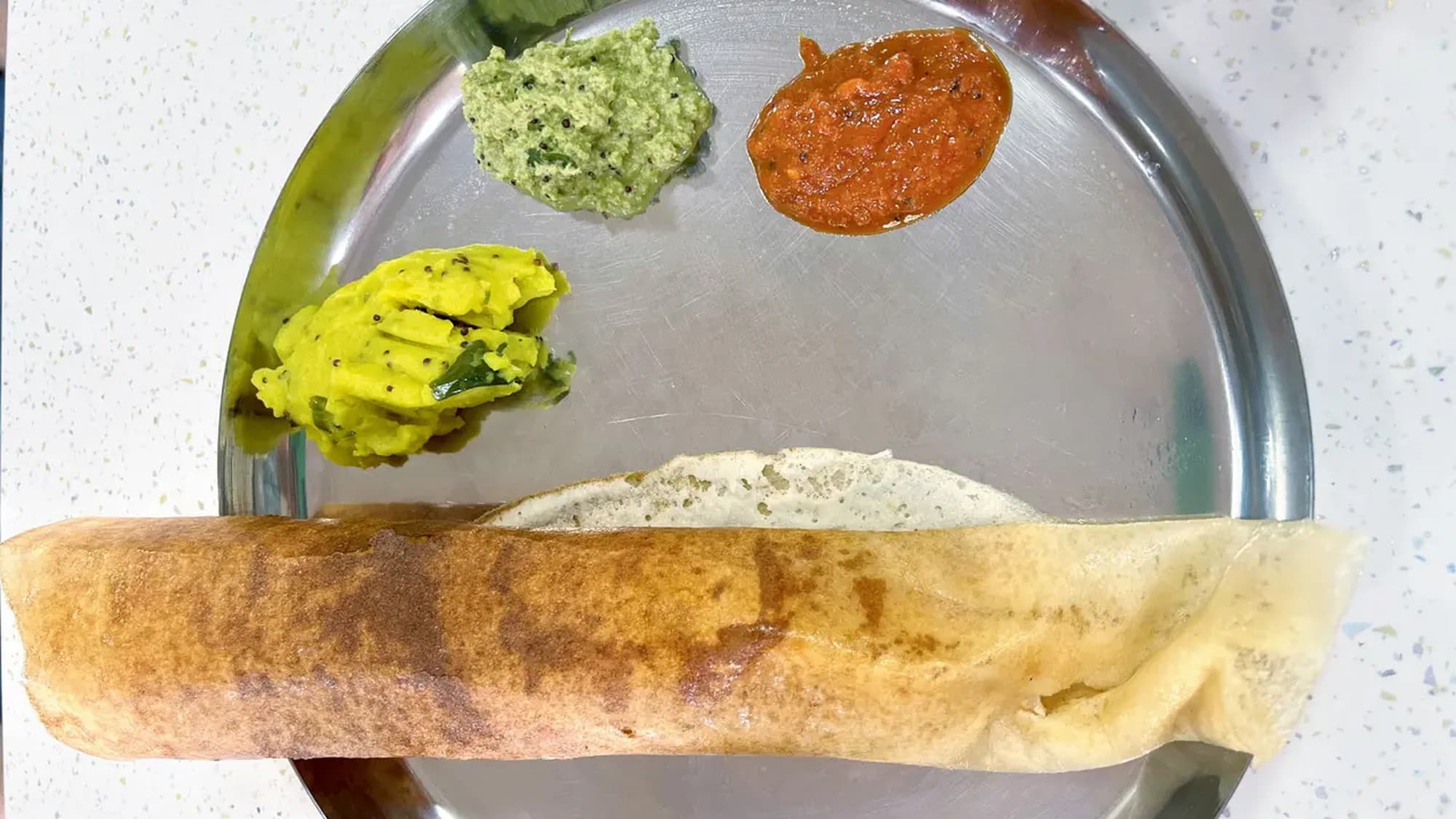
&Chutney opened this year in Balewadi, Pune (shops 18 and 19 at Elite Premio, Laxmi Nagar, Balewadi Gaon), as a small South Indian room with an open kitchen and a cast-iron tawa you can hear from the tables. Mid-Day’s Suprita Mitter visited in July 2026 and found none of the reel-bait: no kitsch set, no hour-long PR queue, no dosa built for the camera. Co-founders Yash Agarwal, 26, and Sayee Karmarkar are betting on everyday traffic instead: filter coffee before work, idli or dosa after the school drop, a rice plate at lunch.
The clearest rule hangs on a board: “No Sambar Only Chutney.” Agarwal told Mid-Day the idea comes from Bengaluru darshinis, quick South Indian counters where chutney carries the plate, and from relatives who eat that way in the city. Pune diners often order less when they learn sambar is off the menu, he said, then order more once they taste the chutneys. The printed list stays short: crisp dosas around ₹65, light idlis around ₹40, homestyle upma, weekday rice plates that rotate (puliyogare one day; an Andhra-style mushroom fried rice with Byadgi chili on Fridays), and pineapple sheera without food coloring for dessert.
Agarwal’s path is local and unfussy. He started cooking for classmates in Karve Nagar as a kid, studied hospitality after encouragement at a Teach For India school, worked part-time at Starbucks, co-founded a vegan smoothie brand, and ran a cloud kitchen for three years before opening &Chutney with Karmarkar. He pushes back, gently, on the ₹250-₹300 single-dosa habit spreading through big-city South Indian rooms. Students from a nearby coaching class still ask for benne dosa they saw online and sometimes leave when it isn’t there; when they come back with parents, he says, they stay for the regular plate.
For readers watching India’s dosa economy tilt toward butter-heavy spectacle, the useful signal is price and habit. Mid-Day reports the founders skipped paid influencers and are claiming roughly 40 percent repeat visits, a figure we can’t audit from here, but one that matches the neighborhood brief. Confirm hours and the day’s rice before you go; call 76661 00789 or find them as andchutney on Instagram. This is opening-week reporting from Mid-Day’s visit, not a Tadka Table review.