
Le Mil’s Wants San Francisco to Take Indian Coffee as Seriously as Its Chai
A Polk Street café opening August 15 puts Chikmagalur estate beans, South Indian filter coffee, and cascara-kokum drinks on a city menu that usually leaves Indian coffee unnamed.
- opening
- coffee
- san francisco
- chai
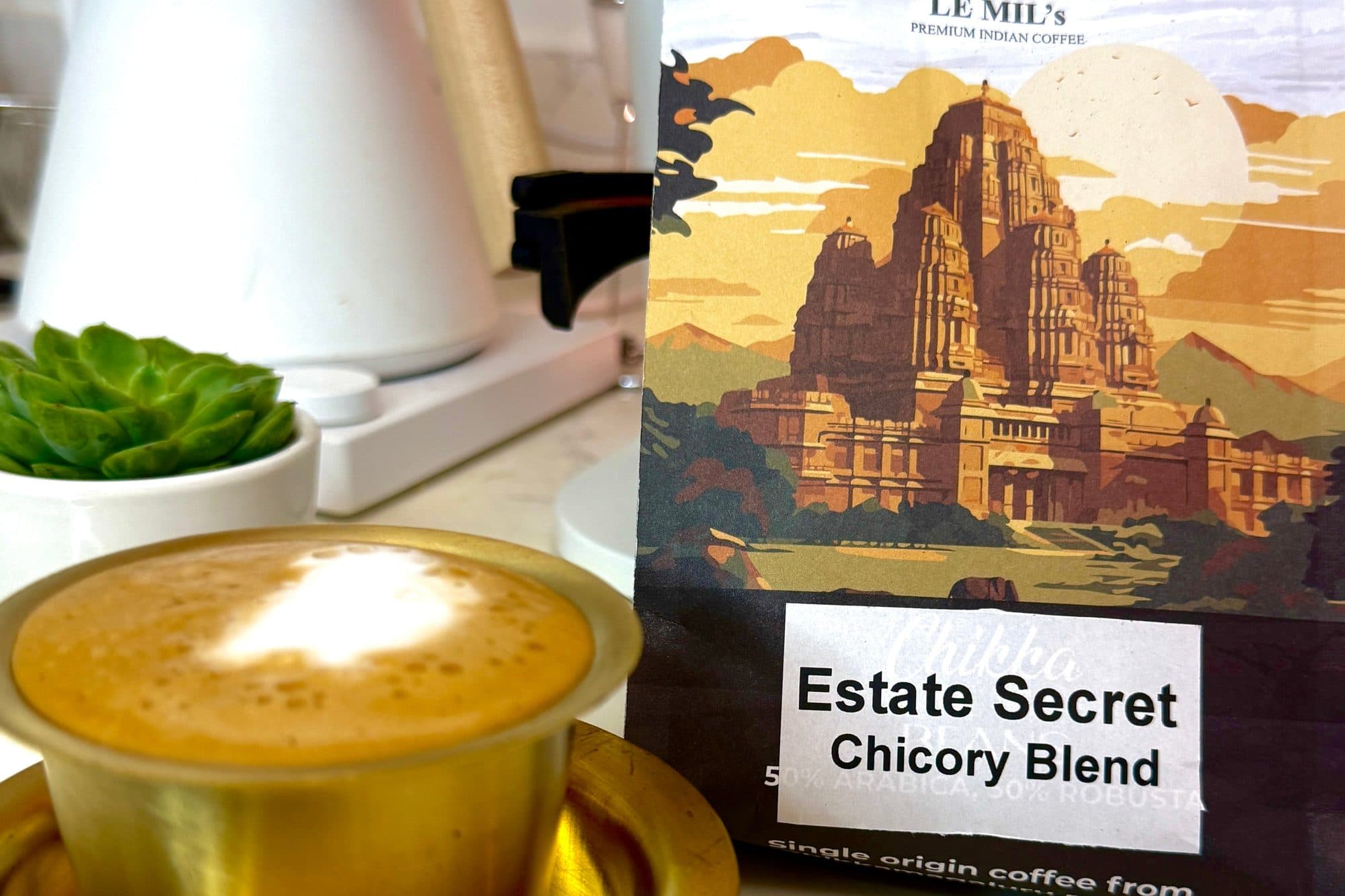
On August 15, Le Mil’s opens a permanent café at 1330 Polk Street in San Francisco. The beans come from Navilumane Estate, the Chikmagalur family farm behind co-founder Milana Ram, and from neighboring Karnataka farms she began buying from once Bay Area demand outgrew one estate’s harvest. The more useful way to read the opening is not as another specialty shop in a city already crowded with them. It is as a public argument that Indian coffee belongs on the same origin map as Ethiopia or Colombia, instead of disappearing into anonymous espresso blends.
Ram and her husband, Himanshu Bhaisare, both came to the Bay Area to study at San Francisco State and later worked as engineers. In 2023, when Ram’s parents considered selling the five-generation plot that remains of a once-larger family holding, the couple started Le Mil’s as an online shop and Newark Farmers Market popup rather than returning to farm full-time. Ram has since left her electrical-engineering job to run the company; Bhaisare still works as a software engineer. First-year imports were about a ton. By the second year they were moving closer to ten tons, roasting small batches in Berkeley and wholesaling to rooms such as Parachute Bakery in the Ferry Building and Chayakada, a South Indian café in San Jose.
India is the world’s seventh-largest coffee producer and a major exporter, yet American specialty menus rarely treat it as a named origin. Much of the crop is robusta, which global specialty culture long treated as filler for crema and price rather than a cup worth describing. Indian arabica often lands in European or commodity channels where caramel, cocoa, and spice notes get absorbed into house blends without a farm or district on the bag. Ram’s point, repeated across early coverage of the Polk shop, is blunt: Indian beans have been useful to other people’s blends more often than they have been allowed to be the story.
What Chikmagalur puts in the cup
Chikmagalur, in Karnataka’s Western Ghats, is the origin story Indian coffee keeps returning to. The Baba Budan legend places the first plantings there after seven Yemeni beans arrived in the seventeenth century; commercial estates expanded in the nineteenth. Estates in the district still grow under layered shade, with jackfruit, silver oak, and other canopy trees moderating monsoon rain, and with pepper, cardamom, or arecanut often sharing the same ground. That mixed canopy is not a marketing garnish. It is how many Karnataka farms stay productive when coffee alone does not pay.
Navilumane’s remaining acres grow both arabica and robusta. Le Mil’s bags name regional blends such as Malenad, Chikka, and Budan, and tasting notes lean toward maple, clove, black pepper, dried fig, chocolate, and hazelnut rather than the bright berry acidity many Bay Area pour-over drinkers are trained to chase. For a diner who only knows Indian coffee as the bottom of a grocery tin, that profile is the first lesson: shade-grown Indian lots can be structured and sweet without pretending to be Ethiopian natural.
Filter coffee is not a failed pour-over
South Indian filter coffee, or kaapi, uses a metal percolator to make a concentrated decoction, then mixes it with hot milk and sugar, often pulling the drink between tumbler and dabara for foam. Many household and stall blends include roasted chicory root for body and color. Specialty pour-over culture, by contrast, prizes clarity, precise water temperature, and origin notes drunk black. Le Mil’s refuses to pick only one side. The Polk menu is expected to carry pour-overs, drip, and milk drinks built on a Malenad arabica-robusta blend, plus a South Indian filter coffee with chicory, after East Bay farmers-market customers asked for the home taste Ram had initially left off the wholesale list.
Her Estate Secret blend uses an 80/20 coffee-to-chicory ratio with chicory sourced from Gujarat. Chicory entered coffee culture as a stretch ingredient during European shortages and traveled into India under British rule; South Indian kitchens kept it because it works with milk, not because it is a novelty syrup. Putting that cup beside a gooseneck pour-over is the café’s clearest thesis: Indian coffee has a domestic brewing grammar and a specialty origin grammar, and both can sit on one counter without one apologizing for the other.
Cascara, kokum, and a longer stop
Specialty drinks for the shop were developed with Anand Upender, whose York Street Collective runs a San Francisco beverage pop-up known for South Asian and Asian ingredients in nonalcoholic drinks. The low-caffeine Pink Panther builds cascara, the dried coffee-cherry fruit, with kokum and hibiscus over tonic, finished with salted coconut cream. A blossom tonic pairs espresso with jasmine, chamomile, and rose. Several drinks use a masala jaggery syrup with cardamom, ginger, clove, and nutmeg, including an “almost” latte of roasted chicory and dandelion root. Pastries are planned from Saltwater Bakeshop.
The room itself pushes against the grab-and-go habit Ram associates with American coffee. A Modbar system keeps espresso equipment under the counter. Woven baskets hang overhead. Soft chairs are meant for lingering. Whether one Polk Street café can rewire how specialty coffee talks about India is an open question. Vietnamese and Yunnan origins only gained U.S. recognition after years of importers, roasters, and regulars insisting those beans were not filler. Le Mil’s is making that insistence local: name the estate, roast in Berkeley, serve filter coffee without translation theater, and ask San Francisco to treat Indian coffee with the same seriousness it already grants chai.
Further reading
- Vikas Khanna Just Put Chef Capital Behind a New York Chai Brand
- Chai Station Setup for Daily Ritual
- Diaspora Co. Raises an Angel Round for Equitable Spices
- Why “Indian Food” Is the Wrong Menu Category
- Beyond Butter Chicken: Why South Asian Dining Got Hyper-Regional
- GOLDSEA: Asian cafés refresh the Bay Area coffee scene
- GOLDSEA: India’s impact on American food culture