
Chaat Counter Decoded: What Goes on What
Pani puri, bhel, sev puri — the assembly logic behind every chaat cart.
- chaat
- street food
- ordering
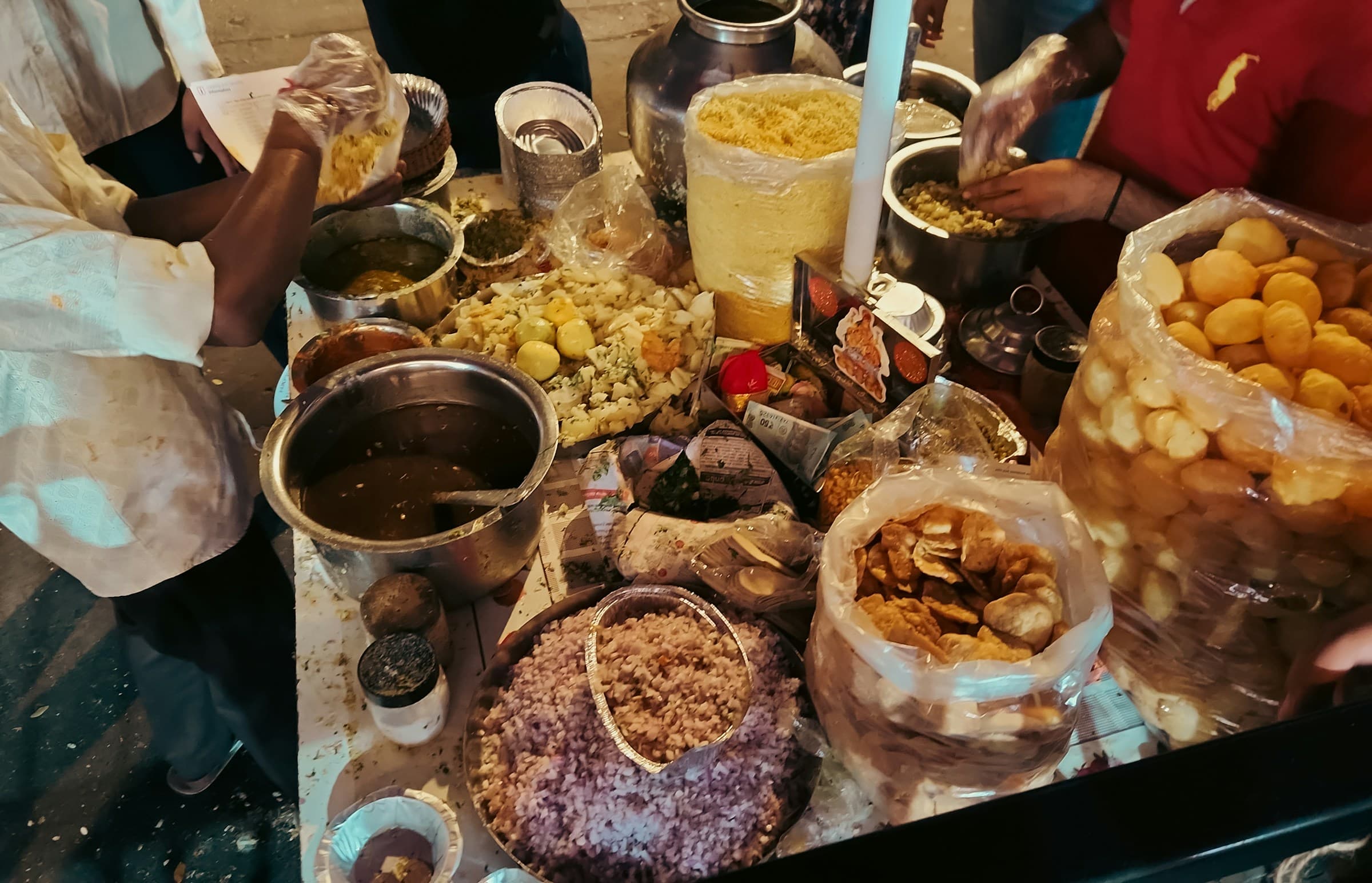
This page decodes what goes on what at a chaat counter — and on a home board — so the plate stops feeling random. Chaat is a timed stack: base, bulk, wet (chutney, pani, or dahi), spice, then last crunch. Region changes the default stack, not the logic.
The stack
- Base — puri shell, papdi, murmura, aloo tikki, bhalla.
- Bulk — potato, chana or ragda, onion-tomato where the style wants it.
- Chutney — green (herb/chili) and imli/saunth (sweet-sour); sometimes garlic or red chili paste.
- Spice — chaat masala, roasted cumin, chili powder; amchur and kala namak do much of the “street” finish.
- Acid — already in imli and chaat masala; lemon or gondhoraj lime when the cart offers it.
- Yogurt — only on dahi styles; skip it when you want heat and crunch first.
- Last crunch — sev (and coriander) after the wet layers so it does not wilt in the bowl.
Wet softens crunch in minutes. Serious counters assemble to order. At home, mix bhel only when people are ready to eat.
Water bites: pani puri, golgappa, puchka
Same format — hollow crisp shell, filling, flavored water, one bite — different regional defaults. Delhi golgappa often means a thicker shell, potato and black chickpeas, minty or tangy waters, sweet saunth in play. Mumbai pani puri leans potato or ragda and a clear sweet-vs-spicy water choice. Bengal puchka runs sharper and less sweet; atta shells can be larger and thinner, with mustard oil or bhaja moshla notes in some carts. Ask for spice level before the first pour. Eat immediately.
Plate chaats: bhel, sev puri, papdi, tikki
Bhel (Mumbai) is a toss of murmura, papdi bits, sev, vegetables, and chutneys — ask for geela (wet) or sukha (drier). Sev puri stacks flat papdi with potato and onion under a mountain of sev; traditionally no dahi. Papdi chaat (Delhi/north) is a yogurt plate: cold dahi, dual chutneys, masala, often lighter on raw onion. Aloo tikki chaat is a hot smashed tikki under dahi and chutneys; Mumbai’s cousin is often ragda pattice with white-pea curry. These plates wilt — order when you can stand and eat.
When dahi joins
Dahi puri fills shells with yogurt instead of pani. Dahi bhalla / dahi vada soaks soft lentil fritters in yogurt, then piles chaat toppings. Say “no dahi” or “dahi on the side” if you want the crunch or heat to lead.
What to say at the counter
- Extra mirch / teekha pani — hotter water or spice.
- Meetha — sweeter pani or more imli.
- Less onion / no onion — say it before the first scoop.
- No dahi — or dahi on the side.
- Sukha / dry — for bhel that should stay crisp longer.
Sources and further reading
- Wikipedia: Chaat
- Wikipedia: Panipuri
- Veg Recipes of India: Papdi chaat
- Veg Recipes of India: Bhel puri
- Unsplash: Zoshua Colah chaat counter