
Asma Khan and the All-Women Kitchen
Darjeeling Express made South Asian home-cook labor visible and payable — and treated the open kitchen as a political choice.
- london
- chef
- labor
- women
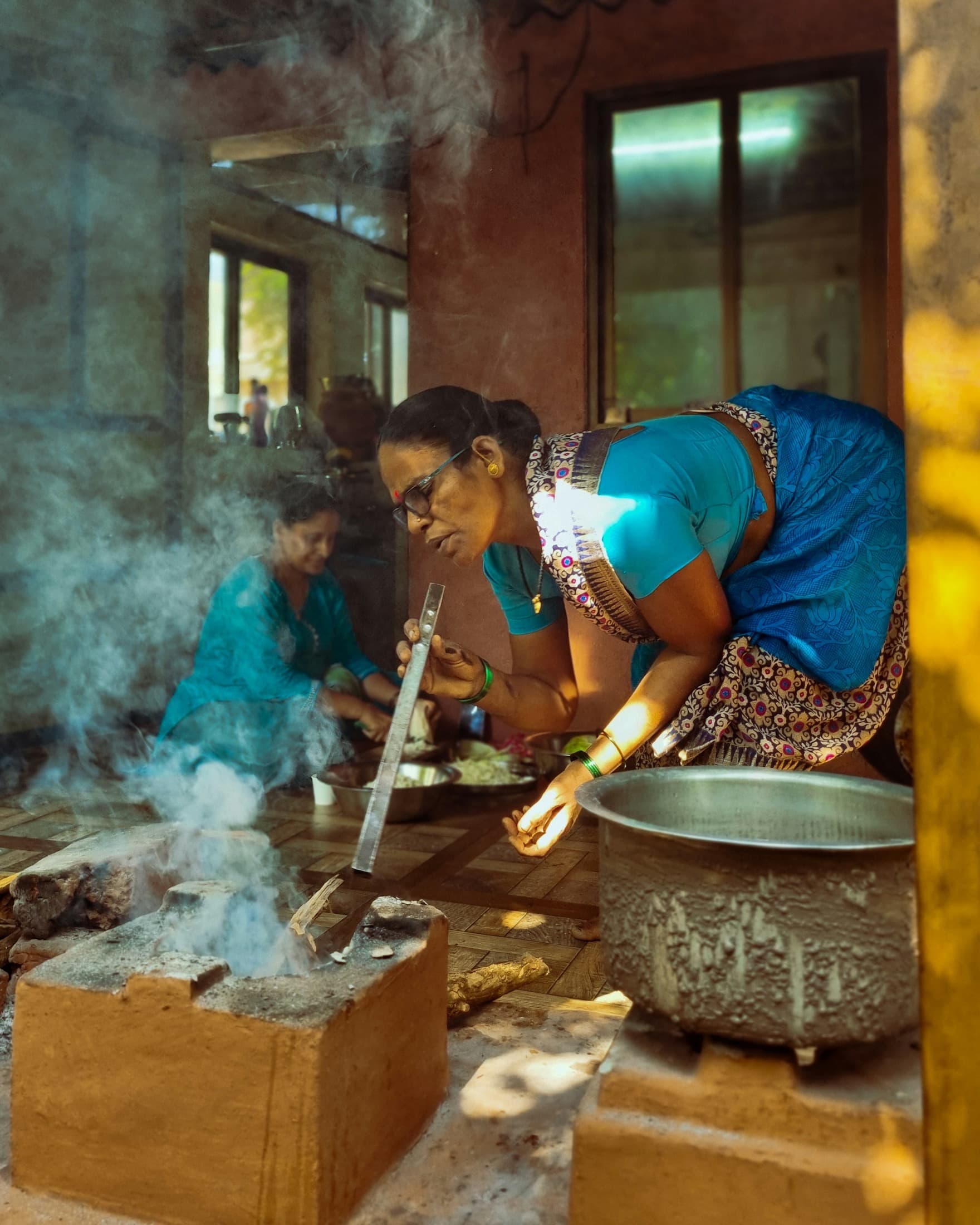
Asma Khan’s Darjeeling Express in London is often introduced as an all-women Indian kitchen. That headline is true and useful. The deeper story is how unpaid, informal skill from South Asian home cooks became paid restaurant labor without a classical brigade, and why whether those cooks are visible to diners is part of the politics, not décor.
From law PhD to Sunday supper clubs
Khan grew up in Kolkata. She moved to Cambridge in 1991, later to London, and completed a PhD in British constitutional law at King’s College London while raising children. BBC Travel and King’s alumni reporting describe the cooking turn as deliberate after the doctorate: home supper clubs around 2012, first for charity, cooking Mughlai and family food she had learned in her mother’s kitchen after arriving in Britain lonely and unable to cook.
The kitchen help was not a chef-school pipeline. Live-in South Asian nannies in her neighborhood often had Sundays off with nowhere to go. Khan invited them in for food, soaps, and company. They asked to cook with her. Guardian reporting from the 2017 restaurant opening describes women from different regions and languages sharing Bollywood songs on the line: home skill made collective before it was branded.
How Darjeeling Express scaled
Demand outgrew the house. Vivek Singh offered space at The Cinnamon Club. Residencies and a Soho pop-up followed. Critic Fay Maschler’s early attention accelerated bookings. The restaurant opened in 2017 at Kingly Court near Carnaby Street with a kitchen staffed by women who had not trained in professional kitchens. The food brief stayed home-table: Kolkata streets and household celebrations, Hyderabad and Darjeeling references, sharing plates rather than a tasting-menu performance of “modern Indian.”
Later site moves, including a larger Covent Garden chapter and returns toward open-kitchen layouts, keep showing up in press because Khan treats sightlines as labor policy. Eater London covered her willingness to leave a commercially useful basement kitchen so the women cooking would not stay invisible. Capacity and rent matter. So does whether the front of house can hide the cook.
What travels to other rooms
- Home cooks hold transferable technique: timing of tadka, patience with onions, festival dishes at scale. The restaurant made that skill payable and public.
- Immigrant women’s Sunday free time was infrastructure (parks and borrowed kitchens) before it was a brand story.
- Media fame (Netflix Chef’s Table, cookbooks including Ammu, TIME recognition in 2024 per the restaurant’s own biography) can flatten the team into one founder’s arc. The line is still the argument.
- A single celebrated London room does not fix wage theft, visa precarity, or the auntie WhatsApp economy elsewhere. It is one working counterexample inside fine-dining attention.
How to read related rooms
When you eat elsewhere, ask who is on the stove and whether the menu matches their training: family household, hotel banquet line, or chef-school plating. Short menus executed every day often signal real capacity. Long fusion lists with an empty lunch service can mean the story is bigger than the labor available. That reading belongs next to Khan’s project without requiring every restaurant to copy her staffing rule.
Darjeeling Express is strongest as a labor and visibility story, not only as a celebrity-chef brand. Book for the kitchen you can see and the home-cook claim on the plate; confirm the current address before you go.