
Conagra Is Betting on Halal Butter Chicken for Canada’s Freezer Aisle
Marigold launches four Canadian-made frozen meals, including three chicken curries and a vegan chana masala, with sauces due in September.
- brand
- cpg
- frozen
- canada
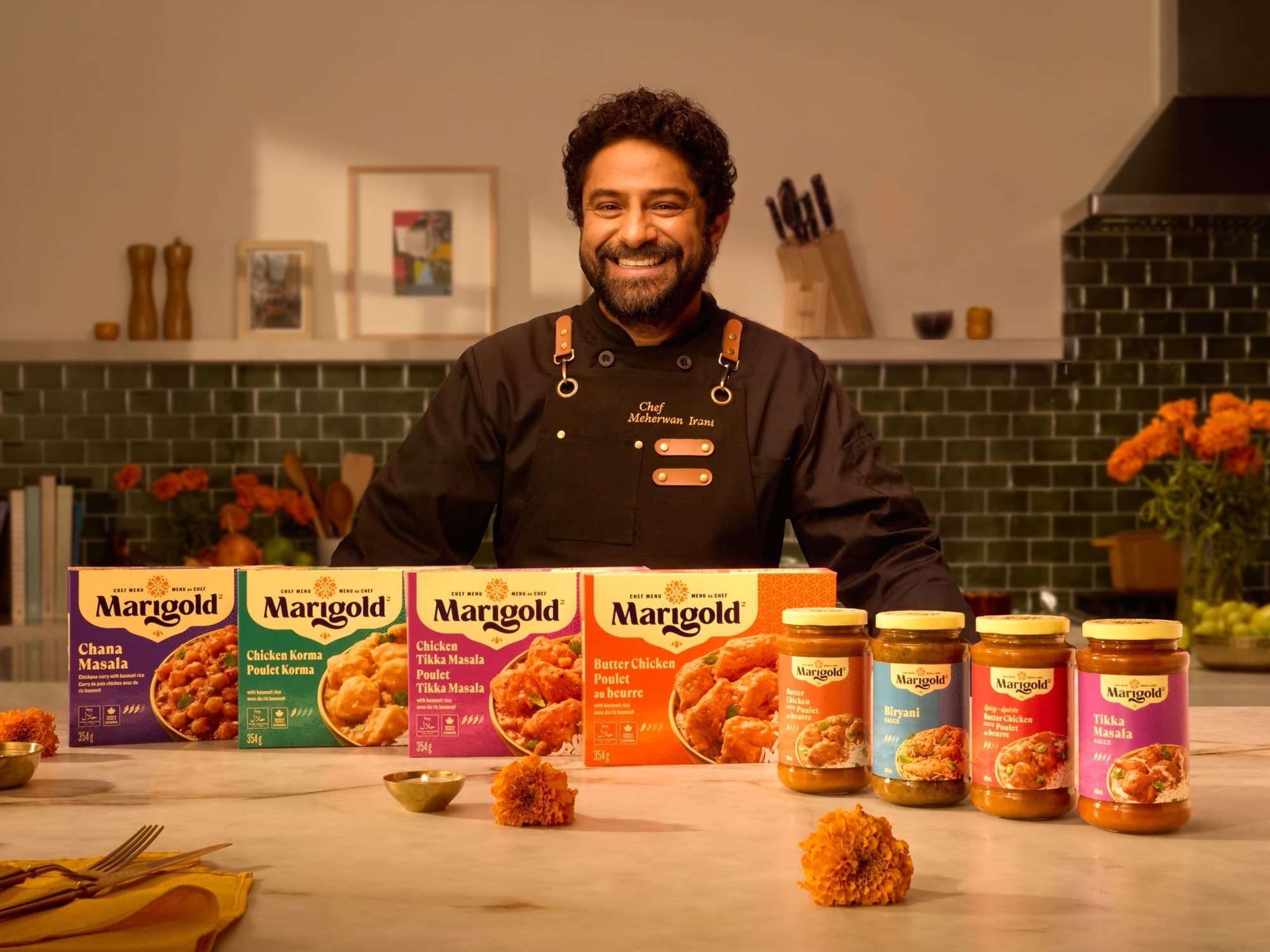
Conagra Brands Canada has launched Marigold, a frozen-meal and cooking-sauce brand built around Indian dishes and prepared in Canada. The company announced the line on August 6, 2026. Four single-serve frozen meals are already shipping to select retailers, with a wider Canadian rollout expected by September. Four jarred sauces are scheduled to follow the same month.
The first freezer set is short and familiar. Butter chicken, chicken korma, and tikka masala come with basmati rice. Chana masala is the only vegan meal. Conagra says all four frozen entrées are halal-certified, including the chickpea tray. The company has not named the certifying body in its launch materials.
What the lineup is saying
Canada already has frozen Indian food. Chef Bombay, a Canadian-made specialist, sells trays and snacks. Deep Indian Kitchen, a North American brand strong in specialty and mainstream freezers, covers a long list of entrées. President’s Choice keeps butter chicken and tikka masala on Loblaws value shelves. Conagra’s own VH brand already sells a butter chicken sauce. Marigold’s news is scale and branding: one of North America’s largest packaged-food companies is giving Indian meals a dedicated Canadian label instead of folding a few SKUs into an existing line.
Caroline Nadeau, Conagra Brands Canada’s general manager, called Marigold one of the company’s most significant Canadian innovation investments and said it was developed for Canadian shoppers. No dollar figure was released. The product map still shows the bet clearly. Three of the four meals are chicken curries. Butter chicken appears as a meal and again as both a mild and a spicy sauce. Biryani arrives only as a jar, not as a frozen rice dish. Shoppers who want to cook from the sauce line still buy their own protein and rice.
The chef on the label
Conagra developed the recipes with Indian chefs and publicly named Meherwan Irani, founder of Chai Pani Restaurant Group. Irani’s Asheville, North Carolina restaurant opened in 2009 as an Indian street-food room and won the James Beard Foundation’s Outstanding Restaurant award in 2022. In Conagra’s launch materials, he describes testing and refining each recipe and advising on ingredients and spice layering. He is a collaborator. Other chefs remain unnamed, and Marigold is still a Conagra brand.
That matters because the dishes on the boxes are the ones mass grocery already trusts. Irani’s restaurants built a reputation on chaat, kababs, and street-food formats that rarely show up in freezer aisles. Marigold borrows his name and kitchen language for a different job: making butter chicken, korma, and tikka masala taste less like anonymous tray food. Whether the jars and trays deliver that difference is for shoppers to decide once they find them in store.
Where it is made
Conagra says the full Marigold line is prepared in Canada. The sauces have a clearer address. Nadeau has said they are made at the company’s Boisbriand, Quebec plant, and Aliments du Québec, the province’s origin-label program, lists the 400-millilitre butter chicken and biryani sauces as food prepared in Quebec. The frozen-meal factory has not been publicly identified. The sauces are described as vegetarian and free of artificial colours. Conagra has not said they are halal-certified.
The shopper backdrop is clearer than the shelf map. Statistics Canada counted more than 2.57 million South Asians in 2021, 7.1 percent of the country and its largest racialized group. That does not mean every freezer buyer is South Asian, and it does not guarantee Marigold will beat Chef Bombay, Deep, Patak’s, KFI, or Conagra’s own VH jar. It does help explain why a mass manufacturer wants an Indian brand that can sit beside lasagna trays as everyday food, not as a temporary specialty add-on.