
New York’s Hardest Table Serves Village Tamil Food
Semma’s Vijay Kumar took Natham farm cooking to a Michelin star, a James Beard, and the Times No. 1 slot without milding the menu down.
- vijay-kumar
- semma
- tamil
- new-york
When Vijay Kumar accepted the 2025 James Beard Award for Best Chef: New York State, he wore a veshti and said what his menu had been arguing for four years. He never expected a dark-skinned boy from Tamil Nadu to stand in that room. The food he grew up on, made with care and fire, was on the main stage. There was no poor person’s food and no rich person’s food. It was food. Tamil food stood tall.
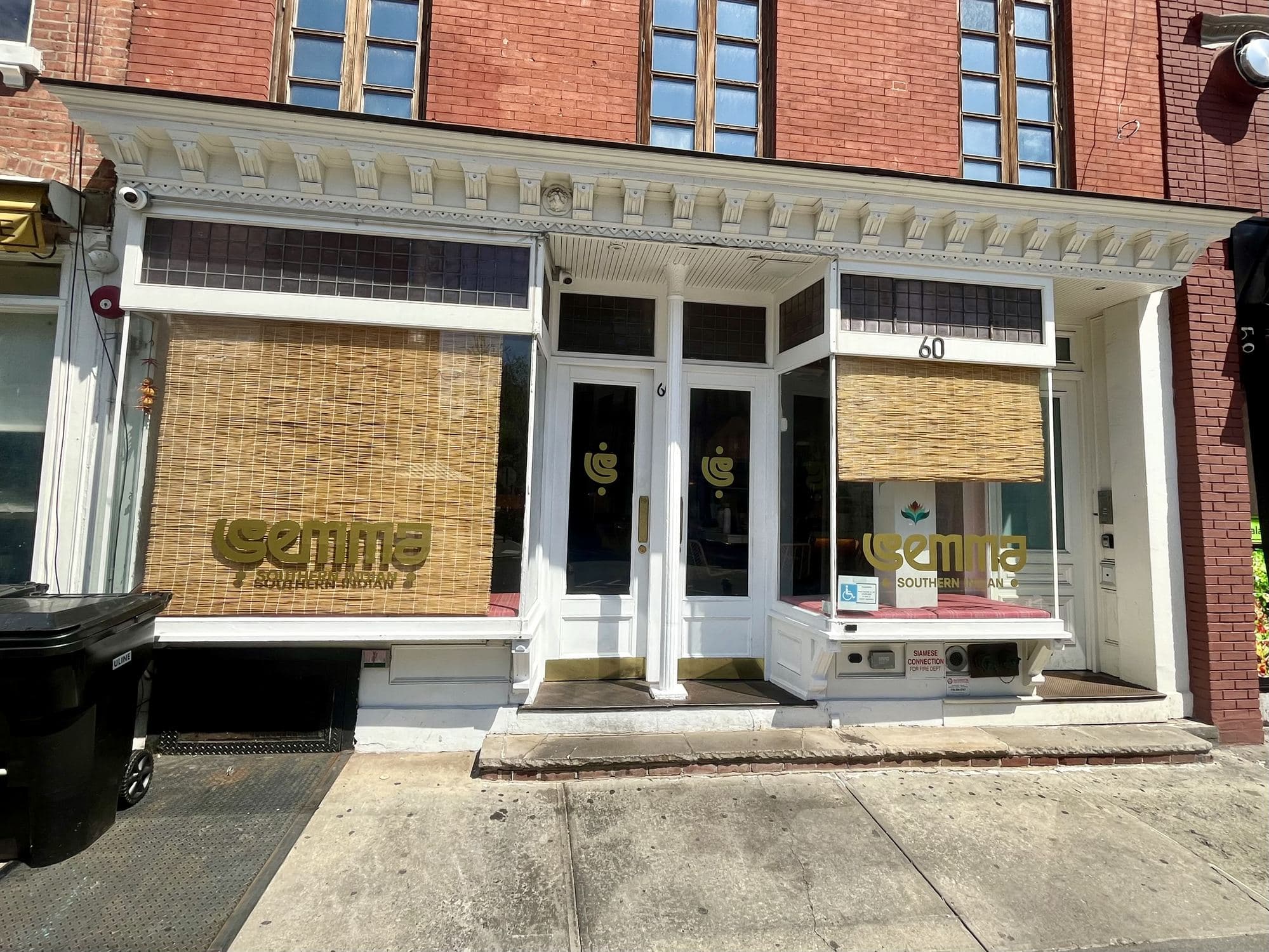
The speech matches the scramble for a table at Semma, his West Village restaurant with Unapologetic Foods. Michelin starred the room in 2022 and has kept the star. In June 2025, The New York Times ranked Semma No. 1 among the city’s hundred best restaurants, the first time an Indian kitchen topped that list. The cooking behind those wins is village Tamil food, served without the mild-down that still defines most “Indian” cards abroad.
Natham, Trichy, California
Kumar grew up in Natham, in Tamil Nadu’s Dindigul district, and finished school in Samuthirapatti. His father held a government job that did not cover the household. His mother ran the farm side. He wanted to be an engineer. Money closed that path, so in 1998 he entered the State Institute of Hotel Management and Catering Technology in Tiruchirappalli. Friends mocked culinary school. He kept going.
The Semma card grows out of those holiday kitchens: walking kilometres to his grandparents’ place near Madurai, working paddy fields, fishing, collecting snails with his grandmother, cooking in clay pots over open fire, eating on banana leaves. His mother’s fish curry set the ingredient bar. If she bought fish, it had to be freshly caught, or the children had to pull it from the river themselves.
After Taj Connemara in Chennai and other Indian hotel stints, he reached the United States in 2007, starting small in Virginia, then cooking at San Francisco’s Dosa and, from 2014, at Rasa in Burlingame. Rasa held a Michelin star while he was chef de cuisine. The food there was contemporary Indian. He has said the kitchen deboned fish and turned spice down to fit someone else’s mold. Something felt missing.
The Unapologetic brief
In 2021 he met restaurateur Roni Mazumdar and chef Chintan Pandya of Unapologetic Foods, already known in New York for Adda and then Dhamaka. Their ask was blunt: cook the food that lives in your bones. The West Village room that had been their Rahi became Semma, Tamil slang for fantastic or excellent. Pandya, a Gujarati who loves South Indian cinema, suggested the name. Kumar got full menu control.
Nathai pirattal was the early test: snails stir-fried with ginger, tamarind, and heat, the way his grandmother cooked them after paddy-field foraging, served with kal dosa. He worried the dish would lose money. Partners pushed it anyway. Diners who knew French escargot as luxury met the same animal as Tamil farm food. The plate became a house signature. Gunpowder dosa, a childhood favorite from his mother and grandmother, lands on nearly every table. Dindigul goat biryani on seeraga samba rice sells out. The card has also carried Chettinad venison, kudal varuval (goat intestines), and other cuts most American Indian menus never print.
Ponni rice, the variety his family still grows, shows up on the menu. A useful first order is mulaikattiya thaniyam, a sprouted-mung childhood snack with coconut and smoked chili, then the gunpowder dosa and the biryani. Heat is the point, used liberally and with control, not as a warning label on a butter-chicken card.
Stars, lists, and limits
Semma’s 2022 Michelin star closed a dry stretch for Indian restaurants in the United States after Junoon’s earlier Flatiron run. Earlier rooms often argued for seriousness by matching French and Italian décor. Semma won with rural Tamil plates in a tight Village dining room. James Beard followed in 2025 for Kumar personally. The Times No. 1 ranking the same year told a wider public what regulars already knew: the city’s hardest South Indian table was also, for that list cycle, its favorite restaurant.
Kumar is careful about the claim. Semma represents one strand of Tamil food, not the whole state, and he has talked about wanting Chennai street food and even goat blood curry on the card when sourcing allows. A single starred room does not fix the mild-medium-hot slider elsewhere. It does make that slider harder to defend as the only commercially safe Indian menu.
How to use the room
Book when you can. Start with a plate that names a village habit or a cut the default Indian menu skips: snails, gunpowder dosa, Dindigul biryani, offal when it is on. Expect real chile. Semma is quieter and more intimate than sibling Dhamaka at Essex Market, and more regionally fixed than Adda’s East Village reboot. Confirm hours and the current card before you plan around a sellout. Reservations open on a short window; the bar sometimes absorbs overflow.
If you cannot get in, use the same checklist elsewhere. Look for a region on the card, a chef’s name, and heat that is not optional garnish. Those choices can fill a Manhattan room. Kumar proved it.
Further reading
- How Indian Food in America Got Michelin Stars So Fast
- Tamil Nadu: Rice Meals, Dryland Grains, and Coastal Tables
- Why North Indian Food Still Owns Most American Menus
- Beyond Butter Chicken: Why South Asian Dining Got Hyper-Regional
- Williamsburg Is Getting a Tamil Kitchen Named for a Grandmother
- GOLDSEA: Asian American cuisines at the 2025 James Beard Awards