
Ramadan Iftar: Dates, Hydration, and the First Bite
What happens at sunset, why dates and water matter, and how South Asian iftar tables differ from Karachi to Chennai.
- ramadan
- iftar
- fasting
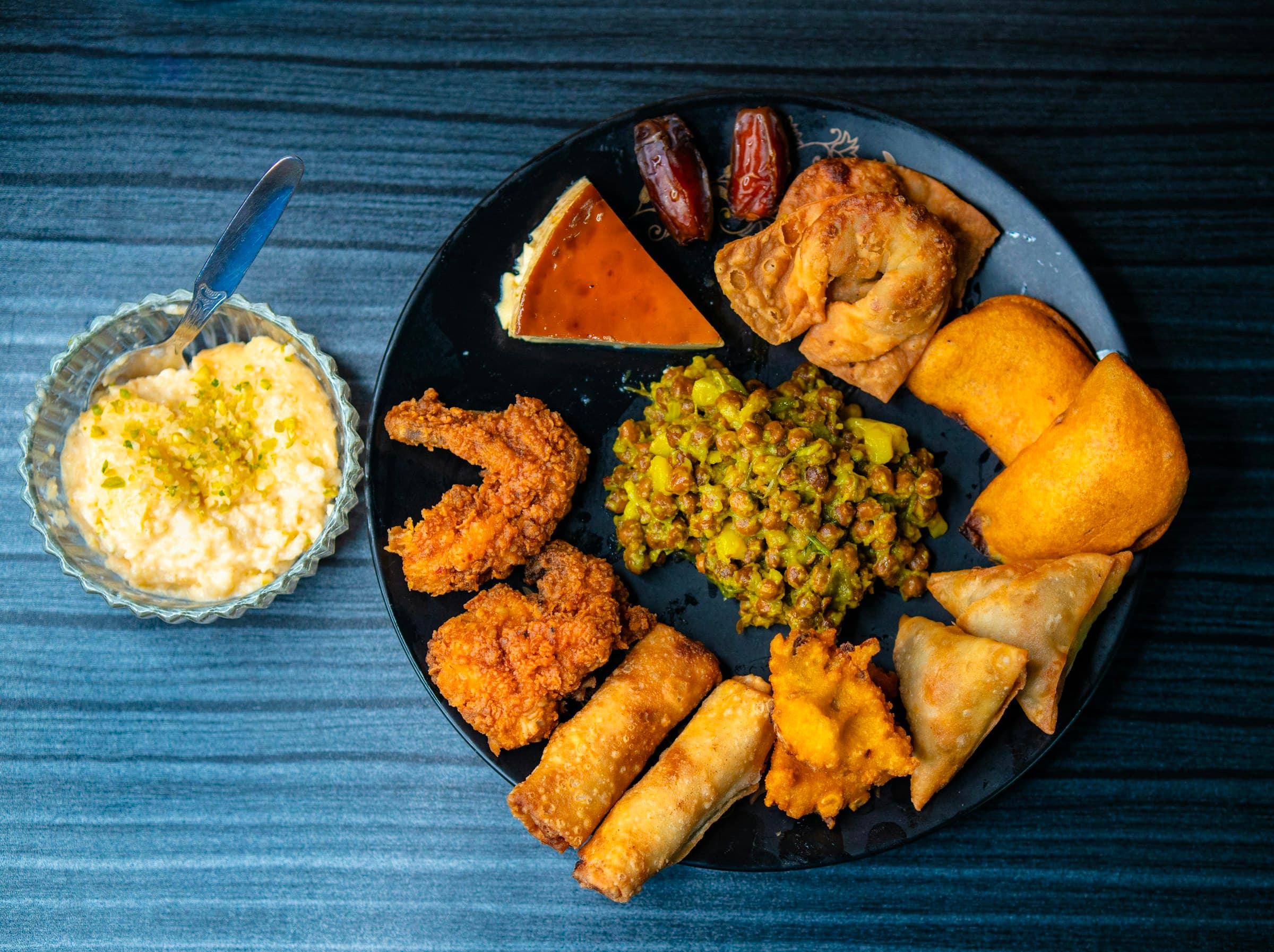
This guide follows the first hour of iftar: what the key terms mean, why a small first bite often comes before a fuller meal, and how South Asian tables change from one region to another. It also offers practical hydration and hosting guidance without treating one household’s routine as a universal rule.
From sehri to iftar
Ramadan is the ninth month of the Islamic lunar calendar. Sawm is fasting; roza is the familiar South Asian term. Suhoor or suhur, commonly sehri in South Asia, is the meal before dawn. The fast begins at Fajr, not sunrise, and continues until sunset. Iftar or iftari can mean the act of breaking that fast or the food served then; Maghrib is the prayer whose time begins at sunset.
Because the Islamic calendar is lunar, Ramadan moves roughly ten or eleven days earlier through the Gregorian year. Climate, work schedules, available fruit, and the length of the fast therefore change over time and across the diaspora. Communities at very high latitudes follow different scholarly approaches to unusually long days; local religious guidance is the useful reference.
The first bite and the pause that follows
A widely followed Prophetic practice is to break the fast with fresh dates, dried dates if fresh ones are unavailable, or water. It is a religious custom rather than a modern nutrition formula. Dates are not required for a valid iftar, and regional first bites may include fruit, sherbet, porridge, or another food already at hand.
A common rhythm is a date or sip of water at sunset, Maghrib prayer, then snacks or dinner. Some families eat more before praying; others return for a separate main meal later, around ʿIsha or Taraweeh. The useful hosting lesson is simply to have the first bite ready on time and let the larger meal follow the household.
South Asian iftar has many local tables
Fruit chaat, chana chaat, dahi baray, pakoras, samosas, and sharbat are familiar across many Pakistani and North Indian homes, with different seasoning and sweetness from one kitchen to another. Around Old Delhi’s Jama Masjid, the opening spread may include dates, fruit, fritters, keema samosas, and milk sharbet; kebabs, haleem, nihari, or biryani belong to the later meal and surrounding night markets as much as to the first minute of iftar.
Hyderabad’s Ramadan trade is closely associated with haleem, a long-cooked mixture of wheat, meat, lentils, spices, and ghee descended from harees. Old Dhaka favors chola, muri, piyaju, beguni, aloor chop, jilapi, and sharbat. Tamil Muslim communities prepare nombu kanji, a rice-and-lentil porridge made in homes and mosques and often shared beyond the congregation. In Kashmir, basil-seed babri beoul treish is a recognizable iftar drink. Each of these foods belongs to a particular regional history.
Hydration without miracle claims
Spread fluids from iftar through sehri instead of trying to drink everything at sunset. Water, soups, dal, yogurt, fruit, and vegetables can all contribute. Very salty foods may increase thirst, while individual caffeine response varies. There is no single glass count that suits every body, climate, medication, or level of exertion.
Fried snacks and sweets are part of real Ramadan tables; portioning and a varied later meal are more useful than moralizing about them. Claims that fasting detoxes the body, that dates reset body chemistry, or that a particular drink prevents dehydration go beyond the evidence. People managing diabetes, kidney or heart disease, pregnancy-related concerns, or medication timing should seek individual clinical and religious advice. Dizziness, fainting, confusion, or dangerous glucose readings need prompt attention.
Hosting an iftar that works
- Check the local sunset time and place water and a small first bite in several easy-to-reach spots.
- Ask about allergies, dietary needs, and whether guests need a clear place to pray.
- Bring fruit chaat, yogurt dishes, and other cold foods out in small batches; keep the rest refrigerated.
- Keep hot foods at 60°C/140°F or above and cold foods at 4°C/40°F or below.
- Refrigerate perishable leftovers within two hours, using shallow containers before extended evening prayer.
- Label common allergens such as dairy, nuts, wheat, chickpea flour, and sesame.
A calm iftar starts with timing, not abundance. Set out water and the first bite, decide what will wait until after prayer, and keep the rest of the menu appropriate to the people gathering at your table.
Sources and further reading
- Qur’an 2:187: the daily fasting period
- Jamiʿ at-Tirmidhi 696: breaking the fast with dates or water
- NPR: How haleem became Hyderabad’s Ramadan food
- The Hindu: Tamil Nadu mosques and nombu kanji
- British Dietetic Association: Nutrition and Ramadan
- USDA: Food safety during Ramadan