
Sujan Sarkar Opens a British-Indian Chophouse in Hudson Yards
Elder serves vindaloo pork chops, Tellicherry-pepper filet, duck seekh, beet Wellington, and paneer lasagne, then asks whether the chophouse format can carry Indian cooking into American luxury dining.
- opening
- new york
- chef
- british indian
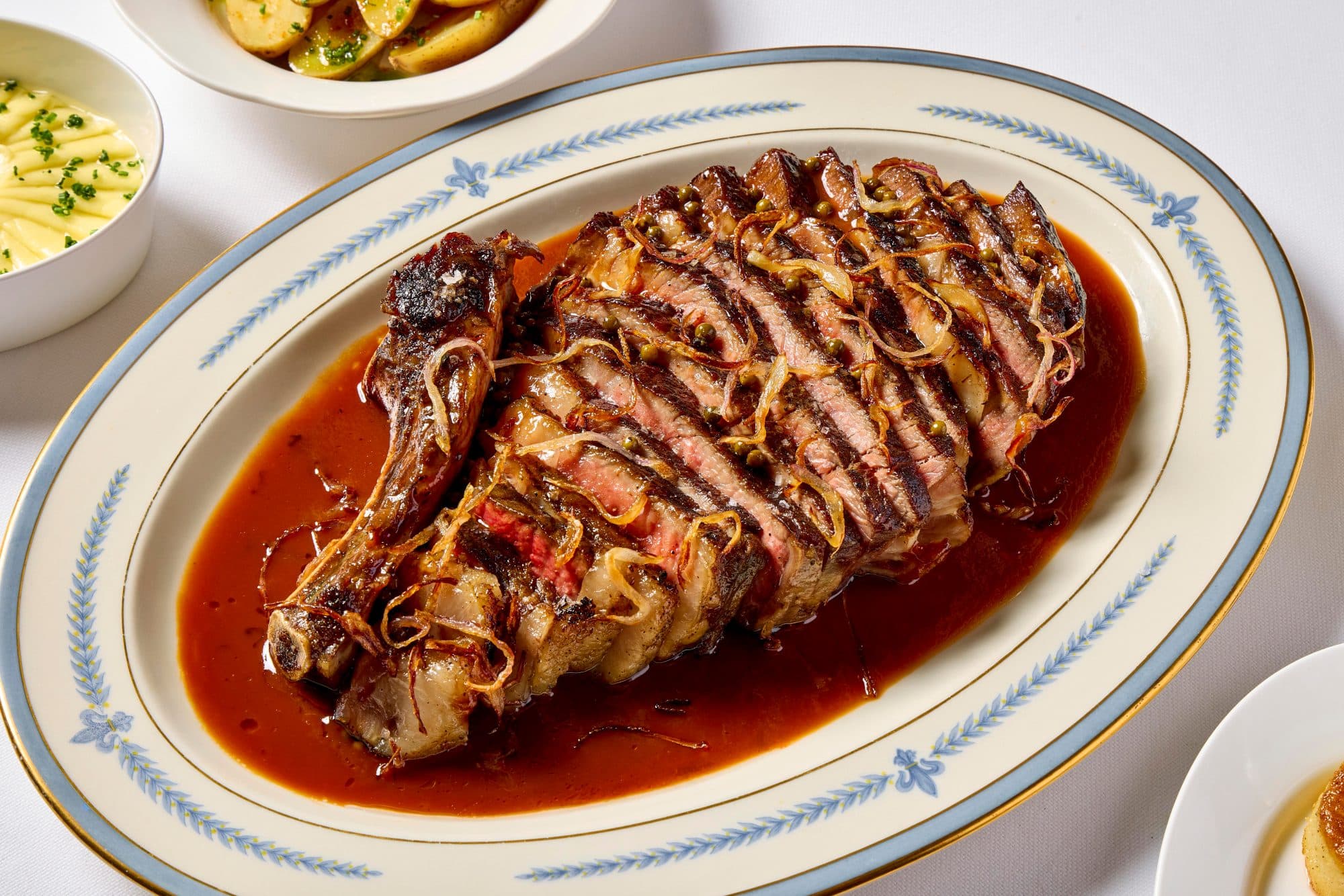
Elder is open on the ground floor of Henry Hall at 517 West 38th Street in Hudson Yards, chef Sujan Sarkar’s British Indian chophouse under the same roof as his Michelin-starred tasting room, Indienne. The Berkshire pork chop comes rubbed in vindaloo masala. The filet reads as a Tellicherry pepper steak. Duck seekh kebabs land with stone fruit chutney. Bone marrow nihari gravy is sold as a steak sauce. Sarkar frames the room as a British steakhouse with Indian influences. The clearer bet is that New York will order that inheritance as dinner, not as a history lesson.
Sarkar, a Kolkata-born 2024 James Beard Award finalist whose Indienne in Chicago holds a Michelin star, cooked in London for about eleven years, including a stretch as head chef at Automat, before building restaurants in the United States. Elder pulls those two careers onto one plate. The name nods to elderflower, an ingredient that shows up in both British and South Asian kitchens. Designer Mapa Mueller shaped a 3,300-square-foot room of hunter green, marine blue, Carrara marble, dark wood, and elderflower wallpaper, with a horseshoe bar and space for walk-ins beside reservations.
What a chophouse was for
London chophouses took shape in the 1690s as rooms that sold individual portions of meat, known as chops, rather than the shared joints of older tavern eating. The model prized speed and plain cooking: meat, potatoes, ale, a seat for a working meal. Houses such as Simpson’s Tavern kept that idea into later centuries. Early American steak culture borrowed it too. New York had chophouses before steakhouse became the national default.
Elder keeps the chop as the organizing unit. You can still order meat, potatoes, sauce, and a drink without being walked through an introductory Indian menu. What changes is the supporting vocabulary. Quail Scotch egg, English pea samosa, Dover sole with curry beurre blanc, horseradish raita, and red pepper makhani sit where a classic steakhouse might put cream spinach and peppercorn sauce. The room reads as a chophouse first. The spices do the real work.
The Anglo-Indian exchange behind the plate
Britain’s everyday curry-house tradition was largely built by Bangladeshi restaurateurs, many from Sylhet, who adapted menus for a broad British audience and made late-night curry part of national life. Korma, tikka masala, jalfrezi, and vindaloo became a commercial vocabulary, often prepared from a flexible base sauce. That model was an immigrant business achievement shaped by labor, racism, tight margins, and customer expectations. It also taught generations of diners to understand South Asian restaurants as places organized around curry and rice.
The exchange runs older and messier than the postwar high street. East India Company returnees brought curry habits into British cookbooks in the eighteenth century. Sake Dean Mahomed’s short-lived Hindoostane Coffee House opened in London in 1810 as an early attempt at Indianised British dining for a fashionable crowd. Veeraswamy, opened in Piccadilly in 1926, helped make restaurant Indian food a West End occasion. Vindaloo itself began as Portuguese carne de vinha d’alhos, meat preserved in wine and garlic, then remade in Goa with toddy vinegar and local spice. British curry houses later turned the name into a heat dare. Sarkar’s pork chop puts the word back on pork and masala without treating it as a Scoville stunt.
Elder starts from the steakhouse side of that history rather than the curry-house side. Indian ingredients supply structure, not a glossary sidebar. That confidence shows up elsewhere in contemporary dining, from London’s Indian barbecue tavern Brigadiers to regional and tasting-menu rooms that put paneer, nihari, saag, and rasam on the page without apology. The chophouse format just makes the assumption easier for a New York guest who already knows how to order a chop.
The dishes that make the argument
The meat list is where the concept is loudest. Berkshire pork rib chop with vindaloo masala. Filet with Tellicherry peppercorns, which Sarkar has described as a pepper steak. Lamb chops with dry burrah spice. Hanger steak as pathar kebab. Duck seekh with stone fruit chutney for the table that wants kebab energy before the chop. A large dry-aged bone-in rib chop for steakhouse theater. Sauces sold by the side include horseradish raita, bone marrow nihari gravy, and red pepper makhani, so the spice lane is optional rather than locked into every cut.
Vegetarian plates refuse to be afterthoughts. Beet Wellington with goat cheese cream is built to read as Wellington when sliced, a British pastry form carrying Indian-restaurant vegetarian ambition. House-made buffalo-milk paneer becomes lasagne with Swiss chard saag and crisp garlic. Jackfruit cutlet lands with piccalilli puree, shallots, and capers. Dessert keeps the same bilingual habit: strawberry Eton Mess beside a rasmalai trifle dome with pistachio ice cream and jalebi crisp. None of these dishes pause to define paneer as cottage cheese. They assume diners can meet the ingredients, then watch what Sarkar does with them.
Could this become a wider U.S. format?
An Indian chophouse is not yet a settled American category. London’s Tandoor Chop House paired North Indian tandoor cooking with British cuts before it closed. Brigadiers still builds a social restaurant around Indian grilling, beer, and large-format meat. Elder pushes the idea toward a polished New York steakhouse: dry-aged beef, side sauces, martini energy, Hudson Yards rent. If the format travels, that is why. The chop is instantly legible. Regional spices and South Asian gravies can keep changing around it without forcing every city to invent a new restaurant type from scratch.
Sarkar is also covering both ends of New York’s appetite in one season. He opened Butter Chicken Social in Midtown in June. Indienne serves the tasting menu upstairs. Elder assumes vindaloo masala belongs beside a Berkshire rib chop. One chef can sell the gateway dish, the fine-dining progression, and a chophouse that treats Anglo-Indian history as technique rather than costume. Whether other cities copy the label matters less than whether diners keep ordering that way: steakhouse comfort, South Asian structure, no apology course in between.
Further reading
- Chicago’s Michelin-Starred Indienne Just Opened a Hudson Yards Chapter
- Beyond Butter Chicken: Why South Asian Dining Got Hyper-Regional
- Why “Indian Food” Is the Wrong Menu Category
- Spice Literacy Is Cultural Fluency
- GOLDSEA: India’s impact on American food culture
- AsiaMs / GOLDSEA: Asian chefs and NYC Michelin dining