
The Busiest Delivery Restaurant on Earth Is a Houston Indo-Pak Kitchen
Aga’s on Wilcrest Drive leads Uber Eats among single-location restaurants. Biryani volume is the American scale story.
- agas
- houston
- uber-eats
- delivery
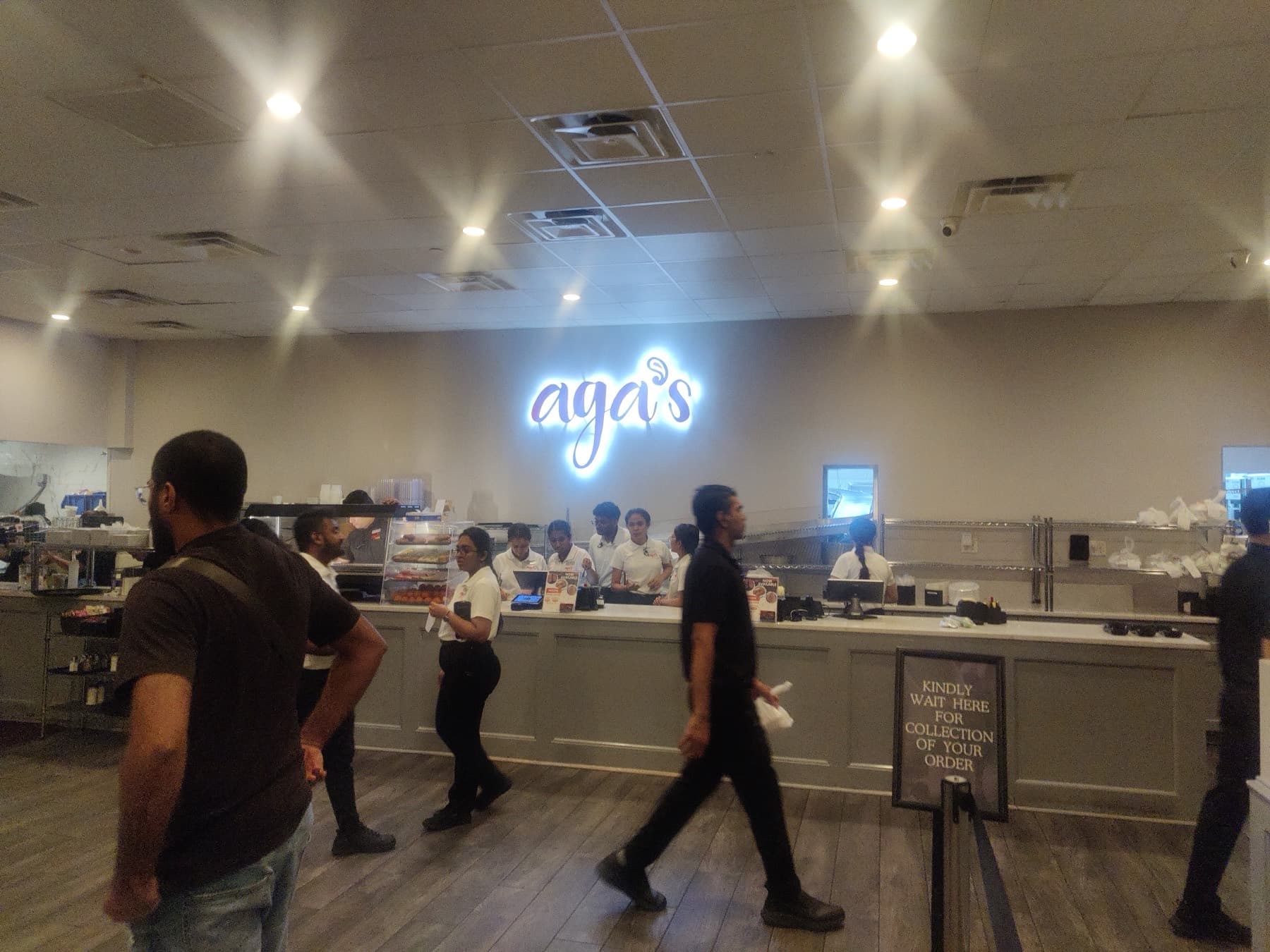
Aga’s Restaurant & Catering, an Indian-Pakistani kitchen on Wilcrest Drive in southwest Houston, is the busiest single-location restaurant on Uber Eats. In 2025, among restaurants with one location, Aga’s moved the largest volume on the platform. Uber Eats put that in writing to the owners. The Houston Chronicle reviewed the email.
Search demand for South Asian food in America still clusters around biryani, butter chicken, and “Indian restaurant near me.” Aga’s is what that demand looks like when a dense Desi metro feeds it through apps and a strip-mall banquet room. Michelin-starred Tamil tasting menus are changing the prestige map. They are not moving this many boxes.
The numbers behind the parking lot
Aga’s spans about 16,000 square feet and seats more than 700. Recent reporting puts daily dine-in near 4,000 people, with roughly 1,600 takeout and delivery tickets on a busy day. Owner and CEO Shaukat “Sal” Maredia has said the kitchen turns out about 2,000 to-go meals a day across pickup and delivery apps, and that takeout is about 40 percent of the business. The family cites about half a million takeout and delivery orders a year and revenue well into eight figures. The ticket counts come from different interviews; treat them as order-of-magnitude, not a single audited ledger.
Staffing sits around 200 people, including nine chefs, with an average wage Maredia has put near $20 an hour. Monthly inputs reported with a Business Insider kitchen video run to roughly 7,000 gallons of milk, 10,000 gallons of oil, and 30,000 pounds of chicken. A former storage room now works as a call center for direct orders in multiple languages. Drivers wait outside; one Uber Eats courier said nearly all of his deliveries come from Aga’s.
A struggling room that learned delivery early
Aga’s opened in 2001. The Maredia siblings, six brothers and sisters with no restaurant background, bought it around 2010 when the place was failing. They renovated, tightened service, and pushed Indian and Pakistani plates from their own kitchens: biryani, nihari, kebabs, goat chops, Hyderabadi and Balti gosht, chicken lollipops. By 2013 the room was profitable. Delivery started about two years before the pandemic, so when takeout demand spiked, the kitchen already knew how to run tickets.
In 2019 they converted banquet space into more dining because waits spilled into the hundreds. In 2025, Houston Chronicle restaurant critic Bao Ong named Aga’s the city’s No. 1 restaurant. A takeout-only outpost in Katy, about thirty miles west, opened in 2026 and was soon doing about 700 orders a day, roughly double the early projection. Maredia has talked about more Houston-area takeout rooms, a commissary, and later Texas markets. Those are plans until doors open.
Houston density and an Indo-Pak menu
Rice University’s Kinder Institute research puts about 655,000 South Asian residents in the Houston area. Aga’s says roughly 60 percent of its customers are South Asian and 40 percent are not. The menu stays Indo-Pak and Zabiha halal, meat slaughtered to Islamic dietary rules. Volume came from cooking the biryani-and-grill plate people already search for, at a scale a suburb can absorb every night.
On Uber Eats, the most-liked items still read like the national search chart: butter chicken, goat biryani, chicken biryani, goat chops, nihari, haleem. Prestige rooms in New York and Chicago can refuse that list. Most American delivery tickets still land on it.
Leverage with the apps
Volume changes the usual restaurant-versus-platform fight. Maredia has said Aga’s persuaded DoorDash, Uber Eats, and Grubhub to cut commissions in exchange for the account. He has not published the rates, and the companies have not confirmed the terms. Uber Eats and DoorDash have promoted Aga’s in Houston. For other kitchens, the useful take is simpler: enough local density can flip who needs whom.
If you are in Houston, order the goat chops or a biryani and watch the takeout line. If you are elsewhere, read Aga’s as proof of where American South Asian volume actually sits: dense suburbs, halal Indo-Pak menus, and apps that reward consistency at thousands of boxes a day. For how that default menu took over U.S. ordering, read Why Non-South Asians Love Butter Chicken and Why North Indian Food Still Owns Most American Menus.
Further reading
- Why Non-South Asians Love Butter Chicken
- Why North Indian Food Still Owns Most American Menus
- How Indian Food in America Got Michelin Stars So Fast
- Beyond Butter Chicken: Hyper-Regional South Asian Food
- Why “Indian Food” Is the Wrong Menu Category
- Goldscene: Houston city guide
- Generational: Houston Asian diaspora circuit