
Sheil Shukla’s Kari Wants to Take ‘Curry’ Back From the Catchall Category
The Plant-Based India author’s second book publishes August 18 with 75 plant-based recipes that treat curry as technique, not an aisle label.
- cookbook
- curry
- plant-based
- sheil-shukla
Sheil Shukla’s second cookbook, Kari: Reimagined Plant-Based Indian Recipes, publishes August 18, 2026 from DK / Penguin Random House. The book gathers 75 plant-based recipes for sauces, curries, and accompaniments. The more useful news is the title fight: Shukla wants cooks to treat “curry” as a kitchen problem, not a supermarket category that swallows half of Asia.
Shukla is a Northwestern Medicine internist, recipe developer, and food photographer who publishes as Plant Based Artist. His debut, Plant-Based India, made the New York Times best-cookbooks list for 2022 and earned a James Beard Award nomination in vegetable-focused cooking. Kari keeps the plant-based lane and widens the map. Publisher copy frames the recipes through his Gujarati heritage and first-generation Indian American kitchen, then routes them through Japanese, Korean, Thai, Italian, and American techniques without pretending those cuisines are one gravy family.
What the book is actually doing
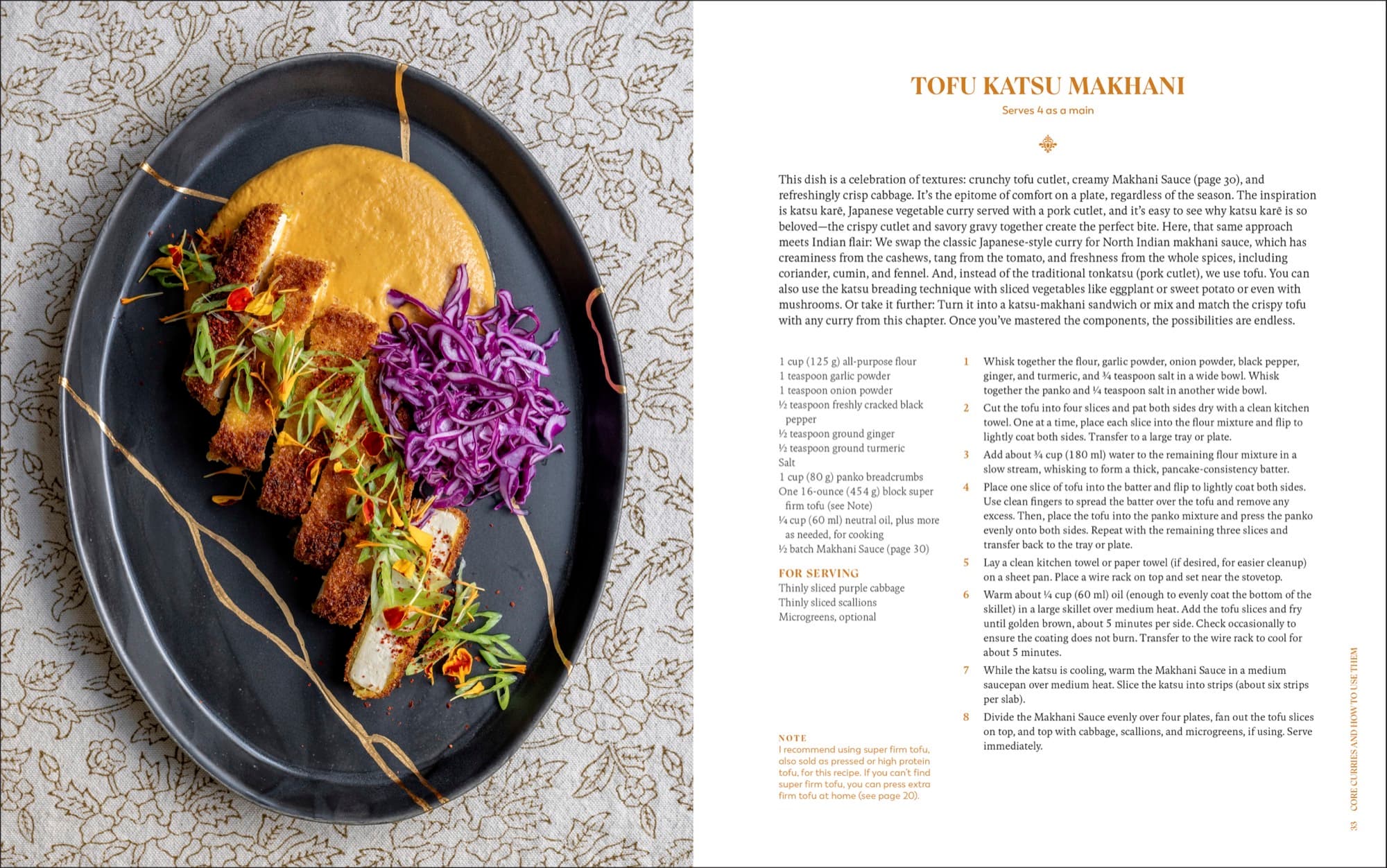
The practical structure is clearer than the marketing slogan. Several core sauces are written once, then reused. A slow makhani base, for example, can finish crispy tofu katsu or turn into nachos with chips and toppings. Mango chutney gets Japanese miso and shows up as a pakora dip or a roast-vegetable glaze. Publisher materials describe the same pattern across the book: make the sauce, cook one full plate, then spend leftovers on a second format. That is home-cook economy, not fusion theater.
The dish list follows the same logic. Tofu katsu makhani borrows Japanese breaded cutlet technique and pairs it with a North Indian cashew-tomato sauce. Beet korma pasta, tikka masala bread pizza, and lemongrass curry sit in the same catalog. None of those plates replaces a Gujarati thali or a named regional restaurant menu. They answer a different question: what can a plant-based weeknight cook do when the pantry already mixes Indian spices with miso, panko, or pasta water.
When “curry” helps, and when it flattens
English “curry” has long been a colonial catchall. Food historians trace the word’s English career through British cookbooks, colonial kitchens, and later high-street curry houses that sorted South Asian food by heat and creaminess more than by region. Publisher materials link Kari to the Tamil word kari, often glossed as a spiced dish or sauce. That etymology is debated and incomplete; the cleaner point is cultural, not linguistic. One English noun still gets asked to cover Japanese curry rice, Thai gaeng, Caribbean curry powder traditions, and dozens of Indian gravies that households never call curry at home.
Cross-cultural reinterpretation earns its keep when the cook names both sides of the swap and keeps the techniques honest. Breaded tofu under makhani is useful because katsu and makhani stay recognizable. The same word becomes lazy when every coconut stew, dal, and jarred simmer sauce collapses into “Indian curry,” as if Punjabi restaurant gravy, Chettinad pepper heat, and a Thai green curry paste were interchangeable products. Kari’s bet is that a book titled after the contested word can teach cooks to notice the difference, then still play across kitchens on purpose.
Restaurant openings and regional dining guides already push diners past a single curry page. Home cooks still meet the word first on jar lids, freezer trays, and search bars. A James Beard-nominated plant-based author publishing seventy-five recipes is a chance to push that authority back toward the stove: sauce ratios, leftover logic, and named techniques instead of one aisle label.