
Tadka, Bhuna, and Dhungar Work on Tomato Soup, Too
Bloom spices in fat, fry until the oil moves, then steal a minute of charcoal smoke. The same moves help pasta and leftover beans.
- tadka
- bhuna
- dhungar
- technique
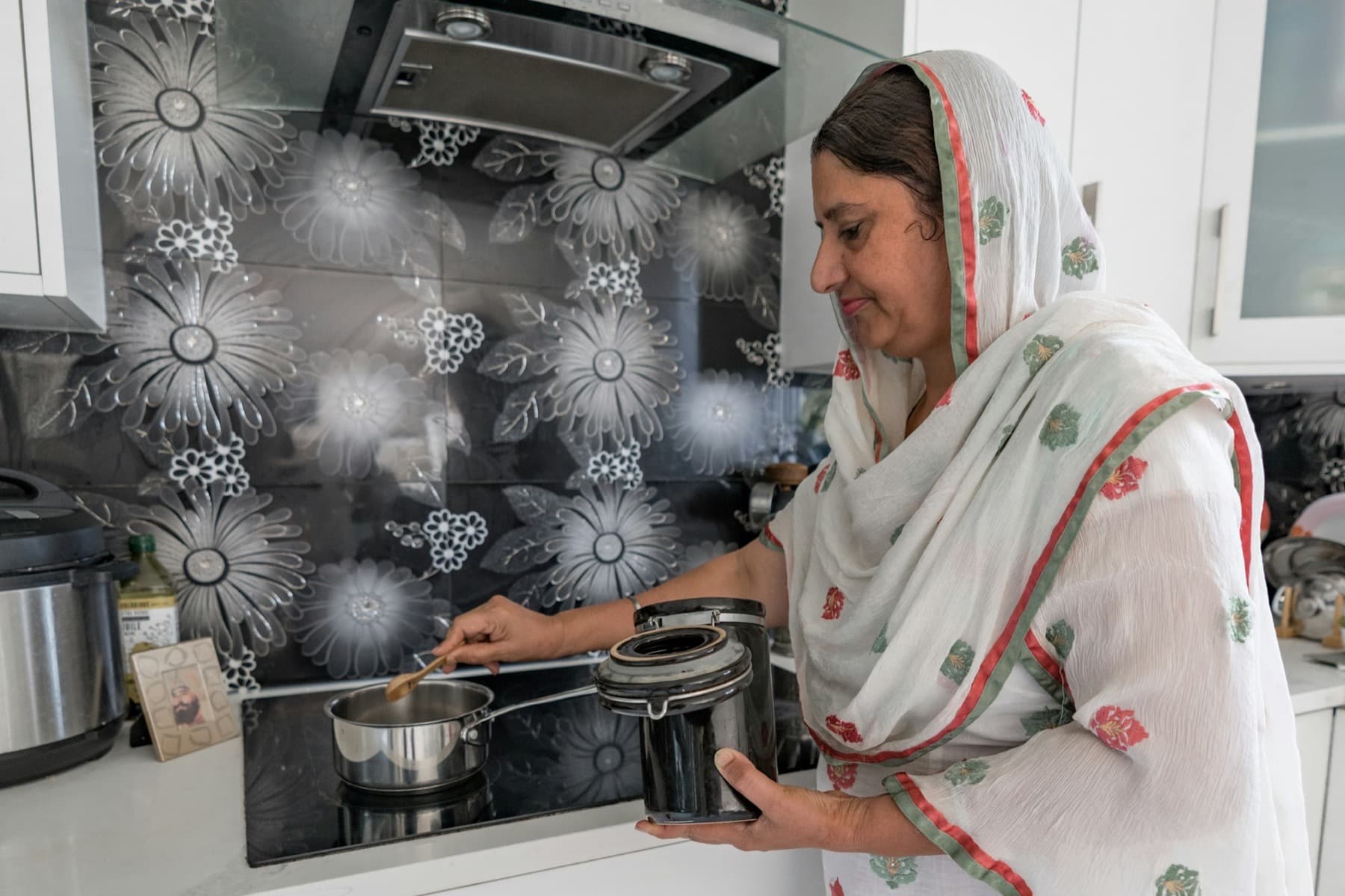
If a weeknight tomato soup tastes flat, the missing move is often a thirty-second pour of spices in hot fat. South Asian kitchens have names for that kind of work. Tadka, bhuna, and dhungar are three of them, and they belong on pasta and leftover beans as easily as they belong on dal.
Tadka
Tadka is the short act of blooming whole spices, and often a chilli, garlic, or curry leaf, in hot ghee or oil. You either start a dish in that fat or pour the seasoned fat over food that is already cooked. Hindi-speaking homes also say chaunk or chhonk. You will hear baghaar or tarka in Urdu, vaghar in Gujarati, phoron in Bengali, thalippu in Tamil, and jhaneko in Nepal. The names point at crackling, sprinkling, or pouring. They do not name one official spice mix.
Several of those words come from Sanskrit roots for sprinkling over or for seeds that burst. Cooks across India, Pakistan, Bangladesh, Nepal, and Sri Lanka have used heated fat to pull aroma out of spices for a long time, which is why no one kitchen gets to claim the invention. The tadkas most Americans meet now also hold later arrivals. Dried red chilli, a staple in many finishing pours, entered South Asian food after the Columbian exchange. Fat still does the same work: it dissolves scent that water leaves behind.
Food writer Priya Krishna, who grew up Indian American and wrote Indian-ish with her mother, treats chhonk as the family habit that finishes a pot. Her masala tomato soup gets a cumin-and-chilli pour. Editor Sonia Chopra published a tadka pasta in Bon Appétit that started as her grandmother’s after-school noodles in Atlanta: mustard seed, curry leaf, urad dal, then Parmesan. A cumin tadka in butter or olive oil also lands on scrambled eggs or roasted broccoli. Keep the window short. Once the seeds smell toasted, pour. For heat and order, see What Is Tadka?.
Bhuna
Bhuna, also spelled bhoona or bhuno, names a longer fry. You cook onion, ginger, and garlic in fat, often with tomato and ground spices, stirring until the water cooks off and the paste turns glossy and dark. The cue many recipes hide in one line is oil separating: fat beads at the edges or sits in thin slicks on a thicker masala. That is when the raw edge of onion and spice has cooked through.
The word is Hindi and Bengali for roasting or frying. The method is everyday work in Pakistan, Bangladesh, and in Indian kitchens from Punjab through Uttar Pradesh and Bihar. Eighteenth-century Bengali writing already listed bhuna among favorite dishes, alongside korma and kebab, as Mughal-influenced meat cookery spread in the region. That tells you the word was on the table. It does not give you a single inventor. British curry-house menus later used “bhuna” for a thick, clingy sauce. At home the test is still the oil.
The same patience helps a soffritto or a chili pot. Keep frying the onion base past the pale, watery stage until the fat moves and the smell turns sweet. Splash in a spoon of water if the paste threatens to scorch, scrape, and keep going. A weeknight turkey chili or a pan of baked beans picks up depth that way, without another jar of spice. For the oil-separates cue in more detail, see Bhuna: Cook Until the Oil Separates.
Dhungar
Dhungar is a finishing smoke. You set a piece of red-hot natural charcoal in a small bowl or a hollowed onion on food that is already cooked, drizzle ghee or oil on the coal so it billows, then lid the pot briefly so the smoke perfumes the dish. The food stays cooked. The fat in the pot catches the scent. Hindi speakers often call the method dhungar. Recipe writers also say coal smoking.
North Indian and Awadhi kitchens use it on kebabs, rich dals, korma, and raita. In Lucknow, cooks still talk about a short clove-and-ghee smoke on fine mince for galouti-style kebabs, the soft kebab associated with the city’s Nawabi tables. Court origin stories are kitchen tradition. Cook and writer Nik Sharma, in The Flavor Equation, is more useful on the plate: smoke flavor rides on both fat and water, and dishes with oil or ghee hold more of it.
A minute of dhungar on mashed potatoes or a thick yogurt dip gives campfire aroma without lighting a grill. Roasted mushrooms take it well. Use natural hardwood lump charcoal only, never briquettes or lighter fluid, and treat the coal as fire. If your kitchen cannot do that safely, skip it. For the working sequence, see Dhungar: The Charcoal Smoke Finish.