
Jhol Momo Explained: The Dumplings, the Sauce, and What to Order
Steamed Nepali momos in a thin sesame-tomato jhol, not a side dip. Where the bowl sits next to kothey, fried, and chilli momo, and what else to order with it.
- nepal
- jhol-momo
- momo
- timur
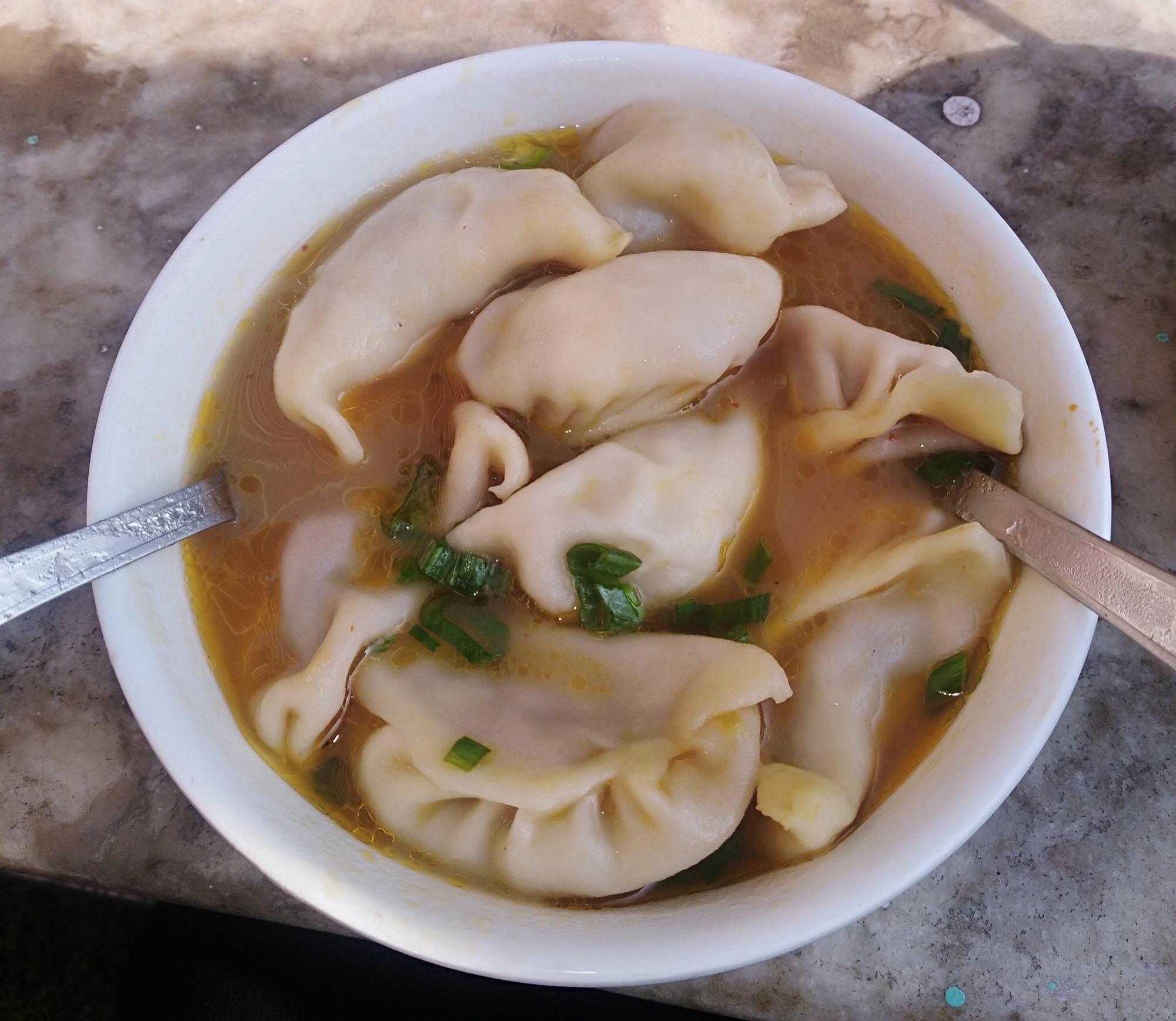
Steamed momo usually arrive with a small bowl of achar on the side, and you dip each dumpling yourself. Jhol momo puts the dumplings in the sauce. The same thin wheat wrappers, filled and steamed, sit in a deep bowl under a warm, pourable broth. You eat with a spoon, dumpling and liquid together, then finish what is left.
This page is for that bowl: how it differs from a side dip, how it sits beside the other momo styles on a Nepali menu, and what else to order when the jhol is the center.
Jhol means the sauce is the bowl
In Nepali, jhol points to a thin gravy or broth. For momo, cooks start with a tomato-based achar, often blended with roasted sesame, soybeans, or peanuts, then thin it with water or stock until it runs off a spoon like soup. Garlic, ginger, dried chilli, cumin, and timur, the Himalayan pepper related to Sichuan peppercorn, show up often. Some kitchens sour with lemon or lime; in Nepal, powdered lapsi, hog plum, still marks many home and shop versions. The Nepal Tourism Board’s 2018 heritage cuisine book lists steamed momo with dipping sauces such as Timmure Golbhenda and Tilko Chhop, and notes the same dumplings can be fried or “dropped in soups called jhol momos.” Those board sauces stay thick enough to dip. Jhol momo takes the same flavor family and pours it over the dumplings as broth.
Watch the thickness. A good jhol should coat lightly, not cling like a chutney. If it sits as a paste under the dumplings, you are closer to a heavy achar pour than to the street and shop bowl most people mean by the name. Heat usually runs higher than a mild side dip, because you cannot dose each bite. Ask for milder if you need it. At some Kathmandu counters you can even choose warm or cold jhol.
Kothey, fried, and chilli momo
Kothey momo is about texture. The dumpling is pan-fried on one side so the base crisps while the top stays soft and steamed. Fried momo goes fully into hot oil until the wrapper is golden all around. Chilli momo, often written C-momo, takes cooked dumplings, usually fried or pan-fried, and tosses them in a thicker wok sauce with chilli, onion, and capsicum so the coating clings. Jhol stays liquid enough to spoon. Chilli momo stays sticky enough to coat. Order both on one table if you want the contrast; they will not feel the same.
Steamed momo with a side achar remains the clearest read of the filling and the wrapper. Jhol is the cold-weather or comfort move. Reach for kothey or fried when you want crunch, and for chilli momo when you want a wok-hot coat. Menus that only say “momo” without a style usually mean steamed with dip. When the board lists jhol, kothey, and C-momo as separate lines, treat them as separate dishes.
Fillings and how kitchens rewrite the jhol
Buff, minced water buffalo, is the Kathmandu classic and still the deepest filling for many regulars. Chicken is the default on diaspora menus. Pork shows up in Tibetan-leaning rooms. Vegetable, cabbage-onion mixes, and paneer cover vegetarian tables. The wrapper should stay thin; the first bite of a good steamed momo should release a little juice into the jhol.
The broth is where kitchens diverge. Sesame gives a nutty, cloudy orange body. Peanut or roasted soybean does similar work. Some shops keep a tomato-forward red jhol and a milder beige sesame-soy version on the same counter. Timur is the spice that marks a Nepali bowl for many cooks. At Timur House in Woodside, Queens, chef and co-owner Vivek Lama, who is from Kathmandu, builds his jhol around timur shipped from Nepal, cooked with tomato, peanuts, and a masala of cumin, coriander, garlic, dried red chilli, and ginger. He has said he cooks with lots of spice for people who also love spice. That citrusy, tingly note is what you are tasting when the pepper is fresh.
What to order with the bowl
Jhol momo can be a snack or a light meal. If it is the center of the order, add one dry contrast and one other Nepali plate so the table is not only soup. At Nepali Bhanchha Ghar in Jackson Heights, chef and owner Yamuna Shrestha’s room is known for pairing the house jhol momo with sel roti, the sweet-salty fried rice-flour rings made to order, plus steamed or fried momo with a hotter side sauce, and a thali when you want dal, pickle, and rice or buckwheat dhindo on the same check. That is a practical first table: sel roti for crunch, the jhol for the spoon work, and a second dumpling style if the group wants texture.
Elsewhere, look for sekuwa, charcoal-grilled marinated meat, or choila, the mustard-oil Newari meat salad, when you want smoke next to the broth. A plain steamed plate with tomato achar lets you taste the filling without the jhol’s chilli. Skip ordering jhol and chilli momo together unless the table wants heat on heat. Drink the last of the broth. Many regulars treat that as the point.
The Queens corridor map that includes Nepali Bhanchha Ghar is in the Jackson Heights dining guide. The house card is at Nepali Bhanchha Ghar. For a related dumpling lineage that is Mongolian rather than Nepali, start with A Mongolian Food Cart Became an East Village Restaurant. Its Dumplings Are Buuz..