
The Maharashtra Table: Varan-Bhaat, Pithla-Bhakri, and Sol Kadhi
Inland plates run on soft dal and millet bread. The coast cooks with coconut and kokum. City snacks travel farthest, but they are not the whole table.
- maharashtra
- marathi
- varan
- pithla
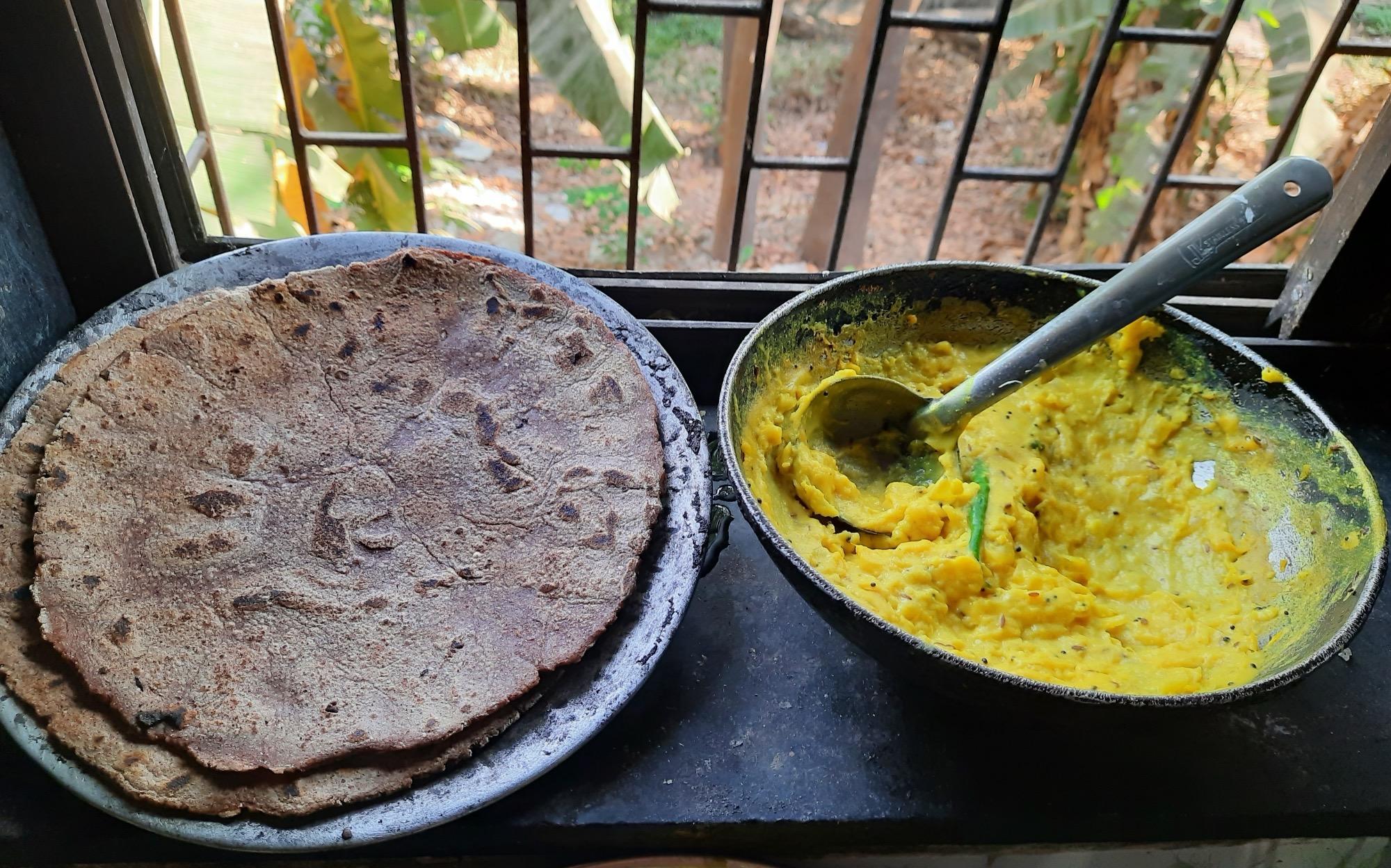
On many inland Maharashtra tables, lunch is quieter than the state’s spicy reputation. Soft toor dal, called varan, goes over rice with a spoon of ghee. Or there is pithla, a thick besan gravy, with jowar or bajra bhakri, the coarse millet flatbread cooked on a tawa. Thecha, crushed green chilli and garlic, sits on the side if you want heat. The coast and the cities cook differently from that plate.
Maharashtra is large enough that one thali cannot stand for it. The Desh plateau, Khandesh, Vidarbha, Kolhapur, and the Konkan coast use different pantries. Peanut, dry coconut, and goda masala matter inland. Fresh coconut, kokum, and fish matter on the coast. Mumbai and Pune add pav, misal, and vada pav that many diners meet first. Household, community kitchen, and season still decide more than any restaurant board.
Varan, amti, and goda masala
Varan is the mild everyday dal: usually toor, soft, often finished with ghee and a little hing or cumin. Amti is the louder cousin, a spiced dal that can carry kokum or tamarind and a spoon of goda masala. Goda means sweet in Marathi, but the blend is not sugary. Households toast coriander, coconut, sesame, and warm spices with dagad phool, also called stone flower, a culinary lichen that gives the powder a dark, smoky edge. Every jar differs. A shop packet is a start, not a fixed recipe.
When you want more body than plain varan, amti over rice is the usual move. Some kitchens dunk fried saandge, crisp lentil nuggets, or a papad into the dal at the table. Varan phal, also called chakolya, puts squares of wheat dough into that dal so the gravy and the dough cook together.
Bhakri, pithla, and thecha
On the plateau, millet bread still marks a working lunch. Jowar or bajra bhakri is thicker and coarser than wheat roti. Pithla, also called zunka or jhunka when it runs drier, is besan cooked with onion, green chilli, and a mustard-hing tempering until it thickens. Together they make a meal that does not need a second gravy. Thecha is green chillies and garlic crushed with salt and oil or lemon. Use a little.
In Deshastha and Khandeshi home cooking, the farmer’s midday plate is often named plainly: bhakri, thecha, and varancha gola, dal cooked so thick it almost holds a shape. City kitchens often swap in wheat chapati. The millet breads are still the clearer regional signal.
The Konkan cooks with coconut and kokum
Along the coast, rice replaces millet as the default grain, and coconut shows up grated, roasted, or as milk. Kokum, the dried rind of Garcinia indica, gives a clean, fruity sourness that many Konkani and Malvani pots prefer to tamarind. Sol kadhi is the cooling drink: kokum extract stirred into thin coconut milk with chilli and garlic, served with fish or rice. Malvan, in Sindhudurg, lends its name to a coastal style heavy on seafood, coconut paste, and fragrant red chilli. Malvani cooking sits inside the wider Konkan coast. Other Konkani kitchens roast, sour, and season differently.
Fish fry, bombil when the Bombay duck run allows, and coconut-based fish or chicken curries sit next to vegetarian plates of usal, fresh cashew amti, and jackfruit when the season opens. Gomantak kitchens, with Goa and north Karnataka ties, roast spice and coconut into pastes that can look browner than bright-red Malvani masalas. Ask what the souring is. Kokum, raw mango, lime, and tamarind do different jobs.
Kolhapur’s heat, and the city snacks
Kolhapuri cooking is what many menus mean when they say Maharashtrian and spicy. Tambda rassa is the red mutton broth. Pandhra rassa is the white coconut one. Both use complex ground masalas, and the heat builds. Vidarbha’s Varhadi cooking and Khandesh’s kala masala kitchens also lean hard on dried chilli and dry coconut. Read those names as regional signals. The whole state does not cook at Kolhapur heat.
In Mumbai, Pune, and Nashik, the plates that travel farthest are often the snack ones. Misal is sprouted lentils in a spiced gravy, topped with farsan, onion, and lemon, eaten with pav. Puneri and Kolhapuri versions argue about heat and dahi. Vada pav is the fried potato dumpling in a bun with dry garlic-chilli chutney. Poha is flattened rice tempered with mustard, turmeric, and onion, the dish many families still serve when two sides meet. Those are city plates. For a weekday center, start with varan-bhaat or pithla-bhakri.
What to cook or order first
- Varan-bhaat with ghee, or pithla with bhakri, before you chase restaurant heat.
- Amti if you want to taste goda masala in a dal.
- Sol kadhi with fish or rice when you are on the Konkan or at a coastal kitchen.
- Misal pav or vada pav when you want the city snack.
- Kolhapuri rassa when you mean the spice and have bread or bhakri ready.
Abroad, scan for Marathi, Malvani, Kolhapuri, or specific names: pithla, amti, sol kadhi, usal, misal. A generic “spicy Indian” thali may borrow the chilli and skip the millet bread and kokum. Confirm before you order.
Further reading
- Gujarati Thali Logic: Dal, Bhaat, Rotli, Shaak
- The Punjabi Table: Bread, Dal, and Everyday Meals
- Mustard Seeds: Pop in the Tadka, Bite in the Paste
- What Is Tadka? A Practical Guide to South Asian Tempering
- Tomato Egg Bhurji
- Indian Regional Cuisines Explained
- Beyond Butter Chicken: Why South Asian Dining Got Hyper-Regional