
A Preacher Called Durga Puja Fish Dirty. Bengalis Are Pushing Back.
Bageshwar Dham’s Dhirendra Shastri called fish and meat around Durga Puja dirty. Bengalis are defending festival food practice, including Kalighat’s fish bhog.
- durga-puja
- bengali
- west-bengal
- fish
In Howrah last weekend, Dhirendra Krishna Shastri, the head of Bageshwar Dham in Madhya Pradesh’s Chhatarpur district, told a Liluah crowd he did not like “dirty” non-vegetarian food around Durga Puja. He said meat should not be sold near the goddess’s idol, urged Hindus in Bengal to treat the season more like Navratri, and called people who keep eating fish and meat during the festival pakhandi, hypocrites worth boycotting. The festival is still weeks away. The argument over the plate is already here.
Community pandals often serve vegetarian khichuri bhog. Many Bengali households still put fish or meat on the Puja table. Some Shakta temple and household rituals treat fish or goat as offering. The question people are asking is whether a pan-Hindu vegetarian festival script can overwrite that local mix.
What he said, and why it landed
Shastri was closing a three-day Hanumant Katha at Liluah Workshop Ground from September 4 to 6. On the last day he appealed to Hindus of Bengal: during Navratri, even without an idol installed, do not sell non-veg near the goddess. He also said those who eat meat during Durga Puja cannot be considered religious.
North Indian Navratri often centers fasting and vegetarian farali meals. Bengali Durga Puja, which runs from mid to late October this year, is a feast season for many families. River fish is everyday cooking here; during Puja it can mean fried pieces, mustard gravies, or a richer guest spread. Households differ. Some stay vegetarian for the days. Some eat veg pandal bhog and cook fish at home. Some older household pujas still put fish on the offering table. A single “clean” rule flattens that range.
Pandal bhog is not the whole festival kitchen
Barowari, or public, pandals usually feed a mixed crowd with gobindobhog khichuri, labra, beguni, chutney, and payesh. Food anthropologist Pritha Sen has described that vegetarian standard as practical hospitality, not a full map of what Bengali Shakta kitchens offer the goddess. At long-running household pujas such as the Sabarna Roy Choudhury Atchala in Kolkata, the mahabhog has historically included fish preparations beside pulao and sweets. In some Tantric and Shakta lines, animal sacrifice on Sandhi Puja or related days can yield meat cooked without onion and garlic and shared as prasad. For many Bengalis, calling that dirty food misnames their own worship.
In late August, the Vishva Hindu Parishad, a Hindutva organisation in the Sangh network, told West Bengal puja organisers to keep non-vegetarian stalls away from the immediate pandal and idol area, while saying it was not demanding a statewide vegetarian ban. Some heard a limited cleanliness request. Others heard outsiders redrawing the festival’s food map. Shastri’s “dirty” language made the fight moral as well as logistical.
The Kalighat answer was a fish plate
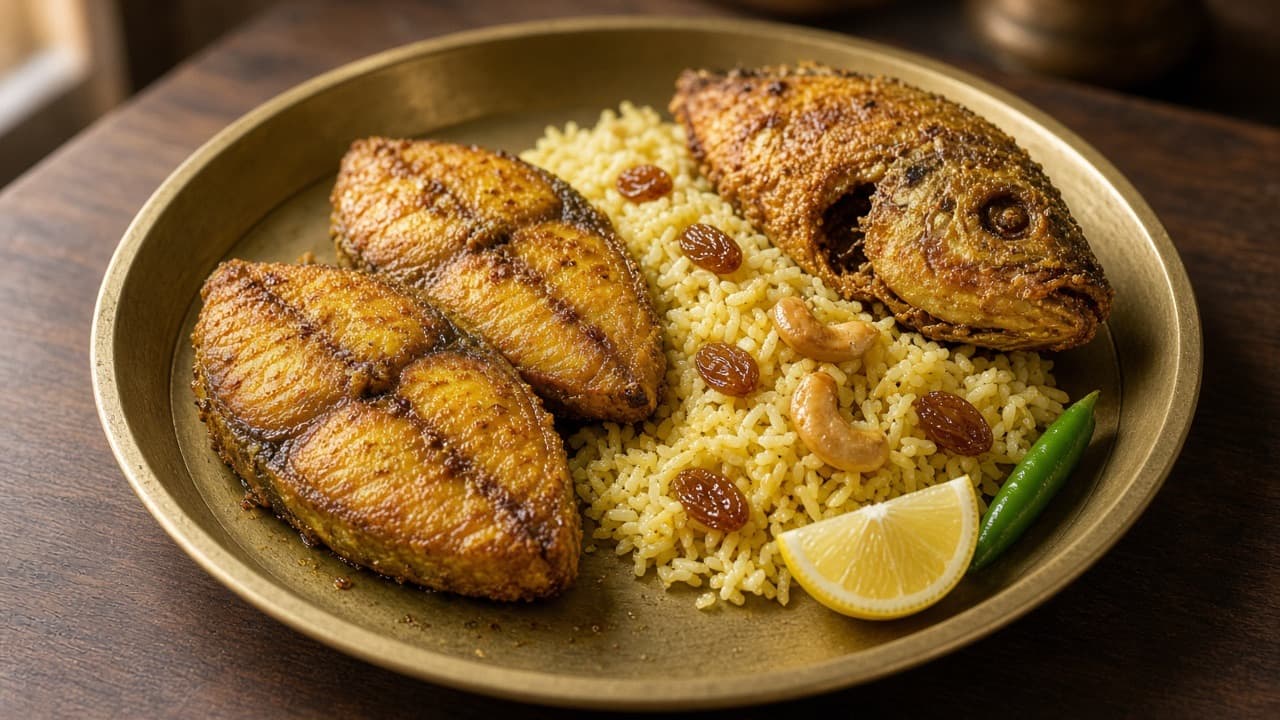
On September 10, West Bengal Chief Minister Suvendu Adhikari visited Kolkata’s Kalighat temple on Kaushiki Amavasya, an important night for many Shakta devotees, and ate the temple’s traditional fish bhog. Video showed him on the floor with fish head, fried fish, and basanti pulao. Fish is part of Kalighat’s offering practice; goat meat from temple sacrifice can appear as prasad on some occasions too. Adhikari said he eats sattvik food on Mahashtami and in Kartik, and also eats non-vegetarian offerings to Kali. On Shastri, he said a saint had given a view people could take or leave.
State BJP president Samik Bhattacharya had already drawn a harder food line: Bengalis will eat fish and meat; no saint decides the menu; he pointed to Swami Vivekananda’s comfort with Bengali meat practice. Opposition parties filed complaints and framed the remarks as an attack on Bengali custom. Adhikari separately ordered arrests after protesters burned Shastri’s photographs outside a Kolkata police station. The politics will keep moving. On the kitchen question, the pushback is blunt: Bengali Hindu festival food is not one pan-India vegetarian template.
Into October
Durga Puja in Kolkata sits on UNESCO’s intangible heritage list as pandals, craft, and neighbourhood life. That culture does not run on one purity checklist. Vegetarian community bhog and fish-forward household tables will share the same week again. Before treating any sermon as the rulebook, ask what a committee serves, what a temple offers, and what a family cooks. Keep the kitchen concrete: name the fish, the oil, and the occasion.