
Chicken Tikka Masala Made Indian Food a Global Habit
Curry houses remade South Asian cooking for export audiences. Named regional kitchens are what those diners are learning next.
- culture
- diaspora
- curry-house
- chicken-tikka-masala
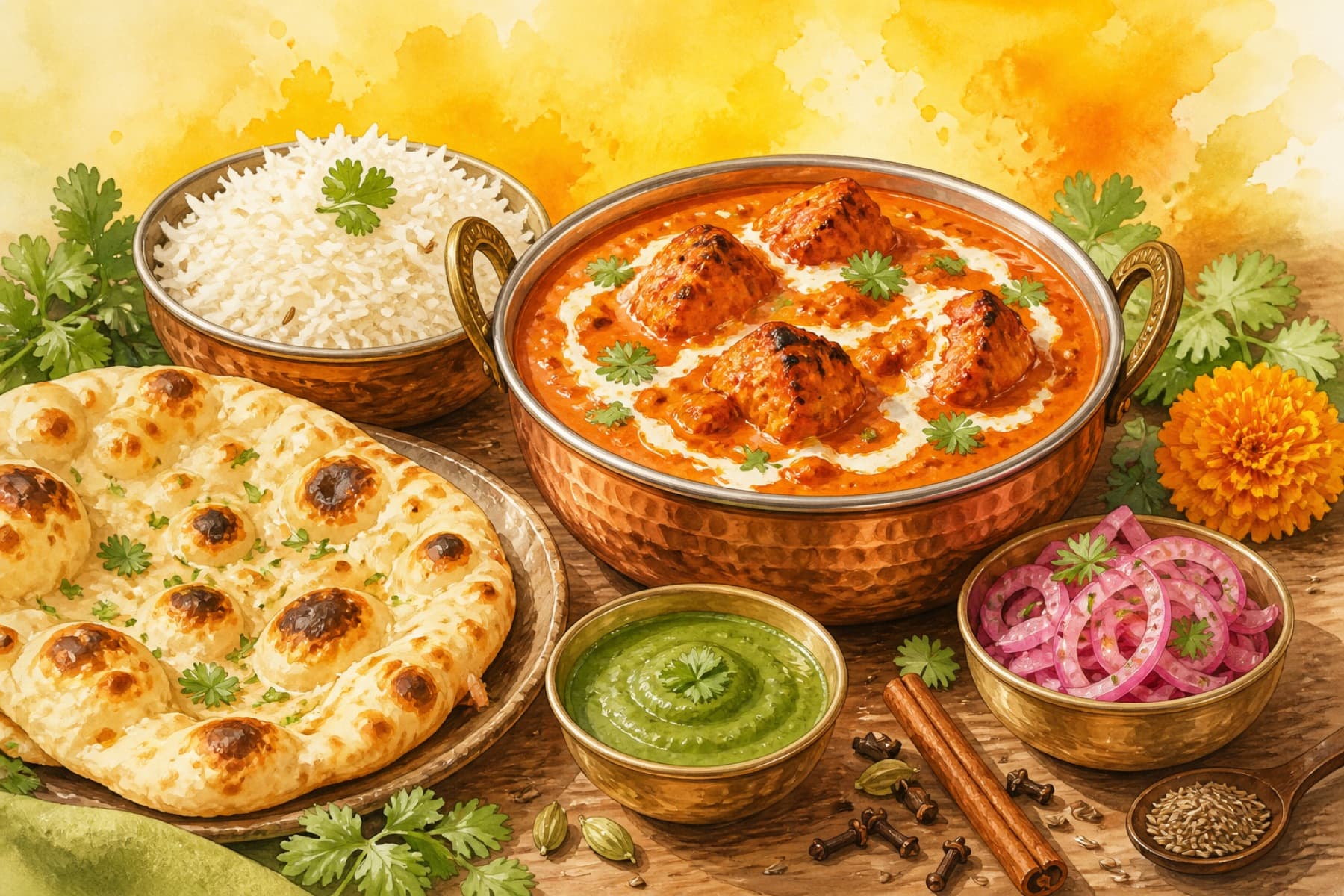
Order “Indian” almost anywhere outside South Asia and you can still get the same plate: tomato-cream gravy, tandoori chicken, fluffy naan, mild or hot on request. That menu did not travel as a full map of the subcontinent. It traveled as a remake, shaped by diaspora kitchens, British appetites, and later supermarket trays. The remake worked. Indian food became a weeknight habit from London to Los Angeles.
Butter chicken and tikka masala earned that reach honestly. They are still only one restaurant grammar. This page is about how that narrowed export version made the category famous, and why more diners are now being asked which region is in the pot.
Comfort food came first
Britain’s everyday curry-house tradition was largely built by Bangladeshi restaurateurs, many from Sylhet. They adapted menus for a broad British audience and made late-night curry part of national life. Korma, tikka masala, jalfrezi, and vindaloo became a shared commercial vocabulary under tight margins and clear customer demand.
Chicken tikka masala sits at the center of that story. Exact invention claims differ, often pointing to Glasgow or other British kitchens that finished tandoori chicken in a gravy Britons already understood. In April 2001, then Foreign Secretary Robin Cook called it “a true British national dish,” saying chicken tikka was Indian and the masala sauce answered a British preference for meat in gravy. The speech was about British identity. For diners, it also named how South Asian cooking went mainstream abroad: by becoming local comfort food.
North America picked up a related Punjabi-Mughlai restaurant toolkit because it held on a buffet line and explained easily. Association for Asian Studies teaching material puts the cost plainly: “Indian food” on many foreign menus is reimagined North Indian eatery fare, not a tour of the subcontinent.
Older than the high street
The exchange started earlier than postwar curry houses. East India Company returnees carried curry habits into British cookbooks in the eighteenth century. In 1810, Sake Dean Mahomed, a Bengali entrepreneur in London, opened the Hindoostane Coffee House for a fashionable crowd that already knew India through empire. The room did not last. Veeraswamy opened on Piccadilly in 1926 and helped make Indian restaurant food a West End night out; under later owners it also took a Michelin star.
Critical prestige arrived much later on a different track. In 2001, the same year as Cook’s speech, Atul Kochhar at Tamarind and Vineet Bhatia at Zaika were among the first chefs of Indian origin to earn Michelin stars in London. Mass comfort and fine-dining recognition grew at the same time.
What the remake left out
Global popularity put Indian flavors on grocery shelves and airport trays. It also trained a lot of diners to ask how spicy before they asked which kitchen. A Tamil breakfast, a Bengali mustard fish, Gujarati farsan, Assamese sour fish, Pakistani BBQ, or Sri Lankan hoppers still get harder to find when everything sits under one “Indian” tile. The longer argument for that category problem is Why “Indian Food” Is the Wrong Menu Category.
The next chapter is already on many city menus. Rooms name Chettinad, Kerala, Awadhi, or Assamese instead of leading with a heat scale. Second-generation cooks and diaspora brands sell achaar, regional kits, and spice stories with a place attached. In 2026, Amritsar-born chef Vikas Khanna, whose New York restaurant Bungalow leans on home and club cooking rather than a generic curry card, landed on TIME’s list of the world’s most influential people. Take that as a marker of cultural reach. Your neighborhood menu may still need a closer read.
Further reading
- Why “Indian Food” Is the Wrong Menu Category
- Beyond Butter Chicken: Why South Asian Dining Got Hyper-Regional
- Assamese Sour Fish and Kerala Toddy-Shop Plates: The New Rooms That Name a Region
- Sujan Sarkar Opens a British-Indian Chophouse in Hudson Yards
- London: South Asian Food Beyond Brick Lane
- The Banquet: The New Banquet India